Biography Template


Two-Column Biography Copy Gives This Section a Distinctive Shape
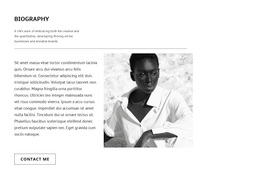
The block uses a simple but recognizable combination: an uppercase “BIOGRAPHY” heading, a short introduction, a divider, two columns of longer text, and one outlined contact button. That sequence gives the section more depth than a short about card while avoiding the density of a large multi-item grid. The paired columns are the key design choice, allowing the biography to occupy a broad area without losing a clear reading structure.
The visual treatment adds another reason to choose this option. A soft pale pink background creates a quiet field for the dark copy, while the serif-style heading introduces a more editorial accent above the compact sans-serif paragraphs. The horizontal rule makes the shift from introduction to extended material immediately visible. Below the text, the outlined “CONTACT ME” button acts as a measured closing detail rather than a dominant promotional control.
This arrangement suits a project that needs an about or biography section with room for a fuller story and a clear route toward contact. It is more text-led than an image-based profile block and more structured than a single-column statement. The displayed body copy appears to be sample content, so it should be replaced with accurate subject information. As a ready-made design choice, the value is in the combination of readable two-column storytelling, restrained color, and a defined contact ending.
Customize with Nicepage
Open this ready-made template in the Template Builder and customize it visually in the Nicepage editor. Replace demo content, edit page sections, and adapt the design to your project without rebuilding the template from scratch.
Edit Template Offline
2. Create a new page or select existing
3. Click Add new block, search for id 366127 and click enter
Edit Template Online
Create Awesome Websites


Free Nicepage Builder
Keywords
Start With a Ready-Made Template
Choose a Design for a New Page
Use a ready-made template as a starting point instead of creating every page from a blank canvas. When adding a new page in Nicepage, browse available designs, compare different layouts, and choose an option that already fits the general purpose and visual direction of your project.
Browse Different Page Designs
Explore Page Designs using search, thematic categories, Design Sets, and full-page previews. The collection includes layouts for different subjects and page purposes, making it easier to compare alternatives before selecting a design to customize.
Customize the Selected Template
After choosing a design, create the page and continue editing it visually in Nicepage. Replace the demo content, adjust images, typography, colors, sections, and other elements, and adapt the ready-made layout to your own content instead of rebuilding the design from the beginning.
Explore More Design Directions
If the first option does not match your project closely enough, return to the design collection and compare other templates before committing to a layout. This makes the template library useful not only for faster page creation, but also for exploring different visual approaches and finding a suitable starting point for a new project.
This workflow gives you access to a broad collection of ready-made designs that can be selected, compared, and customized according to the needs of each new page or project.