Powerful hosting Website Template

Edit Template Offline
2. Create new page and search for id 6509298
Edit Template Online
Create Awesome Websites


Free Nicepage Builder
Keywords
Plans, Technical Options, and Support Establish a Broader Site Foundation
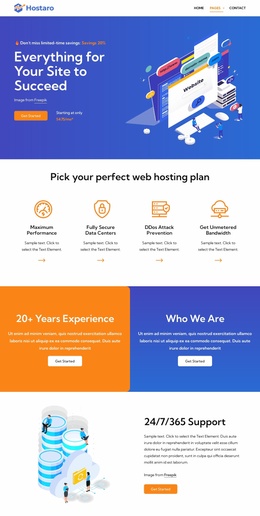
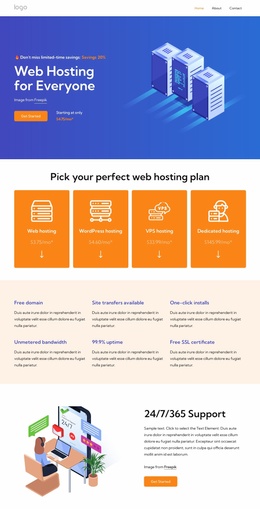
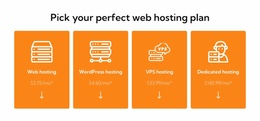
The design already defines several major content categories that a larger hosting project may need. The hero introduces the service direction, while the feature cards explain performance, secure data centers, DDoS prevention, and bandwidth. The pricing area then separates web, WordPress, VPS, and dedicated hosting into distinct offer groups. Together, these sections provide more than a decorative homepage: they establish service and plan subjects that could guide additional pages as the project grows.
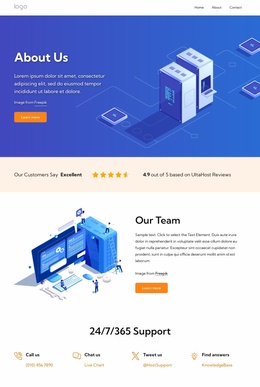
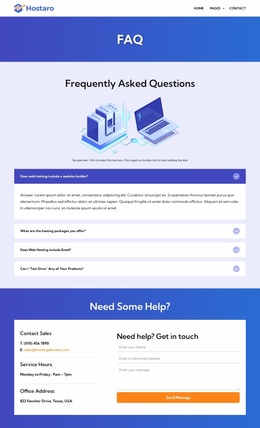
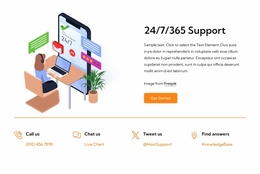
The technical section adds a second expansion path through Debian, Ubuntu, CentOS, Red Hat, AlmaLinux, and Fedora. A future site could use that subject as a basis for deeper server or setup information, while the testimonial, FAQ, and support-channel regions define areas for trust, questions, and assistance. The verified design does not prove that those additional pages already exist, but it does provide a useful content map for considering them.
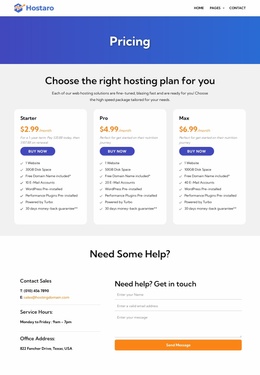
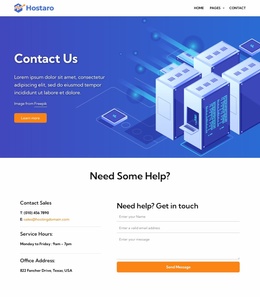
Navigation, the contact forms, and the dark footer support the project-level interpretation. The first form is tied to a trial promotion, and the later form is paired with sales details, service hours, and an office address. Help and service links in the footer suggest shared resources that can remain recognizable beyond this page. The result is a coherent starting information architecture for a hosting website, with clear categories that can be extended without changing the underlying design character.
Customize with Nicepage
Open this ready-made template in the Website Template Builder and customize it visually in the Nicepage editor. Replace demo content, edit page sections, and adapt the design to your project without rebuilding the template from scratch.
Build a Complete Website From This Template
Customize the Website Visually
Use this ready-made website template as a starting point for your project and adapt its pages visually in Nicepage. Change content, images, typography, navigation, sections, and other design elements while keeping the website together as a single editable project.
Manage Website Pages in One Project
Use the Pages panel to open, add, duplicate, and manage the pages of your website. Work on individual pages while keeping navigation and the overall site structure accessible from the same project, making it easier to develop a complete website instead of managing separate page files.
Expand the Website With Matching Designs
When you need additional pages or sections, use Page Design Sets to find Page and Block Designs created in the same visual style. Design Sets group matching designs together, making it easier to expand the website with new content while maintaining a consistent look across its pages and sections.
Organize Larger Multi-Page Websites
As the website grows, use Page Folders to organize related pages and keep larger multi-page projects easier to navigate in the editor. This is especially useful for websites with separate service pages, company information, contacts, landing pages, and other content areas.
This workflow makes the template a practical foundation for building and expanding a complete website while managing its pages, content, and visual design within one Nicepage project.