You need a certified expert Website Template


A Reusable Project Gallery for a Broader Site Structure
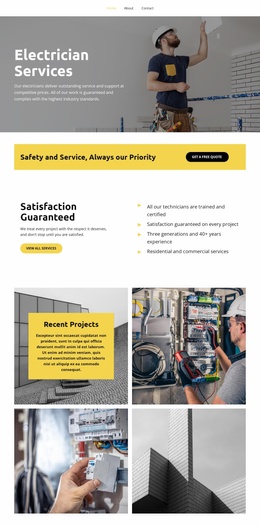
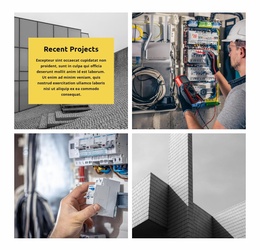
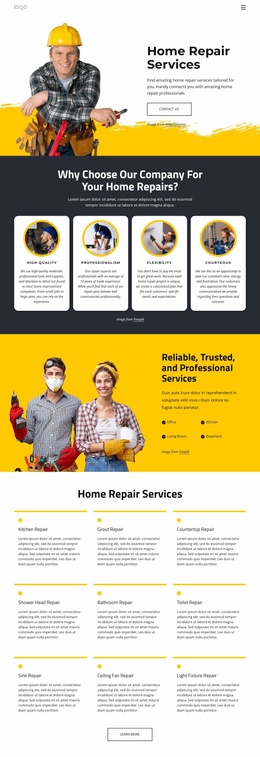
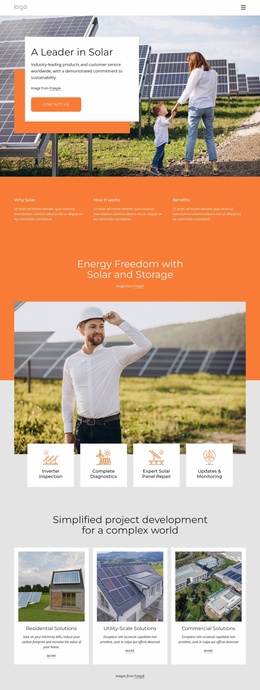
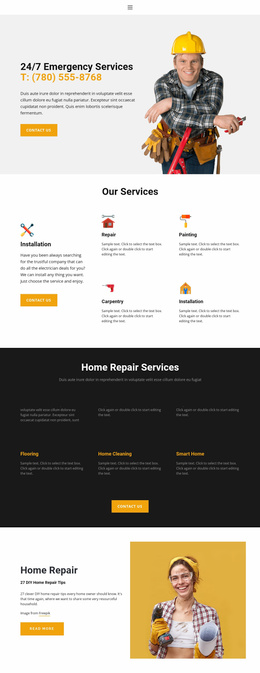
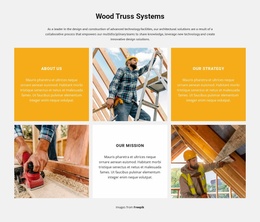
The block defines one stable content area for recent work: four project images arranged in two rows and two columns, with an introductory panel integrated into the upper-left cell. That structure can be reused as a portfolio section within a broader website project without requiring the surrounding site to duplicate its layout. Other pages or blocks can handle service details, company information, contact content, and fuller descriptions of individual projects.
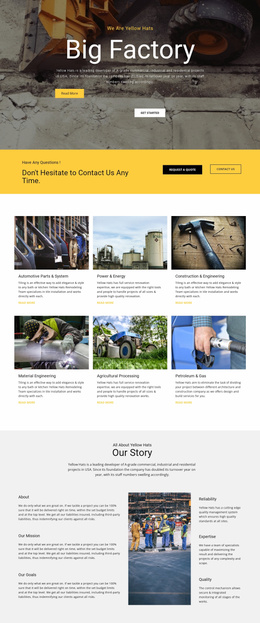
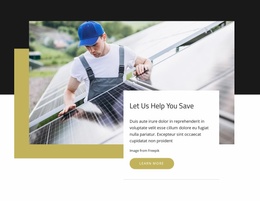
The content relationship is straightforward but visually specific. Electrical equipment, an electrical worker, and industrial architecture provide the project imagery, while the “Recent Projects” heading and supporting paragraph explain the gallery from inside the first cell. The yellow rectangle distinguishes that introductory role from the other image areas, and bold dark typography keeps the message visible against the bright accent. White gutters maintain separation so the four examples read as related items rather than one crowded image.
In a website template project, this section can provide a repeatable pattern for showcasing completed work or selected case-study visuals. Its equal image areas make the content easy to scan, while the overlay treatment gives the portfolio area a stronger identity than a basic thumbnail row. The block remains one section, so any broader page sequence, project archive, or navigation system would be supplied by the surrounding website rather than by this gallery alone.
Customize with Nicepage
Open this ready-made template in the Website Template Builder and customize it visually in the Nicepage editor. Replace demo content, edit page sections, and adapt the design to your project without rebuilding the template from scratch.
Edit Template Offline
2. Create a new page or select existing
3. Click Add new block, search for id 6137915 and click enter
Edit Template Online
Create Awesome Websites


Free Nicepage Builder
Keywords
Build a Complete Website From This Template
Customize the Website Visually
Use this ready-made website template as a starting point for your project and adapt its pages visually in Nicepage. Change content, images, typography, navigation, sections, and other design elements while keeping the website together as a single editable project.
Manage Website Pages in One Project
Use the Pages panel to open, add, duplicate, and manage the pages of your website. Work on individual pages while keeping navigation and the overall site structure accessible from the same project, making it easier to develop a complete website instead of managing separate page files.
Expand the Website With Matching Designs
When you need additional pages or sections, use Page Design Sets to find Page and Block Designs created in the same visual style. Design Sets group matching designs together, making it easier to expand the website with new content while maintaining a consistent look across its pages and sections.
Organize Larger Multi-Page Websites
As the website grows, use Page Folders to organize related pages and keep larger multi-page projects easier to navigate in the editor. This is especially useful for websites with separate service pages, company information, contacts, landing pages, and other content areas.
This workflow makes the template a practical foundation for building and expanding a complete website while managing its pages, content, and visual design within one Nicepage project.