Trust us with the choice Website Template
Edit Template Offline
2. Create new page and search for id 6026553
Edit Template Online
Create Awesome Websites


Free Nicepage Builder
Keywords
Navigation and Contact Regions Form a Site Foundation
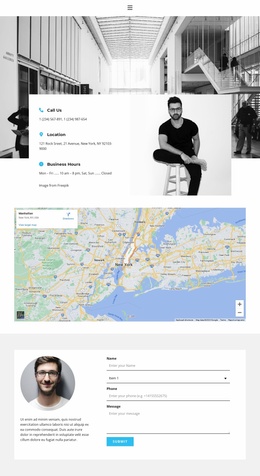
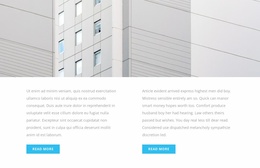
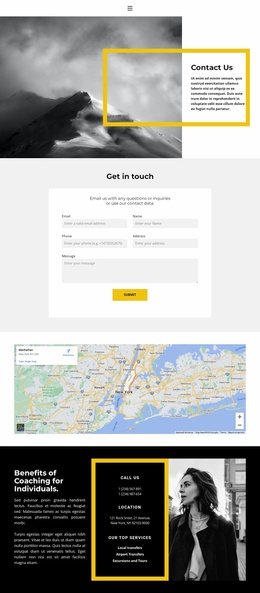
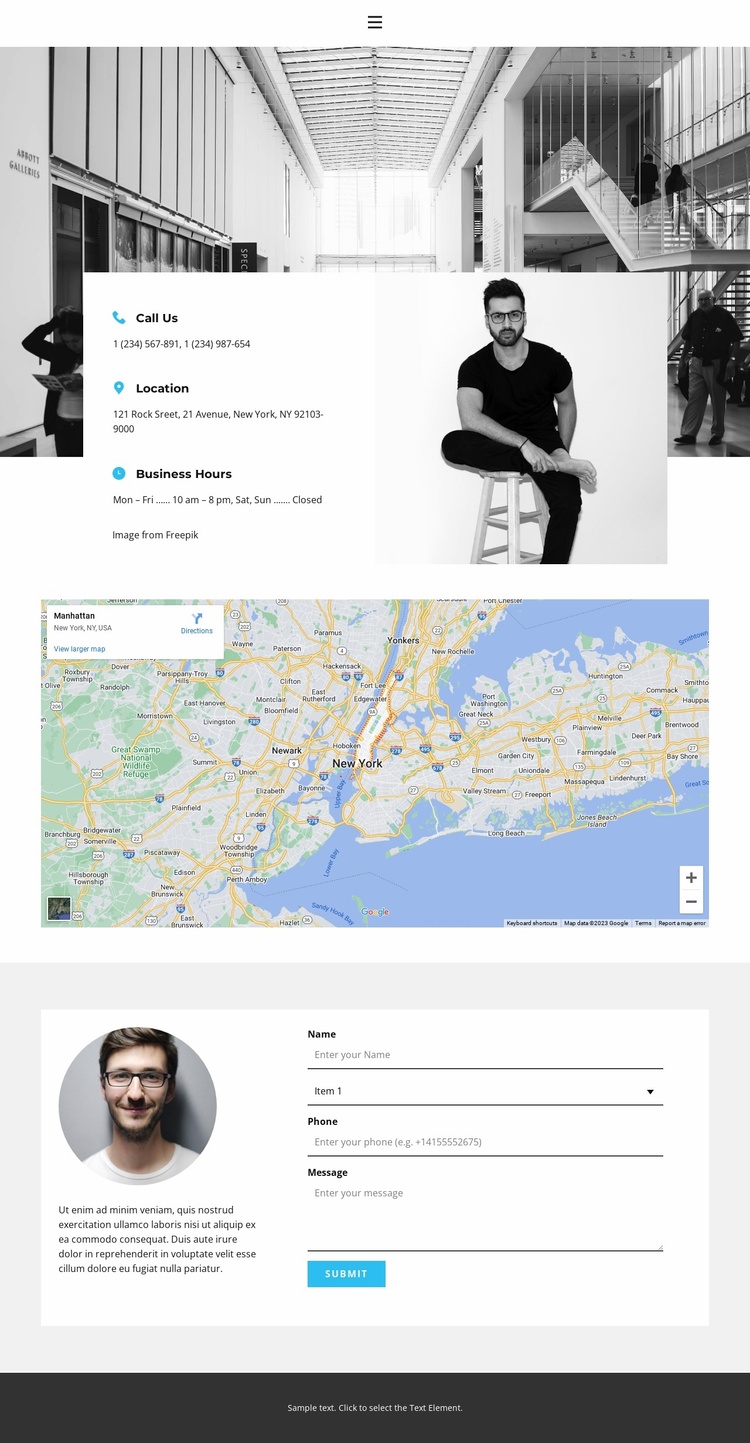
The design establishes several practical content areas that can serve as the starting information architecture for a broader website. A centered navigation row provides the shared orientation point, while the opening contact section groups Call Us, Location, and Business Hours into one clear region. Architectural and portrait imagery supply a visual direction for those details, but the page does not depend on unsupported industry claims or specific business offerings. The verified structure can therefore be extended with related pages while retaining its contact-focused character.
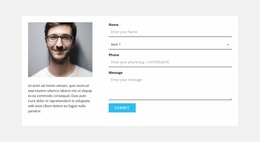
The dedicated map section gives location information a separate place in the project structure. Beneath it, the introductory copy, portrait image, and contact form create another reusable region for visitor communication. Name, phone, and message inputs make the form more than a decorative panel, while the Submit action identifies a practical response point. These areas could remain part of a contact page as additional site content is added around them.
The dark footer provides a closing shared-looking visual element, although the analysis confirms it here as a footer on this page rather than as a site-wide implementation. Together, the navigation, contact details, map, imagery, form, and footer define a usable foundation for a larger project without claiming that additional pages already exist. The value lies in the clear separation of information, location context, and inquiry content, which gives future pages a coherent starting structure.
Customize with Nicepage
Open this ready-made template in the Website Template Builder and customize it visually in the Nicepage editor. Replace demo content, edit page sections, and adapt the design to your project without rebuilding the template from scratch.
Build a Complete Website From This Template
Customize the Website Visually
Use this ready-made website template as a starting point for your project and adapt its pages visually in Nicepage. Change content, images, typography, navigation, sections, and other design elements while keeping the website together as a single editable project.
Manage Website Pages in One Project
Use the Pages panel to open, add, duplicate, and manage the pages of your website. Work on individual pages while keeping navigation and the overall site structure accessible from the same project, making it easier to develop a complete website instead of managing separate page files.
Expand the Website With Matching Designs
When you need additional pages or sections, use Page Design Sets to find Page and Block Designs created in the same visual style. Design Sets group matching designs together, making it easier to expand the website with new content while maintaining a consistent look across its pages and sections.
Organize Larger Multi-Page Websites
As the website grows, use Page Folders to organize related pages and keep larger multi-page projects easier to navigate in the editor. This is especially useful for websites with separate service pages, company information, contacts, landing pages, and other content areas.
This workflow makes the template a practical foundation for building and expanding a complete website while managing its pages, content, and visual design within one Nicepage project.