Architecture as a function of agency Website Template


A reusable architecture introduction for a broader site
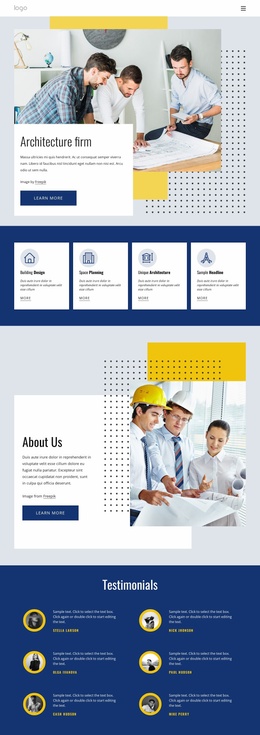
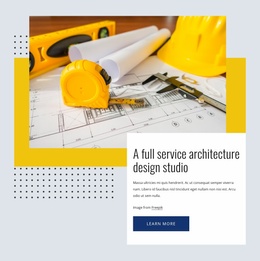
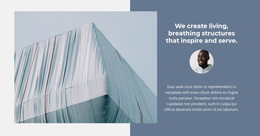
The block supplies one stable content role within a larger website project: an architecture-focused introduction built from a heading, concise paragraph, portrait, and “Learn more” action. The left-side image gives the section an immediate subject, while the overlapping white panel keeps the explanatory content and CTA together on the right. Yellow geometric accents and a black dotted pattern make the arrangement recognizable, and the light gray background provides space around the image and panel.
As a website template section, this block can be reused wherever a project needs to introduce an architecture team, practice, or related topic before visitors move to more specific content. The block itself does not need to carry project listings, service detail, testimonials, or contact information; those roles can be handled by neighboring sections or pages. Its value is the clear boundary around one introductory message and one next-step action.
The composition also offers a visual pattern that a broader site can coordinate with. The portrait-and-panel relationship may guide later image-led sections, while the yellow accents, dots, dark heading, and blue button can inform related visual treatments without requiring every section to duplicate this layout. In that context, the block functions as a reusable building unit: specific enough to communicate its architecture introduction, yet limited enough to fit into a wider website structure.
Customize with Nicepage
Open this ready-made template in the Website Template Builder and customize it visually in the Nicepage editor. Replace demo content, edit page sections, and adapt the design to your project without rebuilding the template from scratch.
Edit Template Offline
2. Create a new page or select existing
3. Click Add new block, search for id 3654082 and click enter
Edit Template Online
Create Awesome Websites


Free Nicepage Builder
Keywords
Use This Block in a Broader Website Template Project
Treat the Block as One Reusable Site Section
A website project is assembled from multiple pages and sections. The analyzed block provides one reusable content area—such as services, About, testimonials, pricing, gallery, team, or contact—while the rest of the site supplies other page-level functions.
Coordinate the Section With Other Pages
Use the Pages panel to manage the pages of the broader project. The block can remain one consistent section pattern while related pages add deeper information or different content without implying that the Block ID itself contains those pages.
Expand With Matching Designs
When additional pages or sections are needed, Page Design Sets can help locate matching Page and Block Designs. This can extend the visual direction around the existing block while keeping the site's other content areas separate.
This workflow treats the block as a reusable building unit inside a larger Website Template project, not as a complete website foundation on its own.