Learn to cook Website Template



Edit Template Offline
2. Create new page and search for id 3125134
Edit Template Online
Create Awesome Websites


Free Nicepage Builder
Keywords
Class Promotion, School Information, and Food Categories Establish a Site Foundation
The design already identifies several major content areas that a broader cooking-school website could build around. The hero establishes the French-classics direction with a chef photograph, while the Online Cooking Classes and traditional-cooking sections provide separate promotional content areas. These blocks can serve as the visual starting points for explaining different forms of instruction without losing the common image-led style.
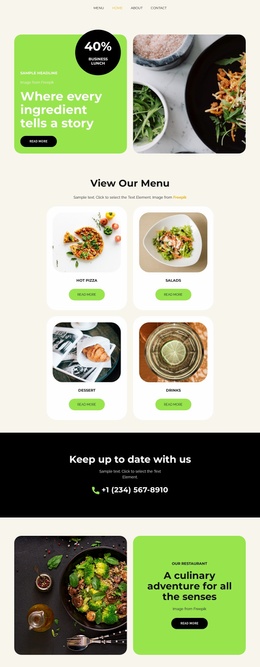
The four feature cards add a concise set of supporting themes—Organic, Simple, Products, and Team—while Mission, Vision & History supplies more institutional material. The Why Us section creates another reusable content category by giving the school space to explain its value beside a circular class image. Six food-category cards broaden the foundation beyond class descriptions. Fresh Food, Dinner Meals, Classic Menu, Chef's Special, Pasta & Pizza, and Vegan Dishes can guide future content organization for culinary topics, course groupings, or related informational pages, without implying that additional pages already exist.
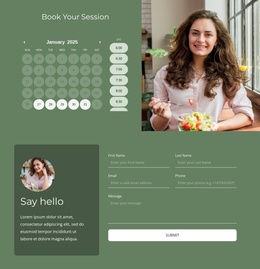
The contact block completes the project foundation with contact channels, location and business-hours content, an inquiry form, and supporting food imagery. Navigation and the branded footer provide shared site elements that can frame related content as the project grows. The template therefore offers a defined information architecture for expansion: introduction, instruction, school identity, culinary categories, reasons to choose the school, and contact. Its value lies in giving a larger website a coherent starting arrangement rather than only a decorative homepage.
Customize with Nicepage
Open this ready-made template in the Website Template Builder and customize it visually in the Nicepage editor. Replace demo content, edit page sections, and adapt the design to your project without rebuilding the template from scratch.
Build a Complete Website From This Template
Customize the Website Visually
Use this ready-made website template as a starting point for your project and adapt its pages visually in Nicepage. Change content, images, typography, navigation, sections, and other design elements while keeping the website together as a single editable project.
Manage Website Pages in One Project
Use the Pages panel to open, add, duplicate, and manage the pages of your website. Work on individual pages while keeping navigation and the overall site structure accessible from the same project, making it easier to develop a complete website instead of managing separate page files.
Expand the Website With Matching Designs
When you need additional pages or sections, use Page Design Sets to find Page and Block Designs created in the same visual style. Design Sets group matching designs together, making it easier to expand the website with new content while maintaining a consistent look across its pages and sections.
Organize Larger Multi-Page Websites
As the website grows, use Page Folders to organize related pages and keep larger multi-page projects easier to navigate in the editor. This is especially useful for websites with separate service pages, company information, contacts, landing pages, and other content areas.
This workflow makes the template a practical foundation for building and expanding a complete website while managing its pages, content, and visual design within one Nicepage project.