All about creative design Website Template
Edit Template Offline
2. Create new page and search for id 221809
Edit Template Online
Create Awesome Websites


Free Nicepage Builder
Keywords
Restaurant, projects, gallery, and reservation content form a site foundation
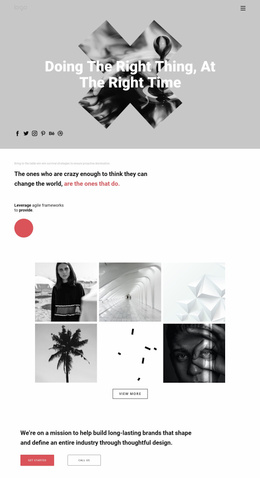
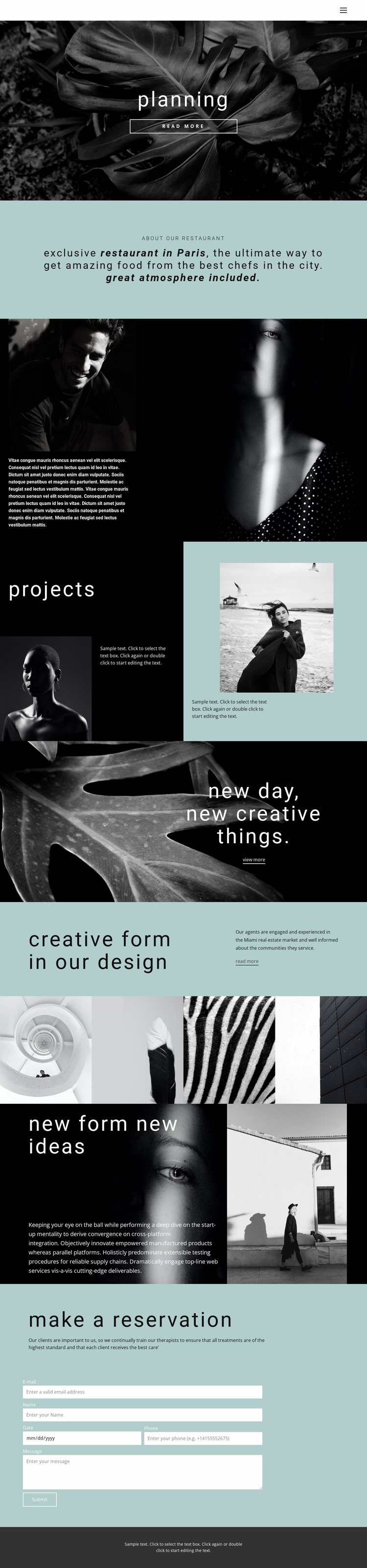
The design already identifies several content areas that can anchor a broader restaurant website project. The Planning hero can introduce the concept, while About Our Restaurant supplies a dedicated area for the restaurant story and its Paris reference. The split editorial block creates room for a longer explanation beside photography, and the Projects section adds a separate visual category built from three photographs and short text panels. These areas give the project more structure than a single promotional headline.
The later creative banner, four-image gallery, and New Form New Ideas feature extend that foundation with additional places for visual examples, concept statements, and supporting copy. They could guide related pages or expanded sections as the project develops, but the verified analysis does not establish that multiple completed pages are already included. The final Make a Reservation block is a useful project boundary because it connects the visual presentation with an inquiry form and Submit action. Navigation and mobile navigation can then organize the main destinations while the dark footer closes the shared page experience. This interpretation treats the template as a starting information architecture for a restaurant site, not as proof of a complete multi-page package. Its value lies in the range of confirmed content categories and the consistent black, pale-aqua, and monochrome direction connecting them.
Customize with Nicepage
Open this ready-made template in the Website Template Builder and customize it visually in the Nicepage editor. Replace demo content, edit page sections, and adapt the design to your project without rebuilding the template from scratch.
Build a Complete Website From This Template
Customize the Website Visually
Use this ready-made website template as a starting point for your project and adapt its pages visually in Nicepage. Change content, images, typography, navigation, sections, and other design elements while keeping the website together as a single editable project.
Manage Website Pages in One Project
Use the Pages panel to open, add, duplicate, and manage the pages of your website. Work on individual pages while keeping navigation and the overall site structure accessible from the same project, making it easier to develop a complete website instead of managing separate page files.
Expand the Website With Matching Designs
When you need additional pages or sections, use Page Design Sets to find Page and Block Designs created in the same visual style. Design Sets group matching designs together, making it easier to expand the website with new content while maintaining a consistent look across its pages and sections.
Organize Larger Multi-Page Websites
As the website grows, use Page Folders to organize related pages and keep larger multi-page projects easier to navigate in the editor. This is especially useful for websites with separate service pages, company information, contacts, landing pages, and other content areas.
This workflow makes the template a practical foundation for building and expanding a complete website while managing its pages, content, and visual design within one Nicepage project.