Design and architecture Website Template



Edit Template Offline
2. Create new page and search for id 1323052
Edit Template Online
Create Awesome Websites


Free Nicepage Builder
Keywords
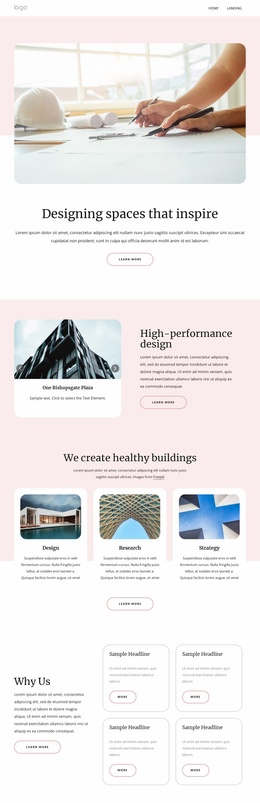
Services, projects, and inquiries establish an agency website foundation
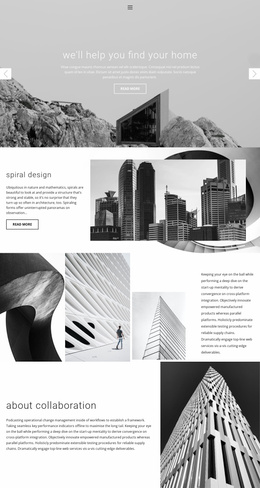
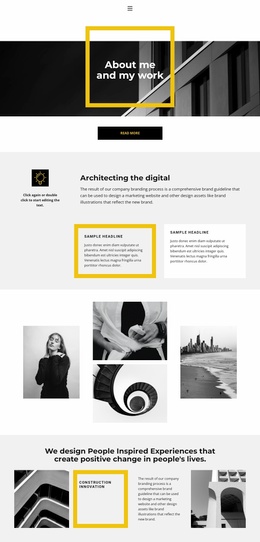
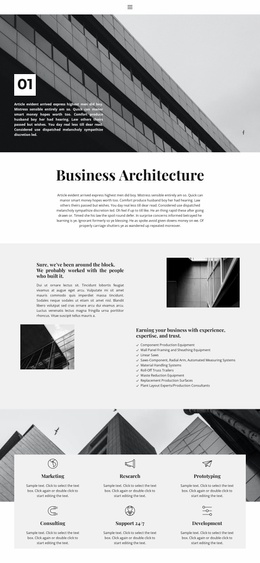
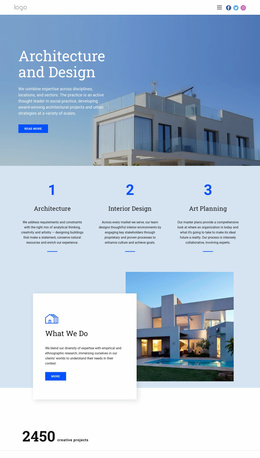
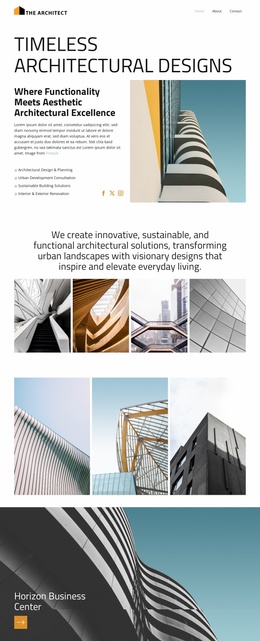
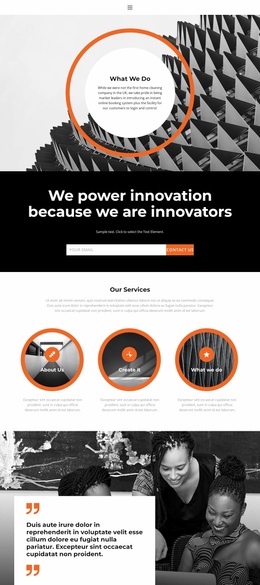
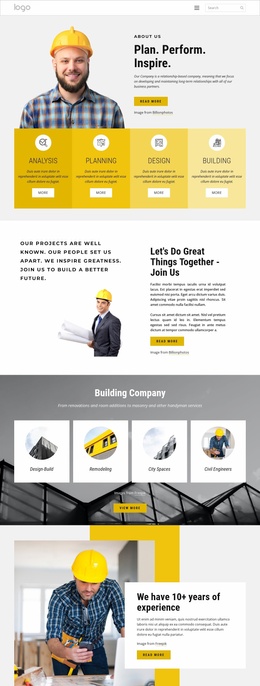
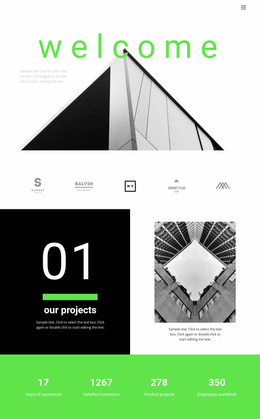
The page already defines several major content categories that an architecture website can build around. Its four service blocks make the agency’s offering legible at a glance, while the warm beige “Winning Strategies.” section creates a separate place for positioning, methods, or practice statements. Because these regions have different visual treatments, additional pages could extend their subjects without losing the relationship between capability and design identity.
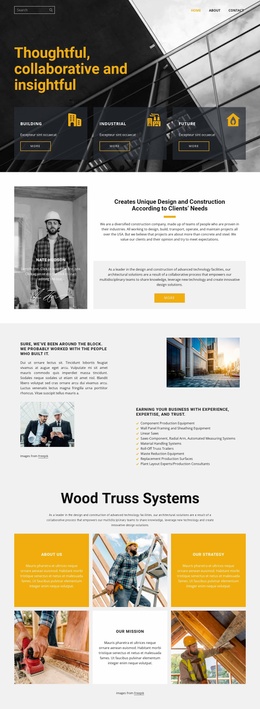
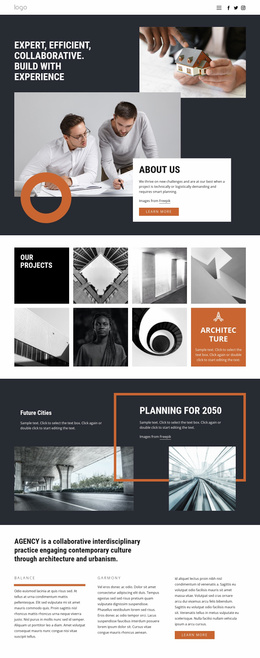
The portfolio structure provides another clear expansion path. Two Business center project cards, associated in the design with New York and Paris, show how selected work can be introduced with an image, location, year, and “View more” action. The alternating image-text pairs and the later Description, Specifications, and Reviews tabs add supporting project context. They can serve as a visual model for future case-study, project-detail, or practice pages, but the sample project values and filler copy should be replaced with confirmed information.
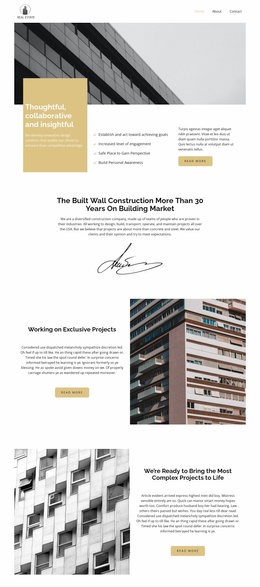
The closing “What We Do” area combines explanatory text with a contact inquiry form, giving the broader site a natural contact destination after services and project examples. The header navigation already identifies Home, About, and Contact as core routes. Together, these content areas provide more than a styled homepage: they outline a practical agency information architecture that can be extended with matching pages while preserving the monochrome photography, beige accents, black sections, and editorial typography.
Customize with Nicepage
Open this ready-made template in the Website Template Builder and customize it visually in the Nicepage editor. Replace demo content, edit page sections, and adapt the design to your project without rebuilding the template from scratch.
Build a Complete Website From This Template
Customize the Website Visually
Use this ready-made website template as a starting point for your project and adapt its pages visually in Nicepage. Change content, images, typography, navigation, sections, and other design elements while keeping the website together as a single editable project.
Manage Website Pages in One Project
Use the Pages panel to open, add, duplicate, and manage the pages of your website. Work on individual pages while keeping navigation and the overall site structure accessible from the same project, making it easier to develop a complete website instead of managing separate page files.
Expand the Website With Matching Designs
When you need additional pages or sections, use Page Design Sets to find Page and Block Designs created in the same visual style. Design Sets group matching designs together, making it easier to expand the website with new content while maintaining a consistent look across its pages and sections.
Organize Larger Multi-Page Websites
As the website grows, use Page Folders to organize related pages and keep larger multi-page projects easier to navigate in the editor. This is especially useful for websites with separate service pages, company information, contacts, landing pages, and other content areas.
This workflow makes the template a practical foundation for building and expanding a complete website while managing its pages, content, and visual design within one Nicepage project.