Between minimalism and sustainability Website Design


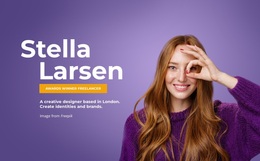
Purple imagery and white type establish a recognizable visual voice
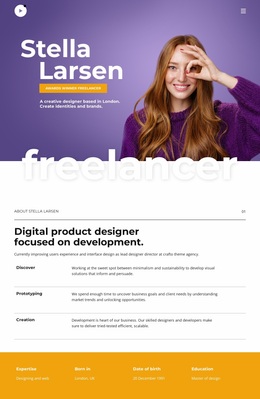
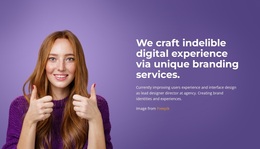
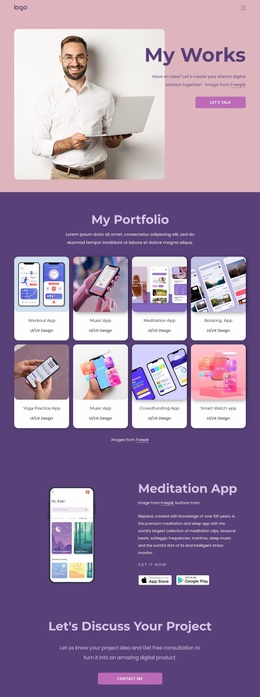
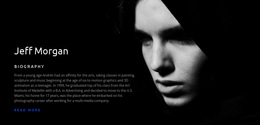
The block’s visual character comes from the coordinated treatment of image, color, typography, and spacing. A portrait subject occupies the left side of a purple-toned full-width background, while the right side uses large white type for the branding-services statement and smaller white text for two supporting descriptions. The absence of visible card borders keeps these elements within one broad composition instead of dividing the service message into isolated modules.
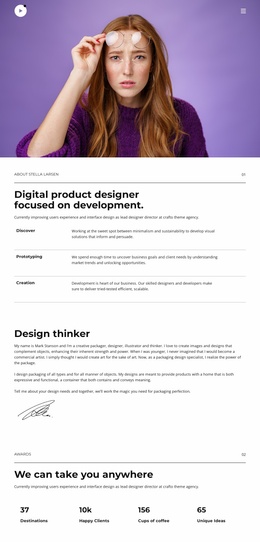
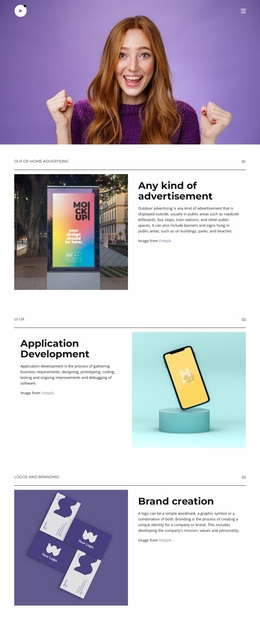
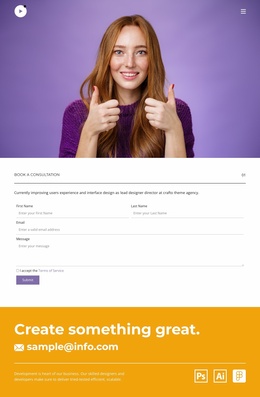
As part of a wider website design, this section can express a visual direction that other areas may echo. The portrait-led imagery brings a human presence to the creative-services subject, while the strong contrast and generous spacing create a calm but clearly structured reading experience. The heading’s scale establishes hierarchy; the supporting paragraphs about UX, interface design, brand identities, and experiences give that visual language a concrete content setting.
One section cannot define every page-level style decision, but it can provide useful reference points for a broader identity. Related sections might repeat the contrast between expressive imagery and restrained typography, or carry forward the same approach to open spacing and focused content. Here, the design language emerges through the relationship between visual atmosphere and concise service communication.
Customize with Nicepage
Open this ready-made template in the Website Design Builder and customize it visually in the Nicepage editor. Replace demo content, edit page sections, and adapt the design to your project without rebuilding the template from scratch.
Edit Template Offline
2. Create a new page or select existing
3. Click Add new block, search for id 6187317 and click enter
Edit Template Online
Create Awesome Websites


Free Nicepage Builder
Keywords
Connect This Block to a Consistent Website Design
Apply a Shared Visual Language
Use Theme Settings to coordinate Colors, Fonts, and Typography across the broader website. A block can express the same visual language through its backgrounds, text hierarchy, image treatment, buttons, cards, icons, and spacing without claiming that one section defines the entire site's identity.
Keep Repeated Treatments Consistent
When the block contains repeated items or distinctive accents, align those choices with the broader project. Shared typography, color roles, button styles, and image treatments can help a service, testimonial, pricing, or gallery block feel connected to other pages and sections.
Add Motion Only When It Supports the Section
Use Animation Effects when movement genuinely helps present the block's content. Effects can be applied to elements or Containers, but animation should remain secondary to the section's verified content and visual hierarchy.
This workflow lets one block contribute to a consistent website design while site-wide identity continues to be defined by the broader set of pages, sections, and shared style rules.