Boost your career CSS Template


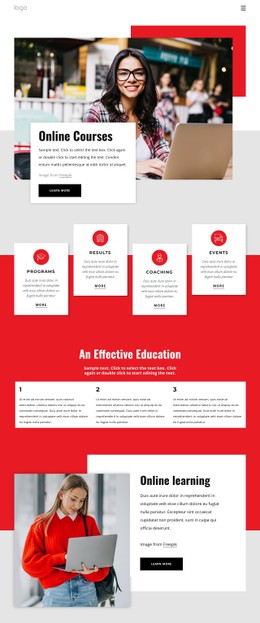
Red framing and layered card styling shape the carousel
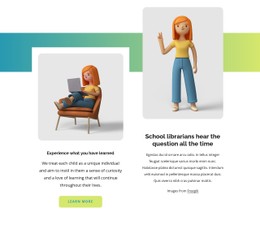
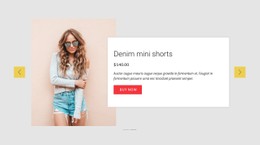
The large portrait photograph is the visual anchor of the section, but the surrounding styling determines how the carousel reads. A horizontal red rectangular shape runs behind the image, giving the otherwise image-led composition a clear color field. The white content card overlaps the lower-left portion of the photograph, creating contrast between the red background, the portrait, and the text area. This layered treatment keeps the descriptive copy visually separate without breaking its relationship with the image.
The two slides use large red numeric labels, 01 and 02, as a recurring typographic accent. Each slide also includes a Learn more button, while muted gray indicators and previous/next controls provide a quieter visual counterpoint. The result is a styling system built from contrast, overlap, color repetition, and controlled navigation emphasis rather than from a flat row of unrelated elements.
As a CSS Template interpretation, this block is useful for refining the appearance of one carousel section. Colors, spacing, card proportions, type scale, button treatment, and control contrast can be adjusted while preserving the two-slide content model and the portrait-led composition. The styling decisions belong to this section, not to an assumed site-wide theme.
Customize with Nicepage
Open this ready-made template in the CSS Template Builder and customize it visually in the Nicepage editor. Replace demo content, edit page sections, and adapt the design to your project without rebuilding the template from scratch.
Edit Template Offline
2. Create a new page or select existing
3. Click Add new block, search for id 96313 and click enter
Edit Template Online
Create Awesome Websites


Free Nicepage Builder
Keywords
Customize This Template With CSS
Control Page-Specific Styling
Customize the visual appearance of this ready-made template directly in the Nicepage editor. Adjust typography, spacing, backgrounds, borders, colors, positioning, and other style properties using visual controls while keeping the page layout easy to manage without writing CSS manually.
Add Custom CSS When Needed
For styling requirements that go beyond the standard editor options, use Custom CSS to add targeted rules. CSS can be applied to individual elements, specific pages, or the entire website depending on the scope of the customization, while CSS classes can be used to connect custom rules with selected elements.
Export Minimal CSS Per Page
For projects where CSS size and page performance matter, Nicepage can export minimal CSS for each page. Instead of relying on one larger common stylesheet, each page can use a separate CSS file containing only the style rules required for that particular page. According to Nicepage documentation, these page-specific CSS files can be about ten times more compact, helping reduce unnecessary CSS and improve page loading performance.
This workflow combines visual styling with optional custom CSS and optimized page-specific CSS output, giving you additional control when a project requires it without making manual CSS editing the primary way to customize the template.