Premium barber shop CSS Template
Edit Template Offline
2. Create new page and search for id 4862978
Edit Template Online
Create Awesome Websites


Free Nicepage Builder
Keywords
Charcoal Contrast, Circular Imagery, and a Light Contact Card
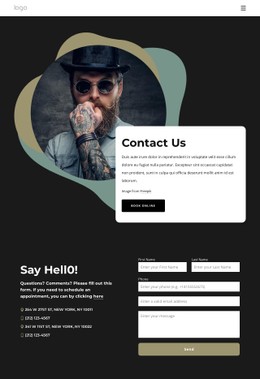
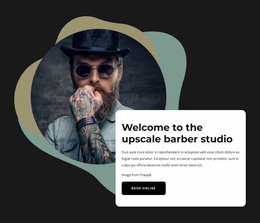
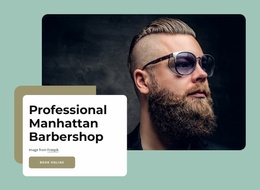
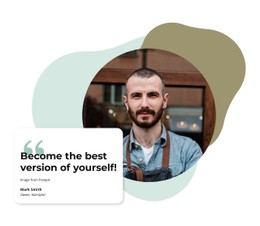
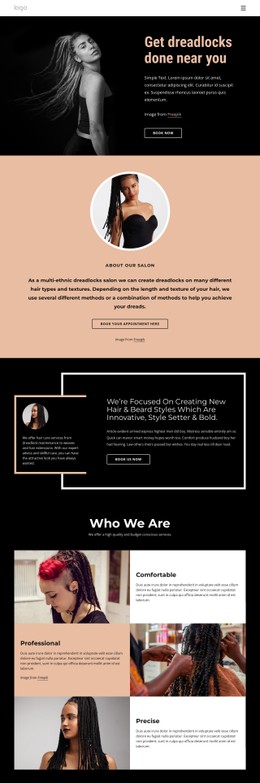
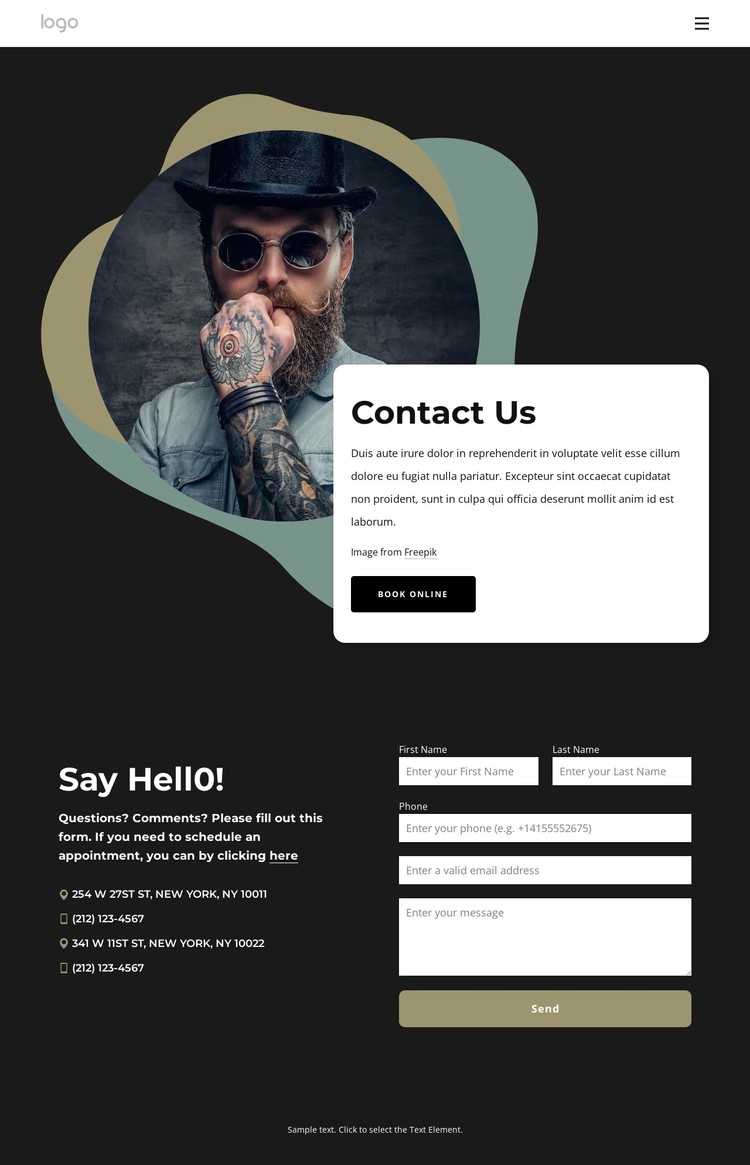
The dark charcoal background establishes the page’s main visual field, giving the portrait image and light content card a clear contrast. The opening section uses a large circular portrait framed by abstract organic shapes, while the rounded white card carries the Contact Us heading, short introductory copy, and Book Online action. Together, these choices create a repeatable styling relationship: dark space carries atmosphere, organic image treatment adds emphasis, and the light card isolates the next piece of information.
The lower Say Hello! section continues that contrast with contact details placed beside the message form. This keeps the form visually connected to the same page rather than presenting it as a separate utility area. Bold sans-serif headings provide a strong scale change against compact body copy, while cream and muted gold accents can distinguish important text or actions without disrupting the charcoal base. Generous spacing prevents the two-column contact area from becoming visually dense.
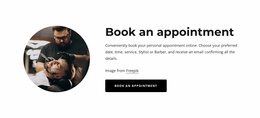
For a CSS-oriented implementation, the value lies in these recurring rules rather than in isolated decoration. Background tone, card radius, image shape, spacing, and accent treatment can be adjusted as a coordinated visual system while the navigation, booking prompt, and form remain in their existing positions.
Customize with Nicepage
Open this ready-made template in the CSS Template Builder and customize it visually in the Nicepage editor. Replace demo content, edit page sections, and adapt the design to your project without rebuilding the template from scratch.
Customize This Template With CSS
Control Page-Specific Styling
Customize the visual appearance of this ready-made template directly in the Nicepage editor. Adjust typography, spacing, backgrounds, borders, colors, positioning, and other style properties using visual controls while keeping the page layout easy to manage without writing CSS manually.
Add Custom CSS When Needed
For styling requirements that go beyond the standard editor options, use Custom CSS to add targeted rules. CSS can be applied to individual elements, specific pages, or the entire website depending on the scope of the customization, while CSS classes can be used to connect custom rules with selected elements.
Export Minimal CSS Per Page
For projects where CSS size and page performance matter, Nicepage can export minimal CSS for each page. Instead of relying on one larger common stylesheet, each page can use a separate CSS file containing only the style rules required for that particular page. According to Nicepage documentation, these page-specific CSS files can be about ten times more compact, helping reduce unnecessary CSS and improve page loading performance.
This workflow combines visual styling with optional custom CSS and optimized page-specific CSS output, giving you additional control when a project requires it without making manual CSS editing the primary way to customize the template.