Empowering Digital Growth Web Page Design

Edit Template Offline
2. Create new page and search for id 6393004
Edit Template Online
Create Awesome Websites


Free Nicepage Builder
Keywords
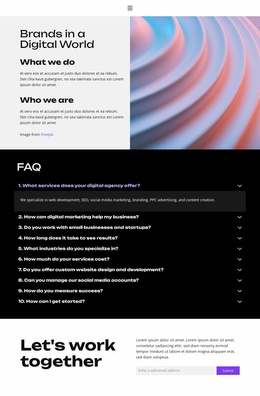
The Split Overview and Dark Narrative Create a Deliberate Reading Rhythm
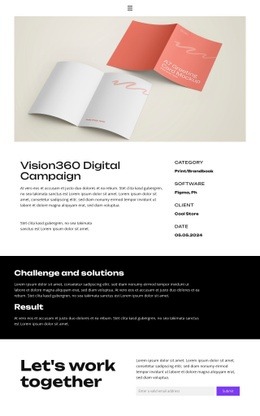
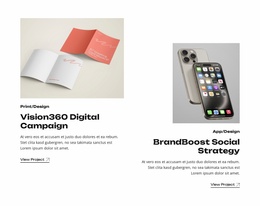
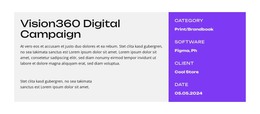
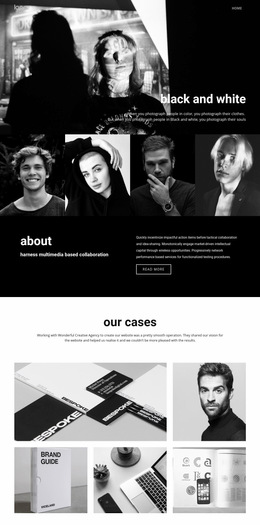
The composition changes density as the visitor moves down the page. A single large project image provides an open visual beginning, with ample light space around it. The following split section introduces a tighter arrangement: descriptive text occupies one column while category, software, client, and date details form a compact reference column. This contrast between broad imagery and labeled information gives the page a clear first transition without relying on excessive decoration.
The black Challenge and solutions block creates the strongest spatial and tonal break. Centered text is stacked vertically, allowing the challenge narrative to lead into Result while the dark background holds both parts together. The final contact section changes the balance again, using two columns to place a large collaboration heading opposite supporting copy and an email submission form. That arrangement keeps the response area visually related to the case study while giving it a distinct function. Bold sans-serif headings, generous spacing, and restrained metadata labels control the hierarchy across these changes. Navigation and mobile navigation frame the page, and the dark footer provides a compact closing band. The result is a single-page composition based on deliberate transitions between image, reference data, narrative, and response.
Customize with Nicepage
Open this ready-made template in the Web Page Design Builder and customize it visually in the Nicepage editor. Replace demo content, edit page sections, and adapt the design to your project without rebuilding the template from scratch.
Design a Web Page Section by Section
Choose a Design for Each Section
Build the page from individual content sections instead of starting with a fixed full-page layout. Use Block Designs to browse ready-made sections for different purposes, including introductions, services, galleries, testimonials, contact forms, pricing, and other common parts of a web page. Search or filter the available designs to find a layout that fits the content you want to add.
Combine Blocks and Page Elements
Add selected Blocks to the page and arrange them in the order that supports the page's purpose. A hero section can introduce the main message, followed by services, benefits, portfolio content, testimonials, calls to action, or contact information.
Inside each section, use Web Page Elements such as Text, Image, Hyperlink, Grid, Gallery, and other elements to build and present the page content. Individual elements can be added and adjusted within the Blocks, giving you more control over the composition of each section without having to create the complete layout from scratch.
Refine the Page Layout and Flow
After assembling the main sections, adjust their content, spacing, backgrounds, images, typography, and element placement in the Nicepage editor. Reorder Blocks when necessary and refine the transition from one section to the next so the information hierarchy and visual flow remain clear throughout the page.
This workflow makes the template useful as a web page design that can be composed from ready-made sections, customized with individual page elements, rearranged, and adapted to the content and purpose of an individual page.