Bbq weekend Web Page Design


Bold Type, Centered Details, and a Lower Circular Anchor
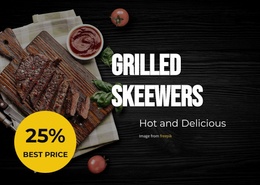
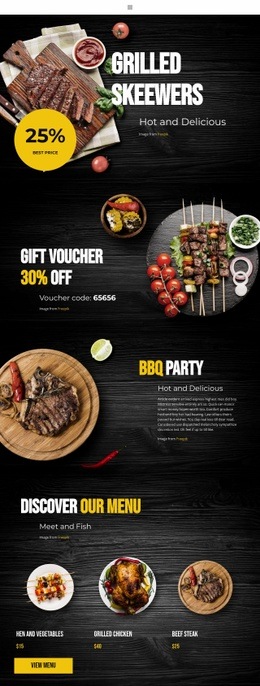
The composition begins with a strong image field that allows the event heading to read as the first point of entry. Large bold typography contrasts with the dark wood and grilled-food background, while the centered activity details create a narrower information layer beneath the title. Music / Food and Beer / Dance are grouped closely enough to read as one event summary rather than separate content cards. The circular badge containing 28 April then extends the composition downward and gives the hero a clear visual anchor.
As one section in a web page, this arrangement can create a high-impact transition into more detailed event content. Its full-width image gives the block visual presence, but the internal hierarchy remains simple: title, activities, date, and attribution. The yellow accent helps guide the eye from the highlighted heading word to the date badge, creating continuity across the vertical composition. Because the block is static, its page contribution comes from spatial emphasis and information order rather than interaction. Neighboring sections can provide schedules, descriptions, or response content, allowing this hero to introduce the event without absorbing the entire page structure.
Customize with Nicepage
Open this ready-made template in the Web Page Design Builder and customize it visually in the Nicepage editor. Replace demo content, edit page sections, and adapt the design to your project without rebuilding the template from scratch.
Edit Template Offline
2. Create a new page or select existing
3. Click Add new block, search for id 5708511 and click enter
Edit Template Online
Create Awesome Websites


Free Nicepage Builder
Keywords
Design a Web Page Section by Section
Choose a Design for Each Section
Build the page from individual content sections instead of starting with a fixed full-page layout. Use Block Designs to browse ready-made sections for different purposes, including introductions, services, galleries, testimonials, contact forms, pricing, and other common parts of a web page. Search or filter the available designs to find a layout that fits the content you want to add.
Combine Blocks and Page Elements
Add selected Blocks to the page and arrange them in the order that supports the page's purpose. A hero section can introduce the main message, followed by services, benefits, portfolio content, testimonials, calls to action, or contact information.
Inside each section, use Web Page Elements such as Text, Image, Hyperlink, Grid, Gallery, and other elements to build and present the page content. Individual elements can be added and adjusted within the Blocks, giving you more control over the composition of each section without having to create the complete layout from scratch.
Refine the Page Layout and Flow
After assembling the main sections, adjust their content, spacing, backgrounds, images, typography, and element placement in the Nicepage editor. Reorder Blocks when necessary and refine the transition from one section to the next so the information hierarchy and visual flow remain clear throughout the page.
This workflow makes the template useful as a web page design that can be composed from ready-made sections, customized with individual page elements, rearranged, and adapted to the content and purpose of an individual page.