Architecture and design One Page Template


Edit Template Offline
2. Create new page and search for id 14349
Edit Template Online
Create Awesome Websites


Free Nicepage Builder
Keywords
Services, project slides, and Contact us create distinct page destinations
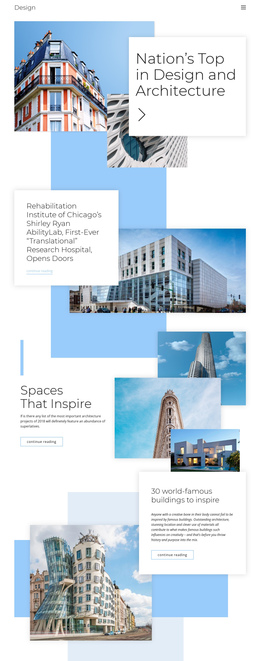
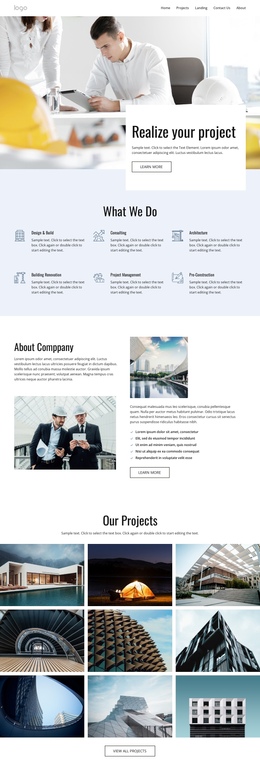
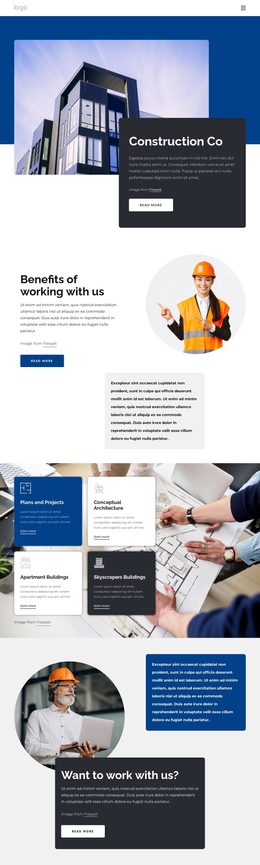
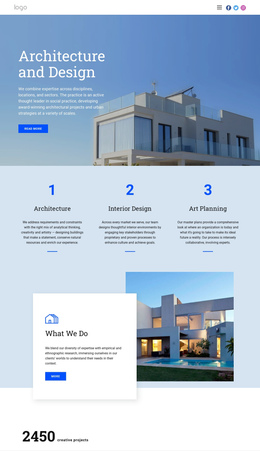
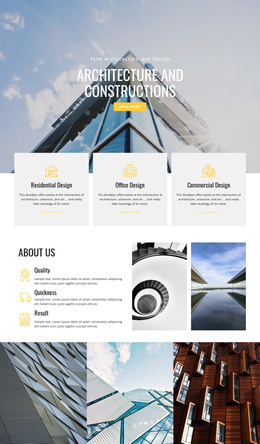
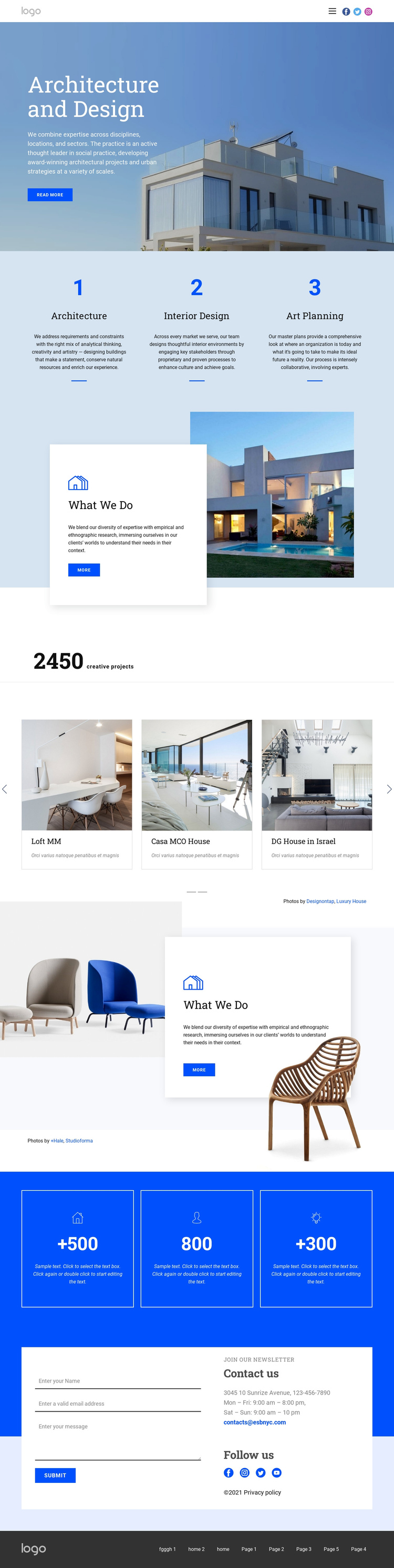
The long layout contains several meaningful information zones that can be explored within one continuous document. The header and hero establish the first destination, with the Architecture and Design message, building image, introductory text, and Read more action giving visitors immediate context. The following three service columns provide a second clear destination by separating Architecture, Interior Design, and Art Planning instead of combining them into one dense paragraph.
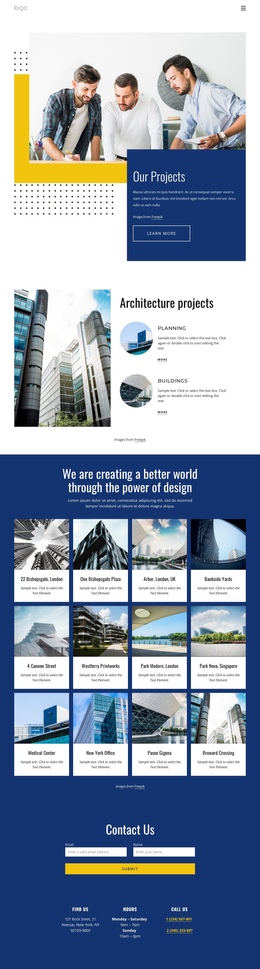
The two overlapping What We Do sections create additional stops in the content journey. Their image-and-card relationship lets explanatory practice content alternate with visual material, while the selected-project carousel creates a dedicated work-sample area containing six project cards across two slides. The photography credit lines remain small supporting destinations within that sequence. Farther down, the blue band with three outlined statistics changes the visual rhythm before the visitor reaches the inquiry section.
Contact us functions as the closing content destination, not merely as a conversion endpoint. The form, contact information, Follow us heading, and social links collect the practical details needed to finish the page journey, while the footer provides another navigation boundary. This structure suits a one-page interpretation because several types of information—services, practice explanation, projects, metrics, and contact—can remain available through the same page without requiring separate URLs or invented anchor behavior.
Customize with Nicepage
Open this ready-made template in the One Page Template Builder and customize it visually in the Nicepage editor. Replace demo content, edit page sections, and adapt the design to your project without rebuilding the template from scratch.
Build a Navigable One-Page Website
Connect the Menu to Page Sections
Organize the website as a sequence of sections on a single page and use the Menu For One-Page Site to connect menu items with individual page Blocks. Visitors can jump directly to sections such as About, Services, Testimonials, or Contact without opening separate pages.
Keep the Website on One URL
A one-page template can combine several parts of a small website within one continuous page. Arrange the Header, introduction, services, portfolio, company information, reviews, contact details, and other relevant sections in the order that fits the project while keeping them accessible through the same page navigation.
Make Long Pages Easier to Navigate
For longer one-page websites, keep navigation labels short and connected to meaningful sections so visitors can move through the page without relying only on scrolling. You can also use the Back To Top element to provide a quick way back to the beginning after longer sections.
This workflow makes the template suitable for compact websites that need several distinct content sections while keeping the complete visitor experience on one URL.