Gourmet Experience Landing Page
Edit Template Offline
2. Create new page and search for id 6331064
Edit Template Online
Create Awesome Websites


Free Nicepage Builder
Keywords
Menu Progression Ends With a Direct Table-Booking Response
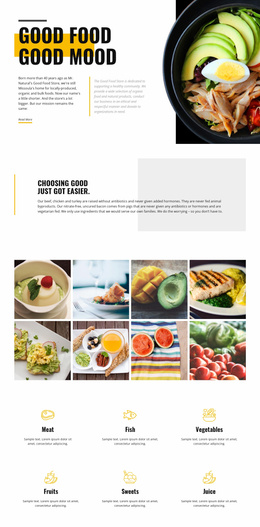
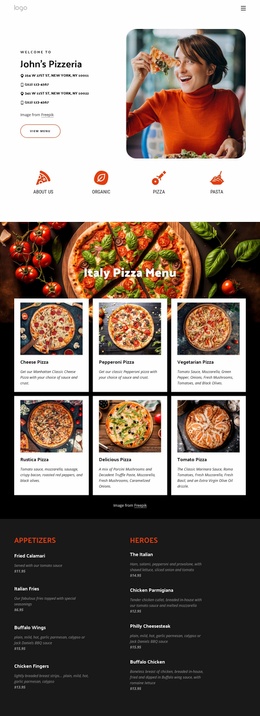
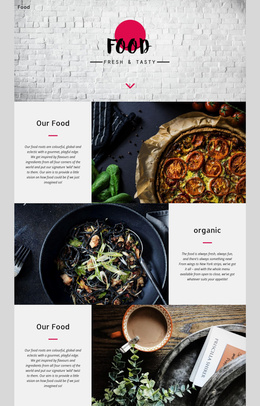
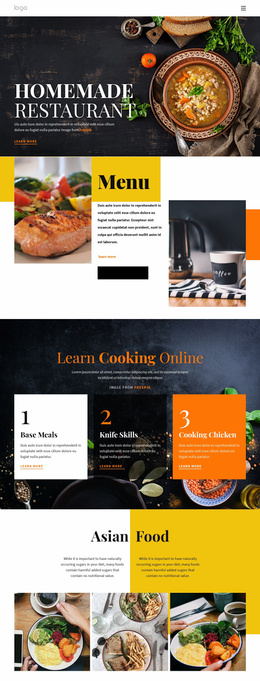
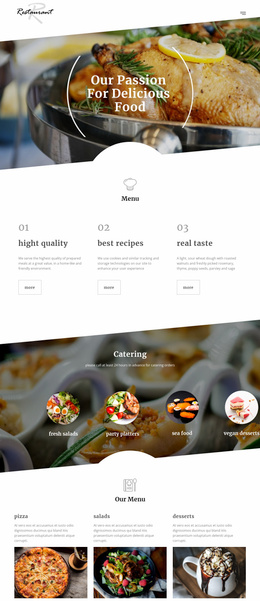
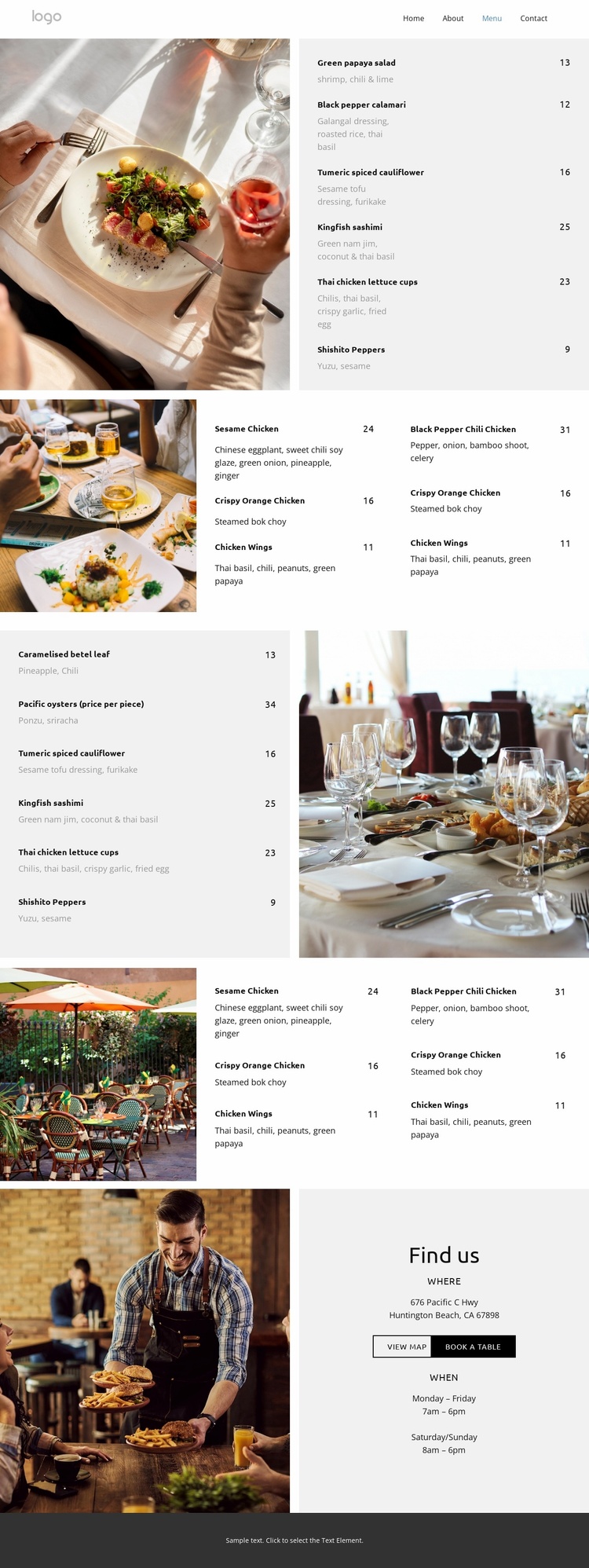
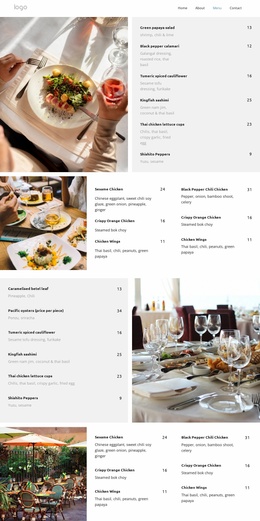
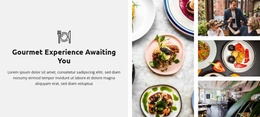
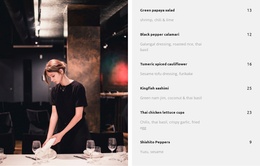
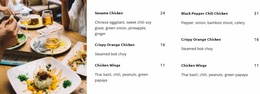
The page begins by presenting the food itself, which makes the first impression visual and immediately relevant to a restaurant visit. A large photograph sits beside six priced dishes, allowing the menu to establish both appetite appeal and concrete offer information in the same view. The following grid introduces two compact columns of main-course entries, and later sections repeat the menu logic with a reversed image-and-list arrangement and another two-column continuation. This progression supplies variety without moving attention away from the dining offer.
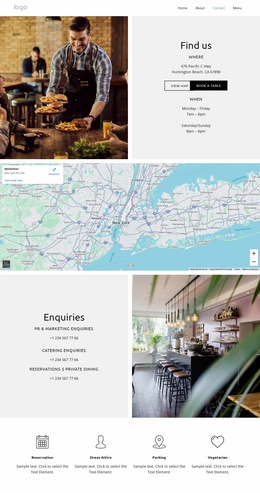
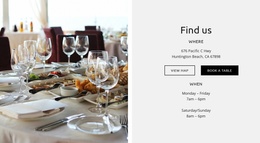
The conversion path becomes explicit in the closing “Find us” section. After visitors have encountered multiple dish groups, prices ranging from 9 to 34, and warm food photography, they reach the displayed address, opening hours, map link, and “book a table” action together. The location details answer where and when, while the reservation link provides the clearest next step. Because the page keeps secondary information subordinate to menu discovery and the final booking response, it can support a focused restaurant campaign without needing to invent a separate offer or promotional claim. The structure is especially suitable when the desired visitor outcome is deciding to visit and reserve a table.
Customize with Nicepage
Open this ready-made template in the Landing Page Builder and customize it visually in the Nicepage editor. Replace demo content, edit page sections, and adapt the design to your project without rebuilding the template from scratch.
Build a Landing Page Around One Conversion Goal
Focus on One Primary Action
Use the landing page to guide visitors toward one measurable response, such as requesting a quote, registering, subscribing, booking a consultation, applying for a service, or submitting an inquiry. Keep the primary call-to-action consistent across the important sections so the headline, supporting content, form, and CTA buttons work toward the same campaign goal instead of competing for attention.
Capture Leads With a Form
Use the Contact Form Element to add a contact, subscription, application, or other conversion form directly to the landing page. Customize the form fields, layout, labels, inputs, and button to collect the information required for your campaign while keeping the form focused on the action you want visitors to complete.
Nicepage also provides several form submission options. Form submissions can be sent to Email, stored as Leads, added to Google Sheets, passed to a custom URL or server endpoint, or used to populate a MailChimp mailing list. This provides practical options for collecting inquiries, registrations, subscriptions, applications, and other campaign responses.
Manage Leads and Campaign Responses
When submissions are stored as Leads, you can use Contact Form Leads to review the information collected through the landing page and use it for follow-up. Keep the form connected to the same offer and primary CTA presented throughout the page so visitors move from the campaign message to a clear conversion action.
This workflow makes the template suitable for landing pages where the offer, content, call-to-action, form, and lead collection process work together toward one defined conversion goal.

Design Set (14)
-

-
-
-
-
-
-
Free Website Builder SoftwareDownload
-
-
-
-
More from Food & Restaurant Landing Pages
-
Free Website Builder SoftwareDownload