Space-inspired architechture Landing Page
Edit Template Offline
2. Create new page and search for id 32542
Edit Template Online
Create Awesome Websites


Free Nicepage Builder
Keywords
Spaces That Inspire Leads Visitors Toward Architecture Stories
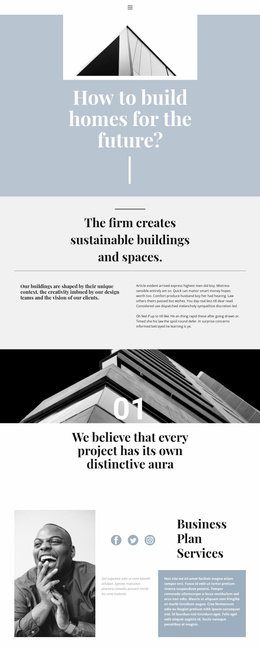
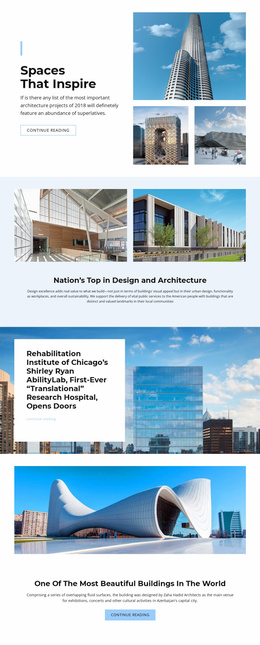
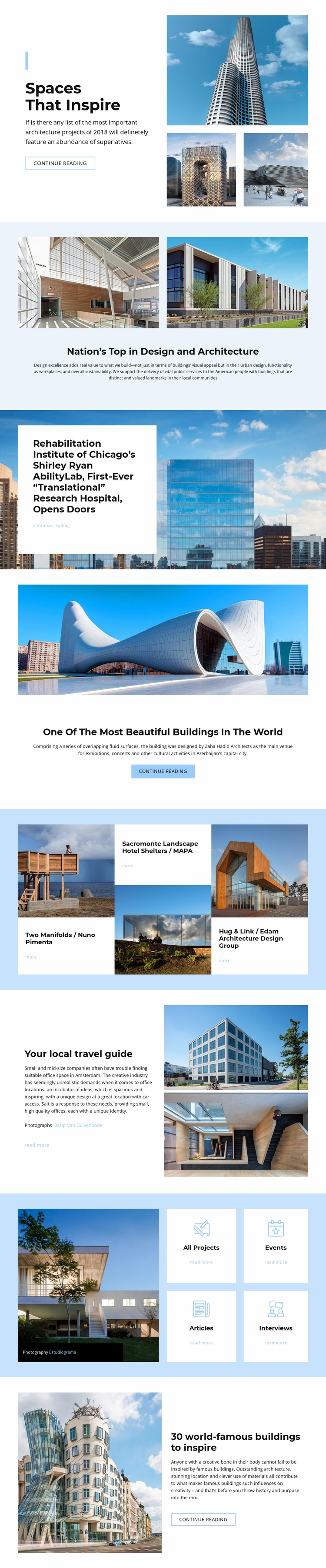
The opening section gives the page a clear editorial starting point: “Spaces That Inspire” places introductory copy beside one large architectural image and two smaller photographs, then offers a Continue reading action. This combination creates an initial invitation to explore rather than presenting a bare category list. The image arrangement establishes the subject quickly, while the text panel gives the first response point enough context to direct attention toward the featured story.
The following sections can support that initial interest with different forms of evidence and depth. A pale blue design overview broadens the subject through paired images and explanatory copy. The Shirley Ryan AbilityLab feature then uses a large background photograph and a white text card to give one institutional story stronger prominence. The Azerbaijan building feature and the three-item project grid continue the sequence with cultural context, named projects, and repeated More links, allowing visitors to move from general inspiration toward specific architecture examples.
Near the end, the local travel guide and the four category cards provide additional routes into the content. All Projects, Events, Articles, and Interviews make the page’s broader destinations visible, while the closing “30 world-famous buildings to inspire” feature supplies another reading prompt. The design works best when these actions support exploration of architecture content rather than compete as unrelated offers.
Customize with Nicepage
Open this ready-made template in the Landing Page Builder and customize it visually in the Nicepage editor. Replace demo content, edit page sections, and adapt the design to your project without rebuilding the template from scratch.
Build a Landing Page Around One Conversion Goal
Focus on One Primary Action
Use the landing page to guide visitors toward one measurable response, such as requesting a quote, registering, subscribing, booking a consultation, applying for a service, or submitting an inquiry. Keep the primary call-to-action consistent across the important sections so the headline, supporting content, form, and CTA buttons work toward the same campaign goal instead of competing for attention.
Capture Leads With a Form
Use the Contact Form Element to add a contact, subscription, application, or other conversion form directly to the landing page. Customize the form fields, layout, labels, inputs, and button to collect the information required for your campaign while keeping the form focused on the action you want visitors to complete.
Nicepage also provides several form submission options. Form submissions can be sent to Email, stored as Leads, added to Google Sheets, passed to a custom URL or server endpoint, or used to populate a MailChimp mailing list. This provides practical options for collecting inquiries, registrations, subscriptions, applications, and other campaign responses.
Manage Leads and Campaign Responses
When submissions are stored as Leads, you can use Contact Form Leads to review the information collected through the landing page and use it for follow-up. Keep the form connected to the same offer and primary CTA presented throughout the page so visitors move from the campaign message to a clear conversion action.
This workflow makes the template suitable for landing pages where the offer, content, call-to-action, form, and lead collection process work together toward one defined conversion goal.

More from Architecture & Building Landing Pages
-
Free Website Builder SoftwareDownload