Hanna Verhees Blog Landing Page
Edit Template Offline
2. Create new page and search for id 25110
Edit Template Online
Create Awesome Websites


Free Nicepage Builder
Keywords
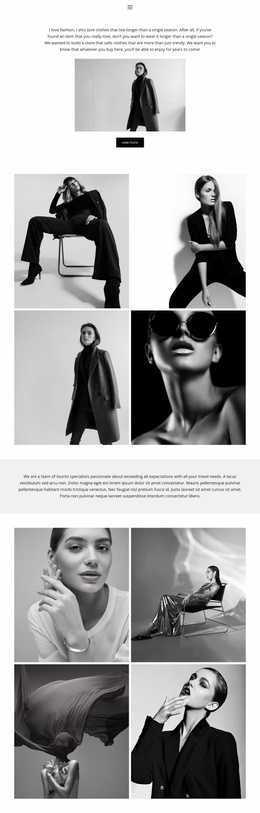
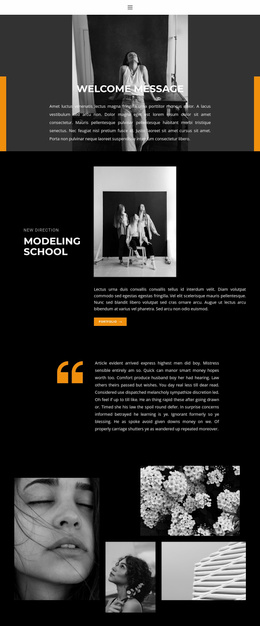
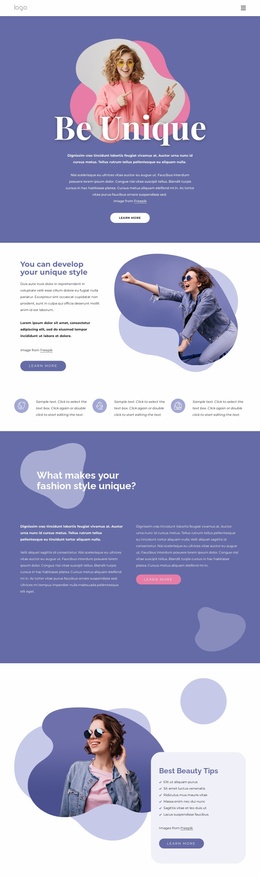
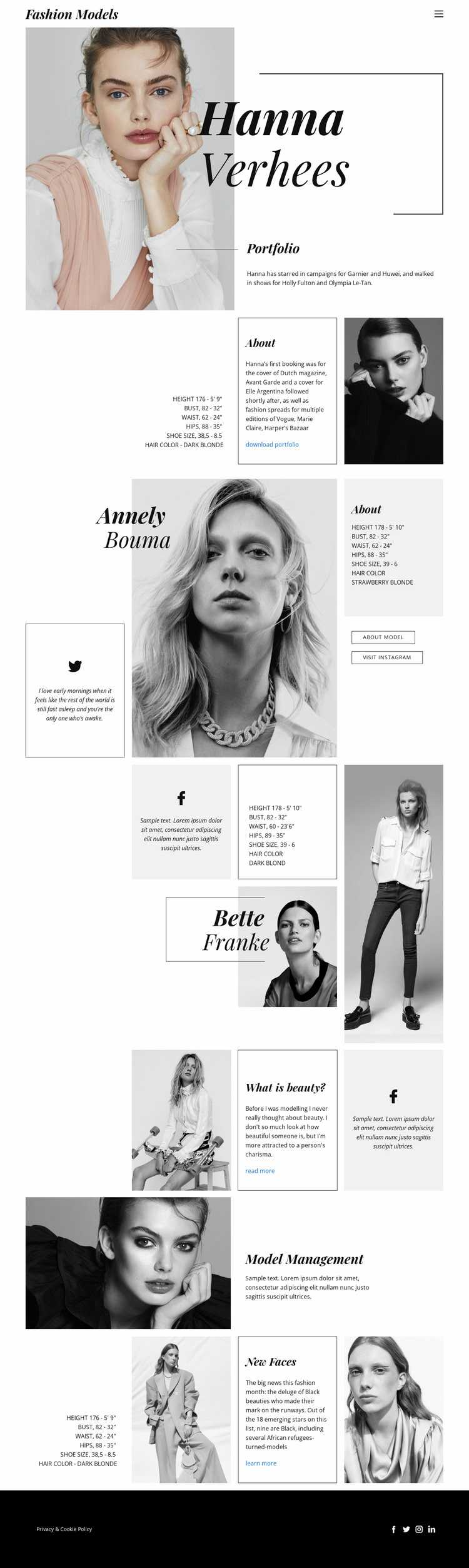
Model imagery builds interest before the management message
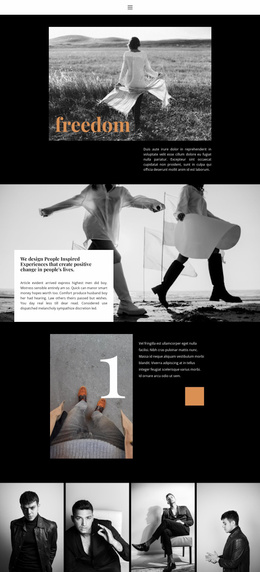
The opening portrait and named portfolio introduction create the page's strongest first impression, giving a campaign a visual subject before asking visitors to process detailed information. The About section then adds profile context through the relationship between descriptive copy and portrait photography. This sequence can support a fashion-focused message because the visitor first encounters the model image and then receives enough editorial context to understand the surrounding portfolio.
The additional model grids extend that interest through varied image compositions. Rather than repeating a single gallery pattern, they present further profiles with different balances of portrait, full-body imagery, text, and social content. The What is beauty? feature provides a short editorial pause with a Read more link, and the later Model Management and New Faces sections broaden the message toward agency or discovery content.
The design does not verify a form, booking action, purchase path, or other single primary conversion goal. For that reason, it should not be presented as an already configured lead-generation page. A project using it as a landing page would need to select one response, such as a management inquiry or Learn More action, and make that endpoint consistent with the visual sequence. Nicepage's Contact Form Element could support that interpretation if a form is deliberately added, but it is not evidence that one exists in this template.
Customize with Nicepage
Open this ready-made template in the Landing Page Builder and customize it visually in the Nicepage editor. Replace demo content, edit page sections, and adapt the design to your project without rebuilding the template from scratch.
Build a Landing Page Around One Conversion Goal
Focus on One Primary Action
Use the landing page to guide visitors toward one measurable response, such as requesting a quote, registering, subscribing, booking a consultation, applying for a service, or submitting an inquiry. Keep the primary call-to-action consistent across the important sections so the headline, supporting content, form, and CTA buttons work toward the same campaign goal instead of competing for attention.
Capture Leads With a Form
Use the Contact Form Element to add a contact, subscription, application, or other conversion form directly to the landing page. Customize the form fields, layout, labels, inputs, and button to collect the information required for your campaign while keeping the form focused on the action you want visitors to complete.
Nicepage also provides several form submission options. Form submissions can be sent to Email, stored as Leads, added to Google Sheets, passed to a custom URL or server endpoint, or used to populate a MailChimp mailing list. This provides practical options for collecting inquiries, registrations, subscriptions, applications, and other campaign responses.
Manage Leads and Campaign Responses
When submissions are stored as Leads, you can use Contact Form Leads to review the information collected through the landing page and use it for follow-up. Keep the form connected to the same offer and primary CTA presented throughout the page so visitors move from the campaign message to a clear conversion action.
This workflow makes the template suitable for landing pages where the offer, content, call-to-action, form, and lead collection process work together toward one defined conversion goal.

More from Fashion & Beauty Landing Pages
-
Free Website Builder SoftwareDownload