Massimo Dutti Landing Page


Edit Template Offline
2. Create new page and search for id 18673
Edit Template Online
Create Awesome Websites


Free Nicepage Builder
Keywords
Collection Discovery Builds Toward Product and Store Actions
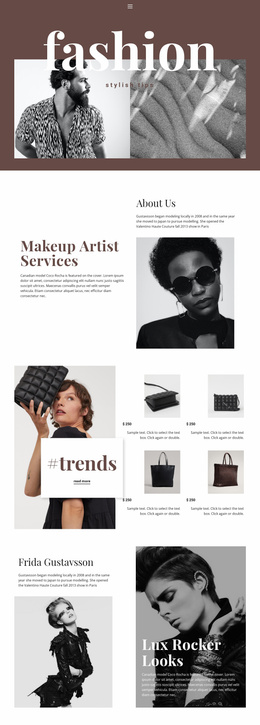
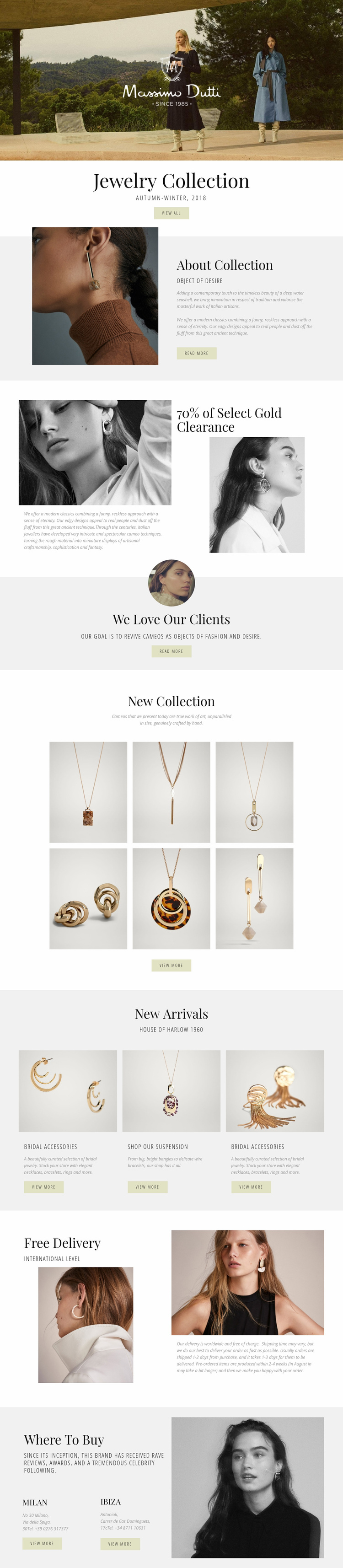
The opening hero and centered Jewelry Collection section establish the subject quickly, using large fashion imagery before visitors encounter more detailed content. The About Collection split section then provides a place for descriptive copy and a Read more action, allowing the page to introduce the collection without asking the visitor to begin with a product grid. The clearance feature changes the emphasis from editorial introduction to a stronger commercial message, while the client statement adds a quieter brand-oriented pause before the next shopping sequence.
The six-image New Collection gallery works as visual proof of the range, encouraging visitors to inspect the jewelry before reaching the three New Arrivals cards. Those cards present product-focused content in a more structured format, with categories, descriptions, and view-oriented actions that can support the next step in browsing. Free Delivery addresses a practical purchase consideration, and the Where To Buy section gives the page a final response path through Milan and Ibiza location information. Because the page includes collection discovery, product features, delivery messaging, and buying locations, its sections can be aligned around the goal of moving visitors from interest to shopping or store visit. The structure supports a focused retail campaign without requiring unrelated navigation to compete with the jewelry story.
Customize with Nicepage
Open this ready-made template in the Landing Page Builder and customize it visually in the Nicepage editor. Replace demo content, edit page sections, and adapt the design to your project without rebuilding the template from scratch.
Build a Landing Page Around One Conversion Goal
Focus on One Primary Action
Use the landing page to guide visitors toward one measurable response, such as requesting a quote, registering, subscribing, booking a consultation, applying for a service, or submitting an inquiry. Keep the primary call-to-action consistent across the important sections so the headline, supporting content, form, and CTA buttons work toward the same campaign goal instead of competing for attention.
Capture Leads With a Form
Use the Contact Form Element to add a contact, subscription, application, or other conversion form directly to the landing page. Customize the form fields, layout, labels, inputs, and button to collect the information required for your campaign while keeping the form focused on the action you want visitors to complete.
Nicepage also provides several form submission options. Form submissions can be sent to Email, stored as Leads, added to Google Sheets, passed to a custom URL or server endpoint, or used to populate a MailChimp mailing list. This provides practical options for collecting inquiries, registrations, subscriptions, applications, and other campaign responses.
Manage Leads and Campaign Responses
When submissions are stored as Leads, you can use Contact Form Leads to review the information collected through the landing page and use it for follow-up. Keep the form connected to the same offer and primary CTA presented throughout the page so visitors move from the campaign message to a clear conversion action.
This workflow makes the template suitable for landing pages where the offer, content, call-to-action, form, and lead collection process work together toward one defined conversion goal.

More from Fashion & Beauty Landing Pages
-
Free Website Builder SoftwareDownload