Protect The Oceans HTML Template


Edit Template Offline
2. Create new page and search for id 14604
Edit Template Online
Create Awesome Websites


Free Nicepage Builder
Keywords
Pollution, Cleanup, and Sustainable Choices Form a Complete Static Page
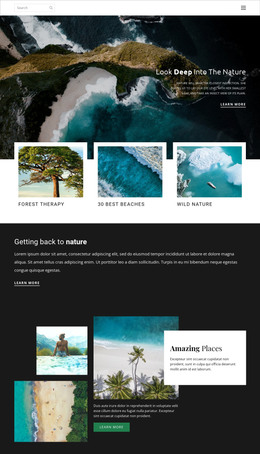
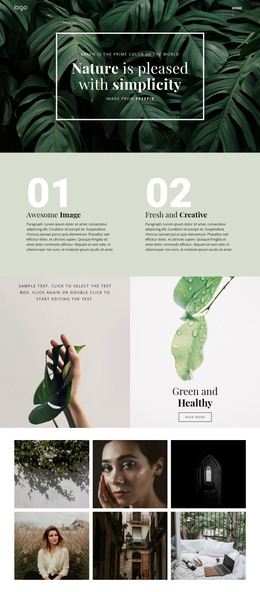
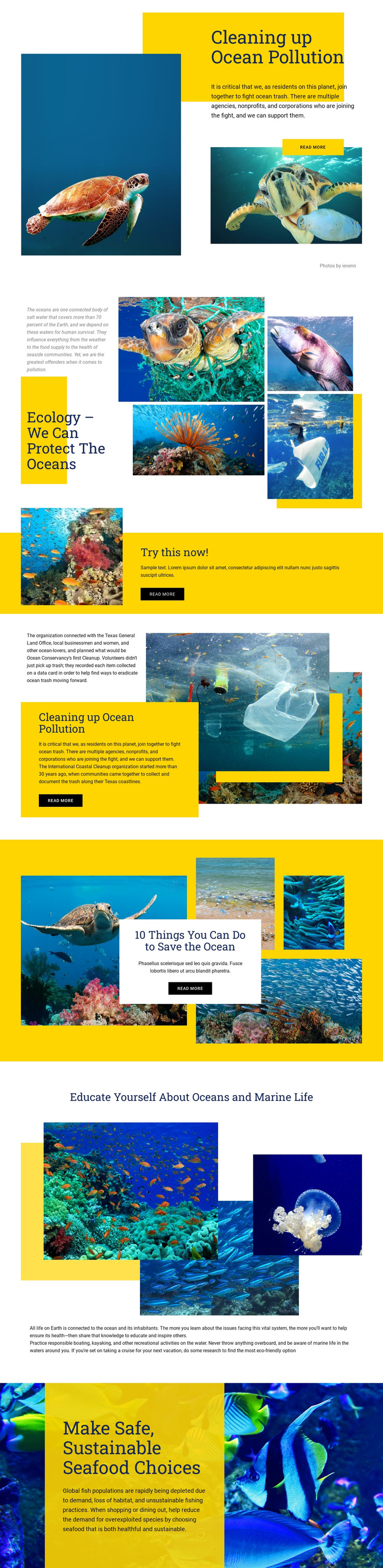
The design already contains the main content sequence needed for a self-contained static HTML page about ocean conservation. The opening introduces ocean pollution with a large headline, supporting copy, stacked photographs, and a Read More button. The next gallery adds ecological context through explanatory text and several underwater images, so the page does not depend on a single hero message to communicate its subject. It develops the topic through distinct sections rather than leaving the reader with only a campaign statement.
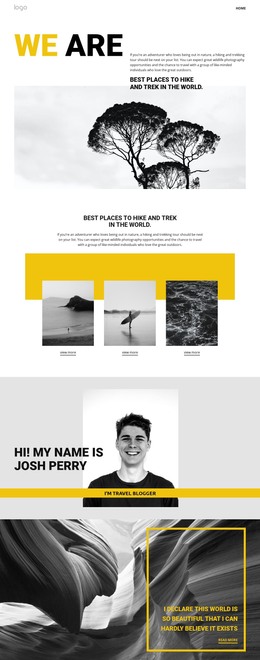
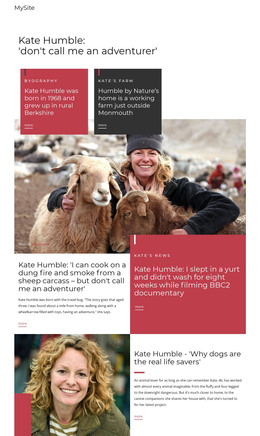
The later arrangement adds practical and organizational depth. A yellow action band introduces an immediate prompt, the coastal cleanup section explains participation and references the International Coastal Cleanup, and the “10 Things You Can Do to Save the Ocean” section turns the broad issue into a list-oriented direction for readers. Marine-life education and sustainable seafood guidance extend the subject beyond cleanup alone. Together, these content areas create a finished static presentation with a recognizable beginning, middle, and closing theme. The strong yellow, white, and deep blue palette, combined with vivid underwater photography and generous spacing, keeps the independent page visually unified while its separate blocks remain easy to replace with verified project content.
Customize with Nicepage
Open this ready-made template in the HTML Builder and customize it visually in the Nicepage editor. Replace demo content, edit page sections, and adapt the design to your project without rebuilding the template from scratch.
Export and Use This Template as an HTML Website
Create a Portable HTML Website
When the template is ready, use the HTML Export option to create a static website with the files required for deployment. The exported website can be used independently of the Nicepage editor and deployed on your preferred hosting.
Nicepage also provides SEO settings and optimization features, including Page Titles and Descriptions, Canonical settings, headings, image Alt Text, and other page-level properties that help prepare the website for search engines.
Deploy Without a CMS
Upload the finished website to the hosting environment that fits your project. Because the exported site does not require WordPress, Joomla, or another CMS to deliver its pages, it can be placed on your own server, uploaded to a hosting provider, or deployed through an existing web infrastructure.
Hand Off the Website Files
The generated website files can also be provided to a client, developer, or hosting team. They remain available outside the Nicepage editor for deployment, technical review, or project-specific development when additional work is required.
This workflow makes the template a practical foundation for a portable static website that can be exported from the Nicepage editor and deployed independently.

More from Nature HTML Templates
-
Free Website Builder SoftwareDownload