Nutrition health coach HTML5 Template
Edit Template Offline
2. Create new page and search for id 6423592
Edit Template Online
Create Awesome Websites


Free Nicepage Builder
Keywords
Navigation, Principle Lists, and Forms Create a Layered Page Hierarchy
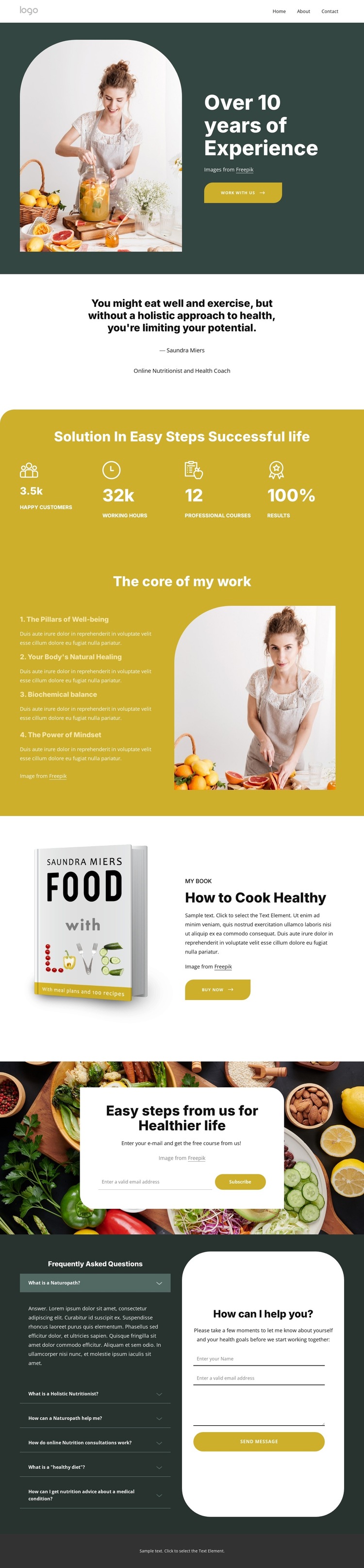
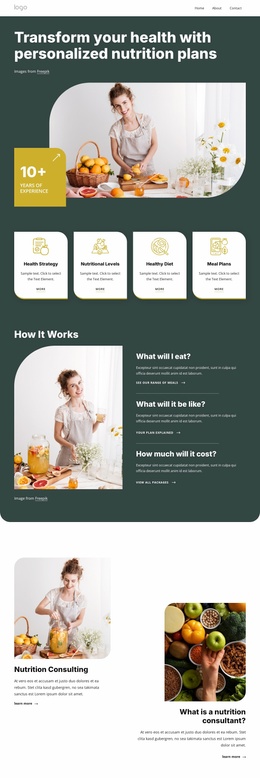
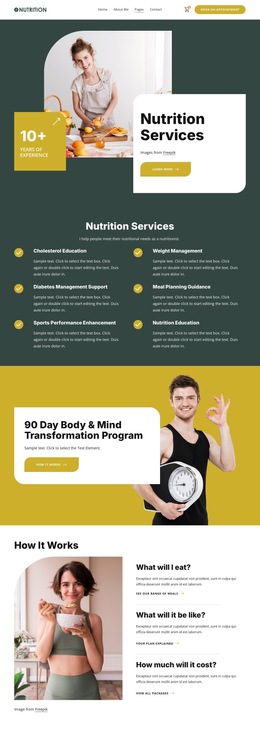
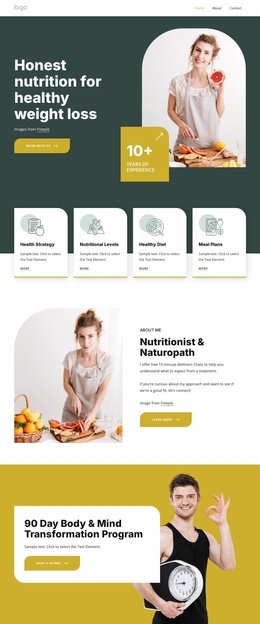
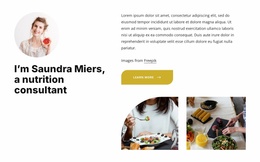
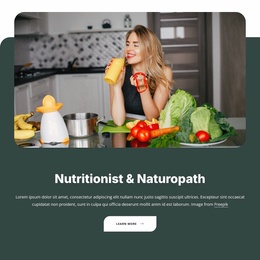
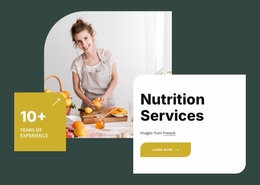
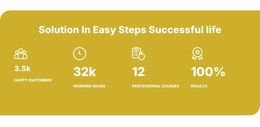
The page hierarchy moves from shared navigation into progressively more specific content. The header establishes the site-level entry point with page links, a shopping link, and appointment access. The first split section then introduces the practitioner through a portrait and experience statement, while the centered quotation creates a separate interpretive pause before the metric band and the four-part wellness explanation.
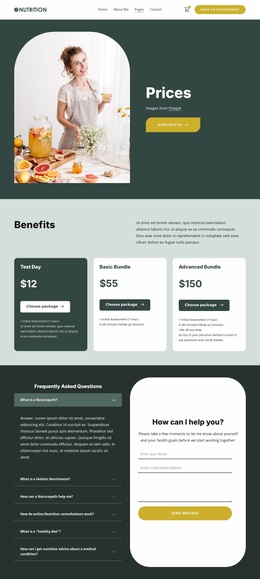
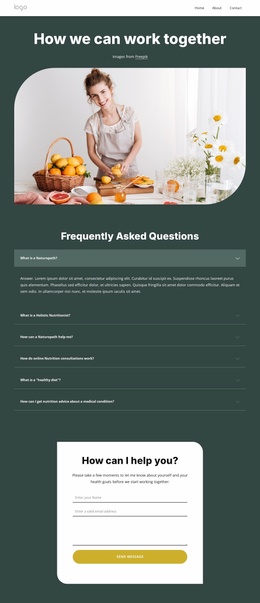
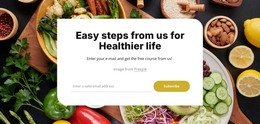
The later structure adds distinct content groups rather than repeating the same profile pattern. The Product Details area gives How to Cook Healthy its own image, title, description, and purchase action. The subscription section uses a separate form context over food imagery, and the FAQ region combines six expandable topics with a consultation form. Finally, the footer gathers service categories, quick links, social links, and newsletter content into a shared closing region.
This organization is useful when inspecting the template as an HTML5 page because the relationships between major areas are easy to follow: introduction, philosophy, evidence, method, product, subscription, questions, consultation, and footer navigation. The analysis does not require unsupported claims about specific semantic tags. Its strength is the visible hierarchy of sections and nested content roles, which provides a manageable structure for extending or reviewing the page.
Customize with Nicepage
Open this ready-made template in the HTML5 Template Builder and customize it visually in the Nicepage editor. Replace demo content, edit page sections, and adapt the design to your project without rebuilding the template from scratch.
Explore This HTML5 Template Structure
Navigate the Page Structure
Customize this ready-made HTML5 template visually in the Nicepage editor while keeping its page organization easy to understand. Use the Layers panel to view the hierarchy of the Header, Blocks, Containers, Elements, and Footer, navigate between different parts of the page, and quickly select items within the layout.
The Layers panel also provides practical controls for working with more complex pages. Blocks, Containers, and Elements can be renamed for easier identification, temporarily hidden while editing, or locked to prevent accidental changes. The outline can also expose the internal structure of elements such as Menus and Contact Forms.
Work With Organized Page Sections
Blocks divide the page into major content sections, while Containers and Elements organize the content inside them. Keeping this hierarchy visible makes it easier to understand how individual parts of the page relate to one another, especially when a layout contains many nested elements.
You can use the Layers panel to move through this structure instead of selecting everything directly on the canvas, making complex layouts easier to inspect and manage as an organized page hierarchy.
Review and Extend the HTML
After customizing the page visually, the resulting HTML can be reviewed and adapted when code-level changes are required. If a project needs additional markup or functionality beyond the standard page elements, use the HTML Element to add targeted custom HTML where necessary.
This workflow combines visual editing with a clear view of the page hierarchy, making the template useful both as a ready-made design and as an HTML5 project whose structure can be inspected, managed, adapted, and extended.

Design Set (30)
-
Free Website Builder SoftwareDownload
-

-
-
-
-
-
-
-
-
-
-
-
-
-
-
-
-
-
-
-





More from Food & Restaurant HTML5 Templates
-
Free Website Builder SoftwareDownload