PC gaming news Template



Edit Template Offline
2. Create new page and search for id 358254
Edit Template Online
Create Awesome Websites


Free Nicepage Builder
Keywords
A Magazine-Like Mix of Games, Gadgets, and Technology Content
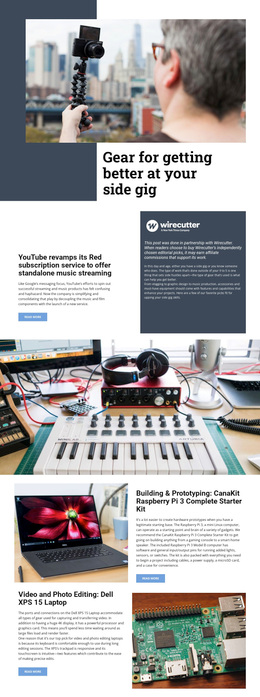
The page opens with a clear editorial promise—PC gaming news, reviews, and guides—then supports that promise with several different forms of content. The benefits section adds explanatory coverage for kids and adults, and its three cards distinguish video games, brain stimulation, and stress relief as related but separate topics. The two-slide Top PC Games carousel brings selected game content into the center of the page with a more active presentation than the surrounding text cards.
The design is also broad enough to move beyond game reviews. A full-width gaming-gadget banner, a free-download invitation, and a VR-Technologies section introduce hardware, access to games, and emerging technology as additional subject areas. Circular images and overlapping shapes make the page feel more like a visual magazine feature than a dense article listing, while the cream cards provide places for concise explanations.
The closing contact form and social icons give the publication a visible reader-connection area, so the template covers discovery, editorial explanation, feature presentation, and response in one design. It is a useful choice for a gaming media concept that needs varied content without abandoning a consistent dark visual direction. The strongest distinction is the relationship between editorial headings, image-led topics, compact cards, and technology-focused sections.
Customize with Nicepage
Open this ready-made template in the Template Builder and customize it visually in the Nicepage editor. Replace demo content, edit page sections, and adapt the design to your project without rebuilding the template from scratch.
Start With a Ready-Made Template
Choose a Design for a New Page
Use a ready-made template as a starting point instead of creating every page from a blank canvas. When adding a new page in Nicepage, browse available designs, compare different layouts, and choose an option that already fits the general purpose and visual direction of your project.
Browse Different Page Designs
Explore Page Designs using search, thematic categories, Design Sets, and full-page previews. The collection includes layouts for different subjects and page purposes, making it easier to compare alternatives before selecting a design to customize.
Customize the Selected Template
After choosing a design, create the page and continue editing it visually in Nicepage. Replace the demo content, adjust images, typography, colors, sections, and other elements, and adapt the ready-made layout to your own content instead of rebuilding the design from the beginning.
Explore More Design Directions
If the first option does not match your project closely enough, return to the design collection and compare other templates before committing to a layout. This makes the template library useful not only for faster page creation, but also for exploring different visual approaches and finding a suitable starting point for a new project.
This workflow gives you access to a broad collection of ready-made designs that can be selected, compared, and customized according to the needs of each new page or project.