My bio Website Template
Edit Template Offline
2. Create new page and search for id 6006663
Edit Template Online
Create Awesome Websites


Free Nicepage Builder
Keywords
Biography, Services, and Contact Establish a Broader Site Foundation
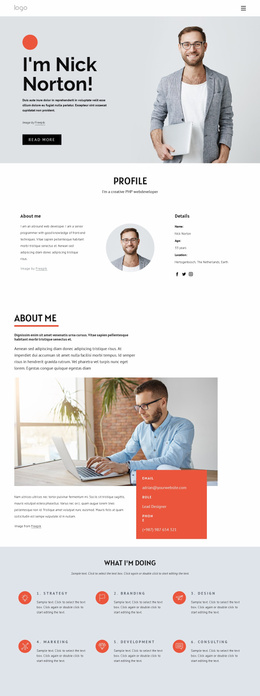
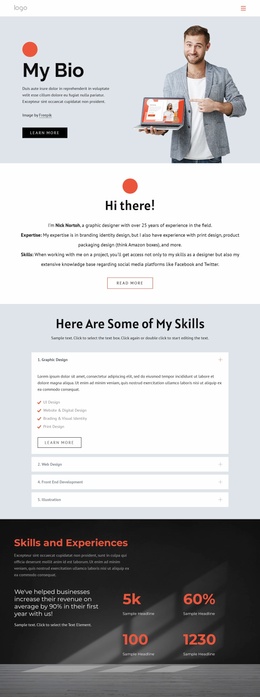
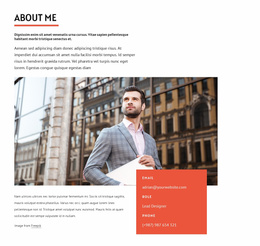
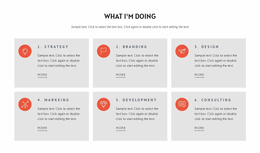
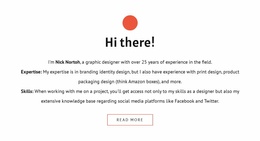
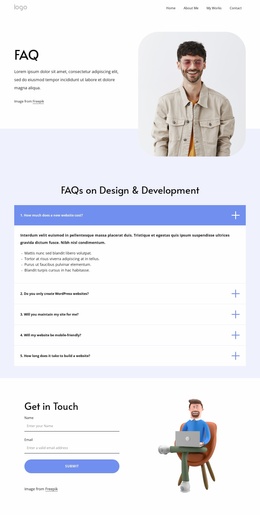
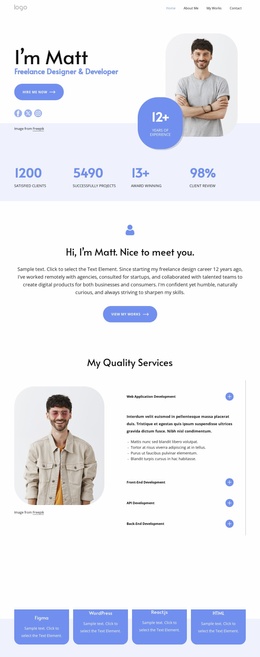
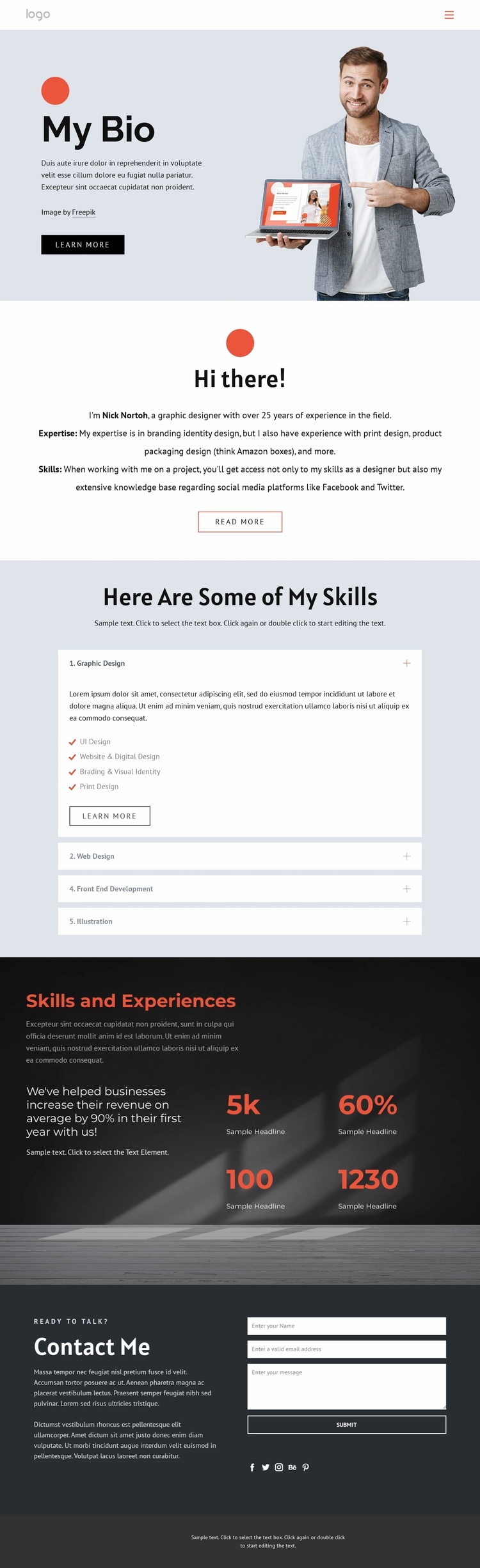
The template already defines several major content areas that a larger designer website could build around. The opening biography and portrait establish the personal identity, while the centered expertise section supplies an introduction that could lead visitors toward more detailed profile or service pages. The accordion then separates graphic design, web design, front-end development, and illustration into distinct categories. Those categories provide a useful information architecture for expanding content, even though the analysis confirms one page rather than a complete multi-page site.
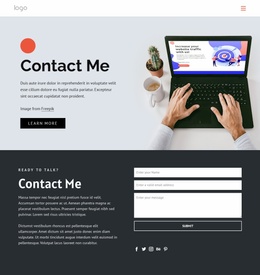
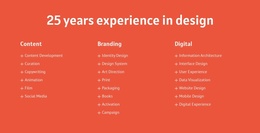
The dark experience block adds a second kind of content area: it combines professional context with four displayed metrics and a highlighted sample claim. Replacing the demo values with verified project evidence would allow this section to support a case-study, experience, or results area later. The final Contact Me block gives the foundation a practical endpoint through inquiry messaging, a form, and links to Facebook, Twitter, Instagram, Behance, and Pinterest. Shared visual decisions—pale blue backgrounds, charcoal contrast, coral accents, portrait imagery, and spacious sans-serif typography—can help additional pages remain connected to the same identity. The template therefore offers a coherent starting information structure for a personal design site without claiming that those additional pages already exist.
Customize with Nicepage
Open this ready-made template in the Website Template Builder and customize it visually in the Nicepage editor. Replace demo content, edit page sections, and adapt the design to your project without rebuilding the template from scratch.
Build a Complete Website From This Template
Customize the Website Visually
Use this ready-made website template as a starting point for your project and adapt its pages visually in Nicepage. Change content, images, typography, navigation, sections, and other design elements while keeping the website together as a single editable project.
Manage Website Pages in One Project
Use the Pages panel to open, add, duplicate, and manage the pages of your website. Work on individual pages while keeping navigation and the overall site structure accessible from the same project, making it easier to develop a complete website instead of managing separate page files.
Expand the Website With Matching Designs
When you need additional pages or sections, use Page Design Sets to find Page and Block Designs created in the same visual style. Design Sets group matching designs together, making it easier to expand the website with new content while maintaining a consistent look across its pages and sections.
Organize Larger Multi-Page Websites
As the website grows, use Page Folders to organize related pages and keep larger multi-page projects easier to navigate in the editor. This is especially useful for websites with separate service pages, company information, contacts, landing pages, and other content areas.
This workflow makes the template a practical foundation for building and expanding a complete website while managing its pages, content, and visual design within one Nicepage project.