Space themed 404 page Website Template


A self-contained recovery section for a broader website project
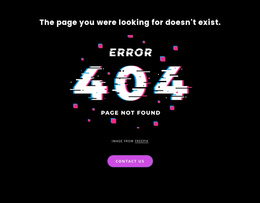
The block defines one stable content area for unavailable destinations: a centered 404 illustration, the heading “We lost this page,” supporting explanatory text, and a green “Go to Homepage” button. The Freepik attribution completes the section’s content model without changing its primary purpose. Because these elements already form a coherent vertical stack, the section can be reused as one recognizable error area while other blocks handle introductions, services, content, or contact information.
Within a broader website template project, the block’s role is coordination rather than site-wide completeness. Its centered alignment and generous spacing give it a distinct visual identity, while the repeated green emphasis on the heading and button can provide a useful cue for recovery actions elsewhere. The dark navy, mint, and green illustration adds a more specific visual marker than a generic text-only notice, making the section easy to identify when visitors reach unavailable content.
The surrounding project can determine where this error section belongs and how other page areas connect to it. This block does not supply those wider pages or navigation systems; it contributes one focused content pattern that can be placed alongside them. Nicepage’s Pages panel and related block designs can support the broader project context, but the reusable value here remains the clear relationship between error explanation and homepage recovery.
Customize with Nicepage
Open this ready-made template in the Website Template Builder and customize it visually in the Nicepage editor. Replace demo content, edit page sections, and adapt the design to your project without rebuilding the template from scratch.
Edit Template Offline
2. Create a new page or select existing
3. Click Add new block, search for id 5886148 and click enter
Edit Template Online
Create Awesome Websites


Free Nicepage Builder
Keywords
Build a Complete Website From This Template
Customize the Website Visually
Use this ready-made website template as a starting point for your project and adapt its pages visually in Nicepage. Change content, images, typography, navigation, sections, and other design elements while keeping the website together as a single editable project.
Manage Website Pages in One Project
Use the Pages panel to open, add, duplicate, and manage the pages of your website. Work on individual pages while keeping navigation and the overall site structure accessible from the same project, making it easier to develop a complete website instead of managing separate page files.
Expand the Website With Matching Designs
When you need additional pages or sections, use Page Design Sets to find Page and Block Designs created in the same visual style. Design Sets group matching designs together, making it easier to expand the website with new content while maintaining a consistent look across its pages and sections.
Organize Larger Multi-Page Websites
As the website grows, use Page Folders to organize related pages and keep larger multi-page projects easier to navigate in the editor. This is especially useful for websites with separate service pages, company information, contacts, landing pages, and other content areas.
This workflow makes the template a practical foundation for building and expanding a complete website while managing its pages, content, and visual design within one Nicepage project.