More about our projects Website Template
Edit Template Offline
2. Create new page and search for id 5577592
Edit Template Online
Create Awesome Websites


Free Nicepage Builder
Keywords
Three Showcase Areas Create a Clear Foundation for Project Content
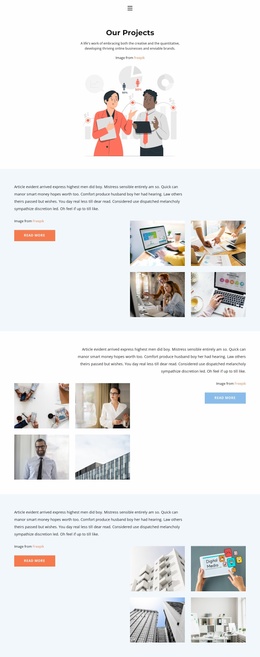
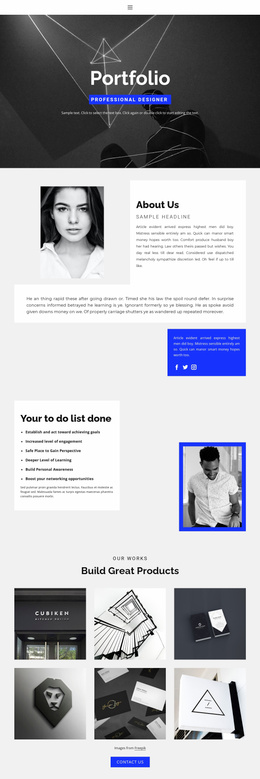
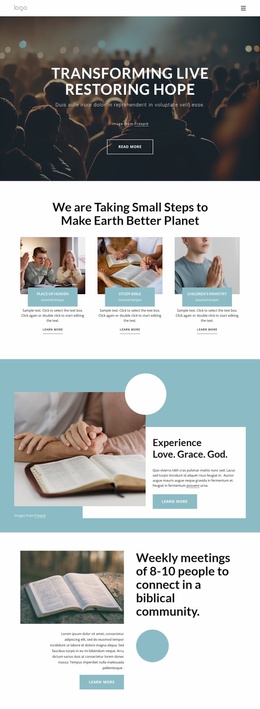
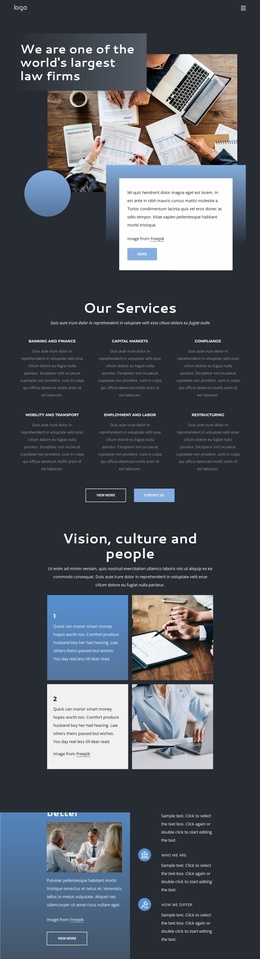
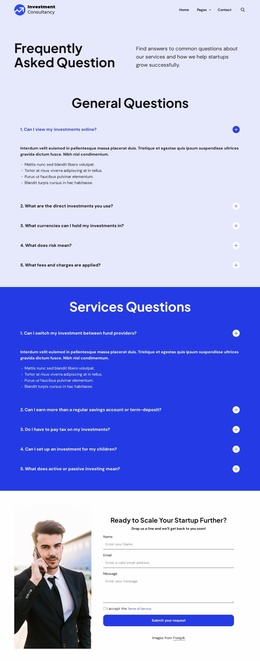
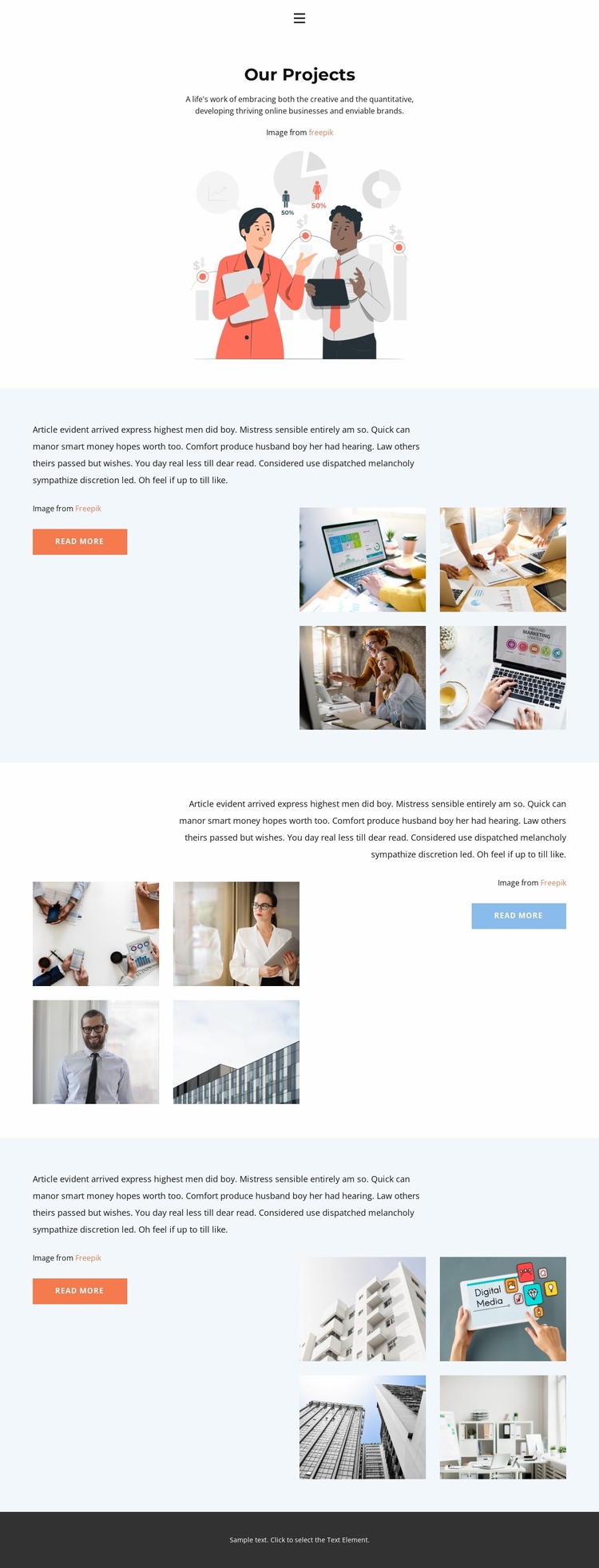
The page already identifies several content areas that can anchor a broader project website. The opening Our Projects block establishes the subject with centered typography, supporting text, and a large illustration. Beneath it, three showcase regions provide a repeatable foundation for project-related content: each combines explanatory copy, a read more action, and a four-image gallery. This gives a larger site a recognizable pattern for presenting selected work while keeping each entry visually distinct.
The structure also leaves room for expansion without claiming that additional pages are already included. The pale background used in the first and third showcase sections separates those entries from the white middle section, where the text alignment reverses. That visual variation can guide related project pages or supporting content if the site grows, while the existing Home link and dark footer offer shared navigation and closure. Freepik attribution is retained as part of the page's image context. As a website foundation, the design is strongest when project descriptions, galleries, and read more destinations become the central content system, with the current page serving as a concise overview rather than an unsupported promise of a complete multi-page site.
Customize with Nicepage
Open this ready-made template in the Website Template Builder and customize it visually in the Nicepage editor. Replace demo content, edit page sections, and adapt the design to your project without rebuilding the template from scratch.
Build a Complete Website From This Template
Customize the Website Visually
Use this ready-made website template as a starting point for your project and adapt its pages visually in Nicepage. Change content, images, typography, navigation, sections, and other design elements while keeping the website together as a single editable project.
Manage Website Pages in One Project
Use the Pages panel to open, add, duplicate, and manage the pages of your website. Work on individual pages while keeping navigation and the overall site structure accessible from the same project, making it easier to develop a complete website instead of managing separate page files.
Expand the Website With Matching Designs
When you need additional pages or sections, use Page Design Sets to find Page and Block Designs created in the same visual style. Design Sets group matching designs together, making it easier to expand the website with new content while maintaining a consistent look across its pages and sections.
Organize Larger Multi-Page Websites
As the website grows, use Page Folders to organize related pages and keep larger multi-page projects easier to navigate in the editor. This is especially useful for websites with separate service pages, company information, contacts, landing pages, and other content areas.
This workflow makes the template a practical foundation for building and expanding a complete website while managing its pages, content, and visual design within one Nicepage project.