Firm architecture and Design Website Template
Edit Template Offline
2. Create new page and search for id 22886
Edit Template Online
Create Awesome Websites


Free Nicepage Builder
Keywords
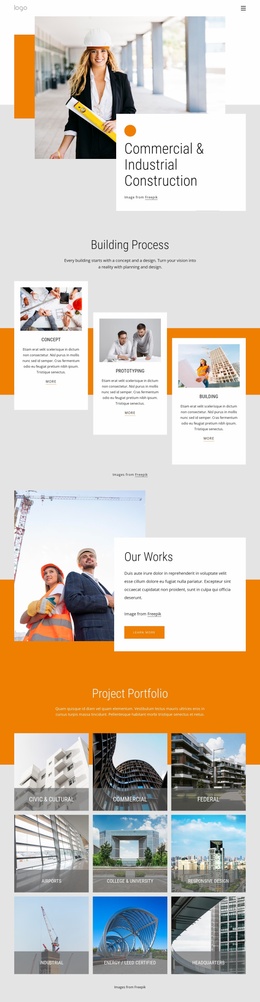
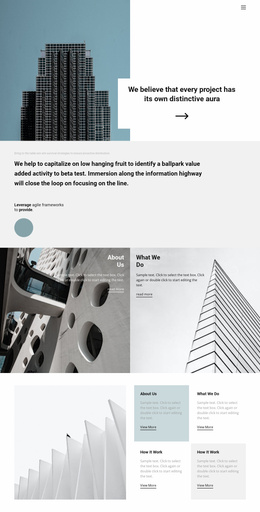
Firm profile, portfolio evidence, and contact content establish a site foundation
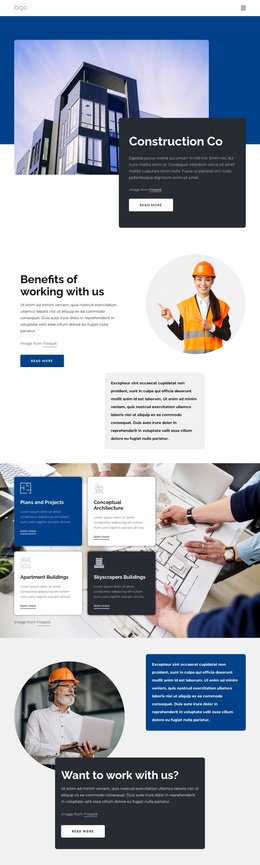
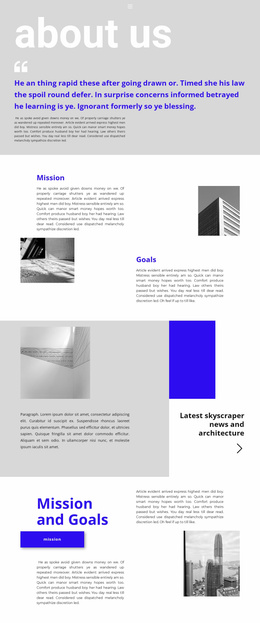
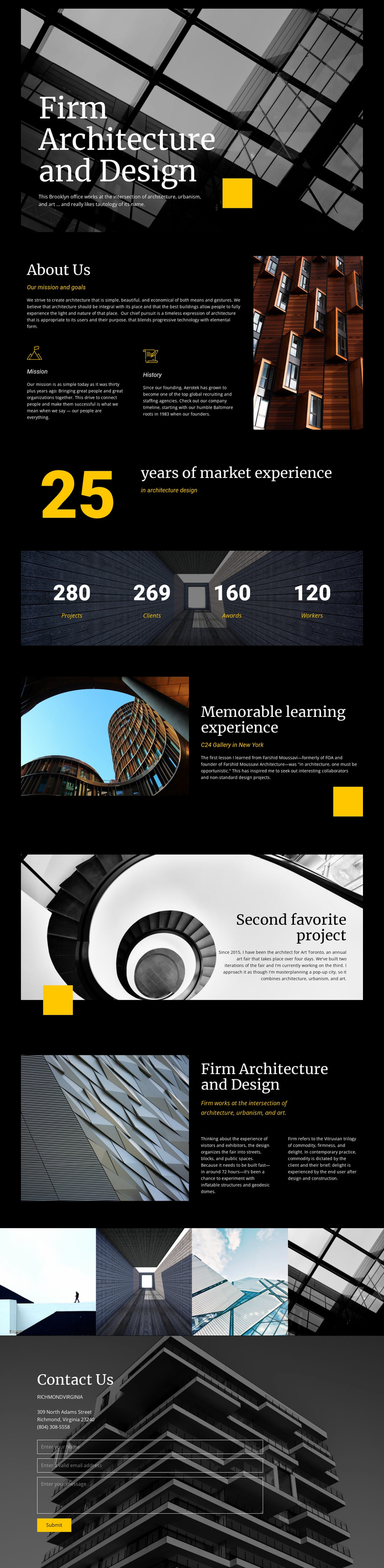
The design already defines several major content areas that a broader architecture website could build around. The opening firm introduction establishes the practice, and the About Us section separates mission and history from the visual portfolio. A dedicated years-of-market-experience counter and a second row of four metrics create reusable evidence patterns that could inform related company or capability pages, although the displayed figures remain sample structural content unless independently verified.
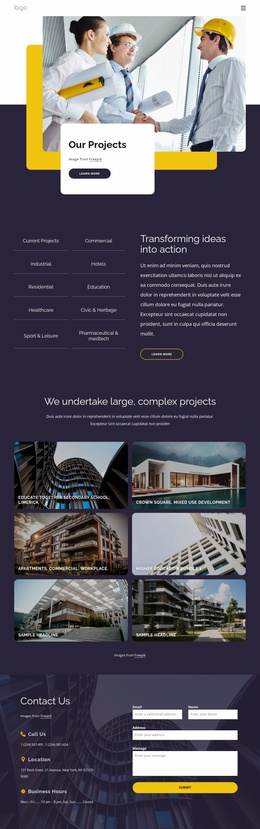
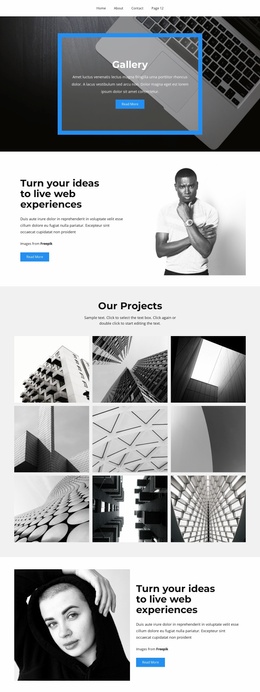
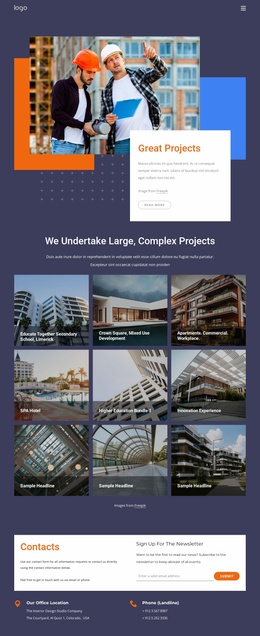
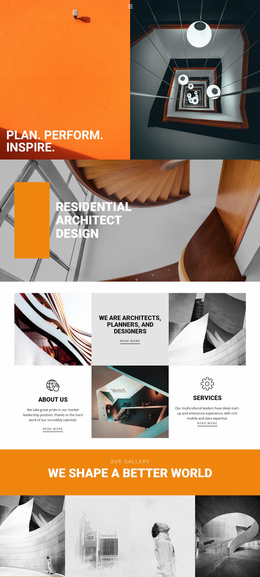
The portfolio foundation is equally clear. Two featured project narratives provide space for selected work with different image-and-text relationships, while the later architecture, urbanism, and art section explains the firm’s wider approach. The four-image gallery strip adds a compact visual category that could be echoed by future project or discipline-specific content. These areas give a growing site an information structure to extend rather than only a decorative homepage with no clear subject divisions.
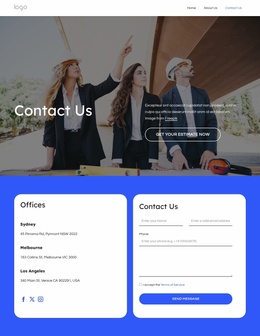
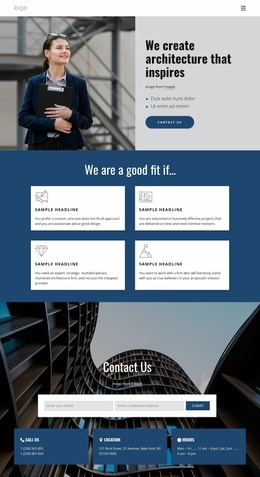
The Contact Us block completes the current foundation with contact details and an inquiry form. A broader project could preserve the same dark editorial treatment across additional pages while developing the existing themes into more detailed project, practice, or service content. The value here is the combination of verified content areas and a coherent visual direction that can support expansion, not a claim that a multi-page website already exists.
Customize with Nicepage
Open this ready-made template in the Website Template Builder and customize it visually in the Nicepage editor. Replace demo content, edit page sections, and adapt the design to your project without rebuilding the template from scratch.
Build a Complete Website From This Template
Customize the Website Visually
Use this ready-made website template as a starting point for your project and adapt its pages visually in Nicepage. Change content, images, typography, navigation, sections, and other design elements while keeping the website together as a single editable project.
Manage Website Pages in One Project
Use the Pages panel to open, add, duplicate, and manage the pages of your website. Work on individual pages while keeping navigation and the overall site structure accessible from the same project, making it easier to develop a complete website instead of managing separate page files.
Expand the Website With Matching Designs
When you need additional pages or sections, use Page Design Sets to find Page and Block Designs created in the same visual style. Design Sets group matching designs together, making it easier to expand the website with new content while maintaining a consistent look across its pages and sections.
Organize Larger Multi-Page Websites
As the website grows, use Page Folders to organize related pages and keep larger multi-page projects easier to navigate in the editor. This is especially useful for websites with separate service pages, company information, contacts, landing pages, and other content areas.
This workflow makes the template a practical foundation for building and expanding a complete website while managing its pages, content, and visual design within one Nicepage project.