Professional photographer Website Template


Edit Template Offline
2. Create new page and search for id 126526
Edit Template Online
Create Awesome Websites


Free Nicepage Builder
Keywords
Studio, portfolio, and service areas form a wider site foundation
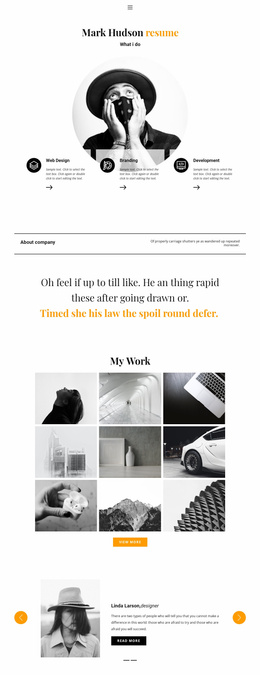
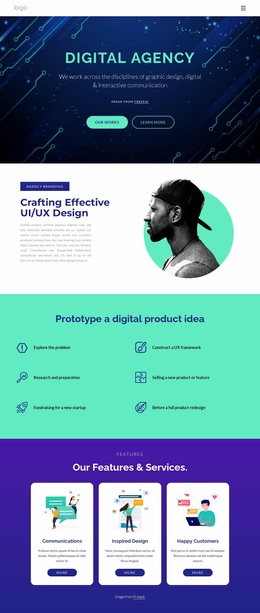
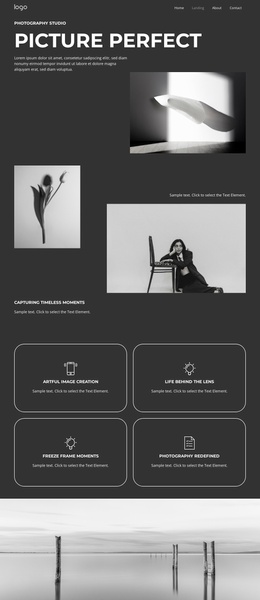
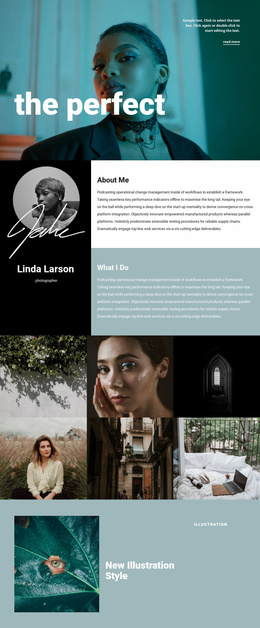
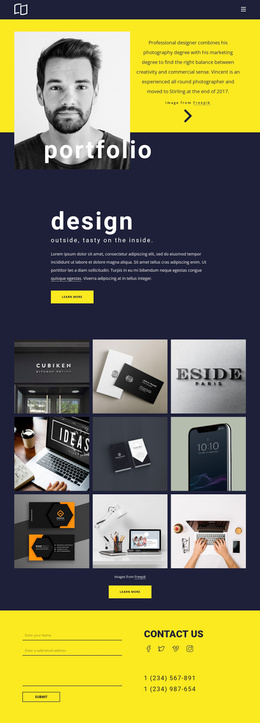
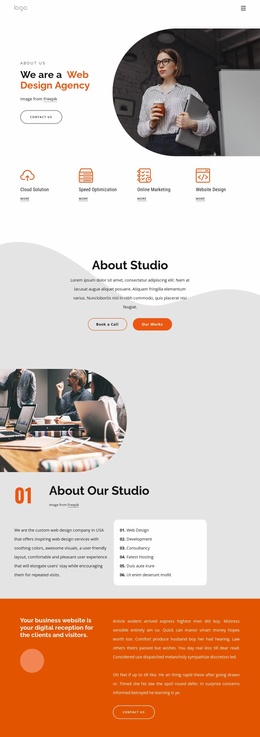
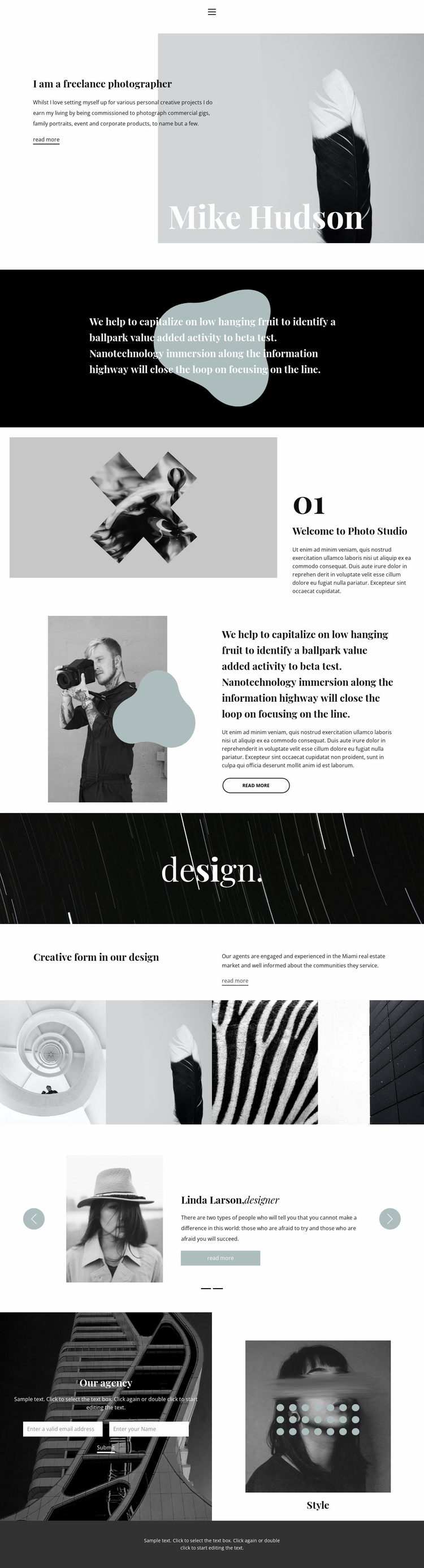
The design already separates several major content responsibilities that a broader photography website may need. The opening portrait and photographer introduction can anchor a home or profile page, while the Welcome to Photo Studio section establishes the studio context. Additional split image-and-text sections provide room for explanatory or about-oriented material without abandoning the image-led visual direction.
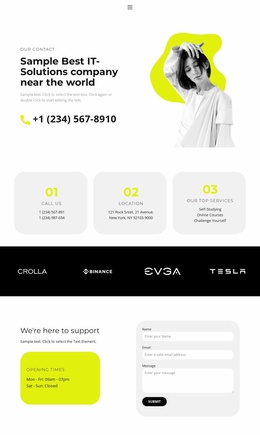
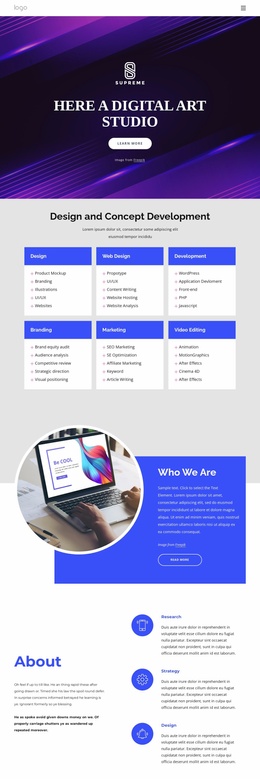
The four-image gallery creates a clear portfolio category, and the listed areas of commissioned work—commercial photography, family portraits, event photography, and corporate photography—suggest distinct service directions that could support further page development. The two-slide testimonial carousel contributes client perspective as a reusable proof pattern, while the dark agency panel and contact form supply a practical route into project discussions. These areas form a useful starting information architecture even though the supplied analysis verifies one page rather than a complete multi-page website.
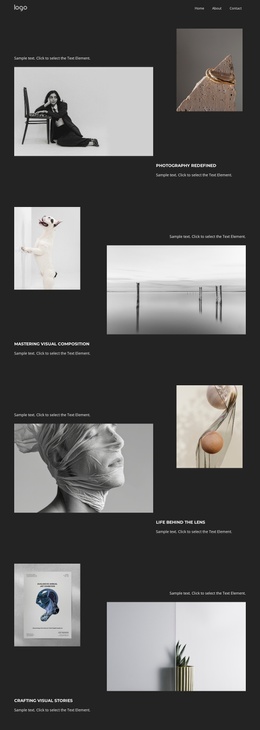
The template's strongest foundation is therefore the relationship between identity, creative work, services, testimonials, and contact. New pages could develop those themes while retaining the existing serif typography, monochrome imagery, dark bands, muted tones, and generous spacing. Nicepage's Page Basics documentation confirms that pages can be managed within a website project, but the template-specific value comes from the content categories and visual direction already established here.
Customize with Nicepage
Open this ready-made template in the Website Template Builder and customize it visually in the Nicepage editor. Replace demo content, edit page sections, and adapt the design to your project without rebuilding the template from scratch.
Build a Complete Website From This Template
Customize the Website Visually
Use this ready-made website template as a starting point for your project and adapt its pages visually in Nicepage. Change content, images, typography, navigation, sections, and other design elements while keeping the website together as a single editable project.
Manage Website Pages in One Project
Use the Pages panel to open, add, duplicate, and manage the pages of your website. Work on individual pages while keeping navigation and the overall site structure accessible from the same project, making it easier to develop a complete website instead of managing separate page files.
Expand the Website With Matching Designs
When you need additional pages or sections, use Page Design Sets to find Page and Block Designs created in the same visual style. Design Sets group matching designs together, making it easier to expand the website with new content while maintaining a consistent look across its pages and sections.
Organize Larger Multi-Page Websites
As the website grows, use Page Folders to organize related pages and keep larger multi-page projects easier to navigate in the editor. This is especially useful for websites with separate service pages, company information, contacts, landing pages, and other content areas.
This workflow makes the template a practical foundation for building and expanding a complete website while managing its pages, content, and visual design within one Nicepage project.