Fashion House Website Design


Edit Template Offline
2. Create new page and search for id 21059
Edit Template Online
Create Awesome Websites


Free Nicepage Builder
Keywords
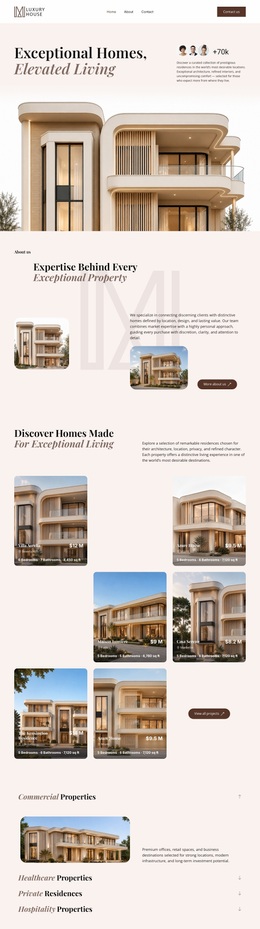
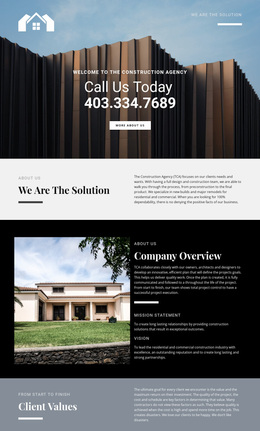
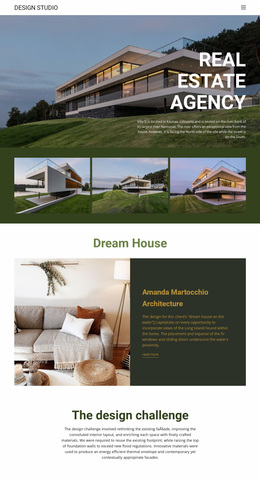
Architectural Imagery and Monochrome Contrast Shape the Identity
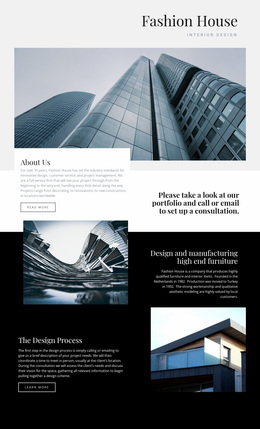
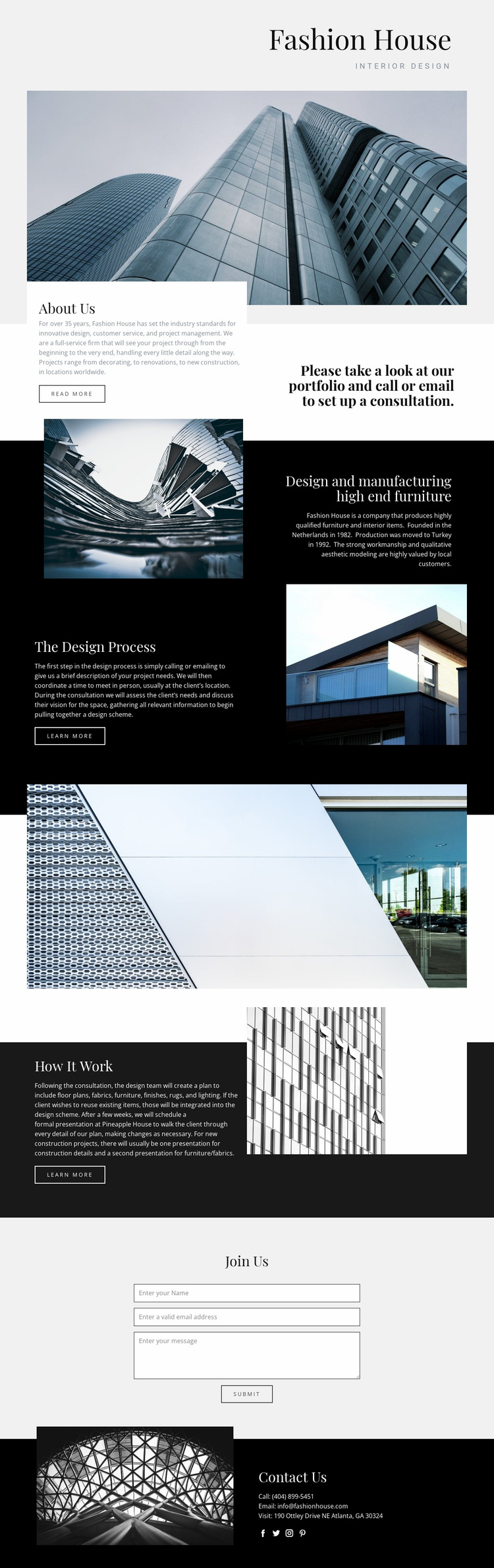
Fashion House communicates its visual direction through a consistent relationship between architecture, typography, and contrast. Large interior and architectural images provide the main expressive material, while prominent serif headings give the page an editorial voice. Restrained sans-serif body text keeps the supporting explanations quieter, allowing the visual subject and section headings to carry emphasis without making the page feel crowded.
The palette reinforces that identity across the site-like presentation. White and light gray areas create space around About Us, the wide image, and the Join Us form; black sections give furniture manufacturing, process information, and Contact Us a more concentrated character. This is more than a sequence of color changes. It gives different kinds of content a recognizable visual role while preserving a common design language.
Generous spacing and asymmetrical split compositions complete the system. Interior imagery sits beside text instead of appearing only as decoration, so material and spatial references remain visible while services and process details are explained. The contact image, social links, and form continue the same balance at the end of the page. As a website design, the template offers a coherent identity that can extend to related interior design content without losing its editorial, high-contrast character.
Customize with Nicepage
Open this ready-made template in the Website Design Builder and customize it visually in the Nicepage editor. Replace demo content, edit page sections, and adapt the design to your project without rebuilding the template from scratch.
Create a Consistent Design Across the Website
Define a Site-Wide Visual Style
Use Theme Settings to establish the visual foundation of the website across its pages and sections. Set global Colors, Fonts, and Typography so the site follows the same design direction instead of styling each page independently.
Coordinate Colors and Typography
Choose a color scheme and font combination that fit the character of the website, then fine-tune Headings H1-H6, regular Text, links, buttons, quotes, lists, and other typography styles. Consistent use of these settings helps create a clear visual hierarchy and keeps recurring design elements recognizable throughout the website.
Add Motion and Interaction
Use Animation Effects to make the website design more dynamic and interactive. Elements and Containers can use effects such as Run On Display, Animation On Hover, and Animation Sync With Scroll to introduce content as visitors move through the site or respond to user interaction. Animation Presets provide ready-made effects that can be adapted to the visual style of the website.
Keep the Website Visually Consistent
Apply the same design direction to shared website elements such as the Header, Menu, and Footer. The Theme Settings Panel brings common site-wide styling controls together, making it easier to maintain a coordinated look as the website expands across multiple pages.
This workflow makes the template a useful starting point for creating a website with a consistent visual identity, coordinated colors and typography, shared design rules, and interactive effects across its pages.