Experience in our restaurant CSS Template


Edit Template Offline
2. Create new page and search for id 3814298
Edit Template Online
Create Awesome Websites


Free Nicepage Builder
Keywords
Dark Food Imagery, White Menu Panels, and Blue Action Accents
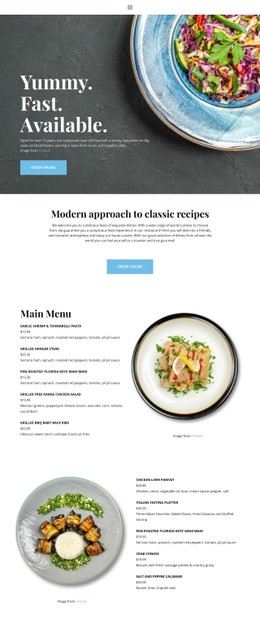
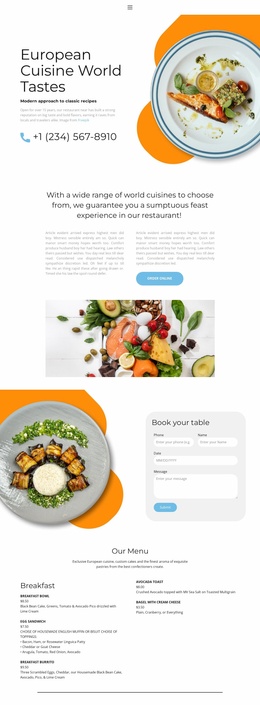
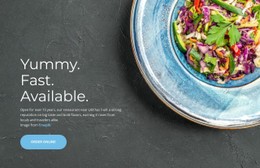
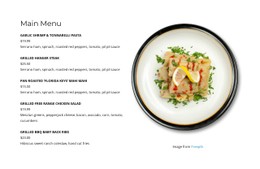
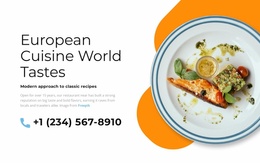
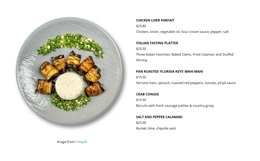
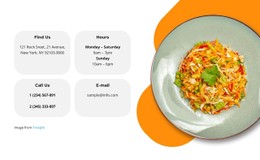
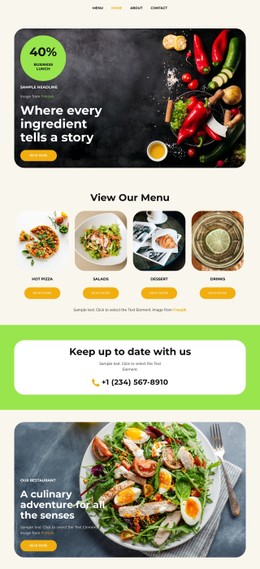
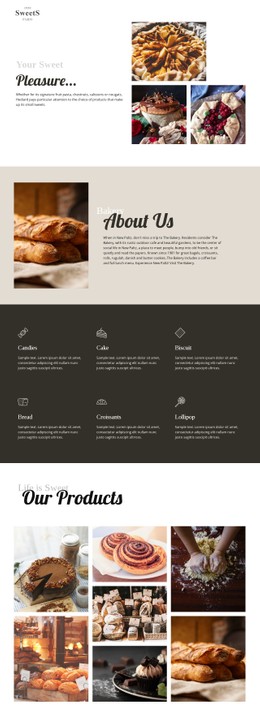
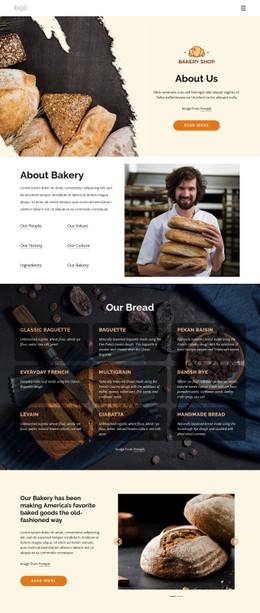
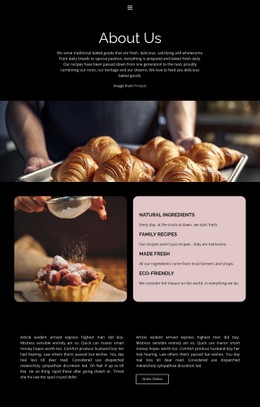
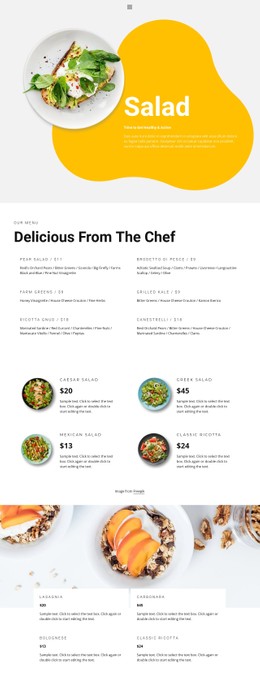
The page’s visual system is built from repeated contrasts rather than a single uniform surface. A dark hero places the stacked “Yummy. Fast. Available.” headline over a large food photograph, giving the opening area a strong image-led treatment. The later menu sections reverse that emphasis: bright white content areas carry compact dish names, descriptions, and prices beside circular or overhead food images. This alternation keeps the long menu visually segmented while preserving a consistent restaurant character.
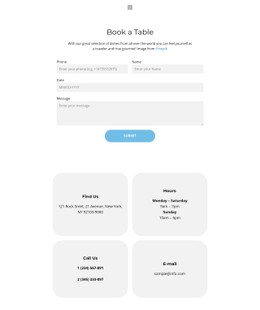
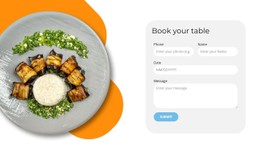
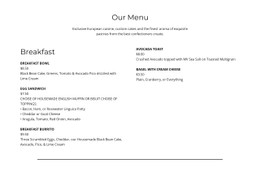
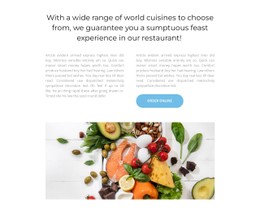
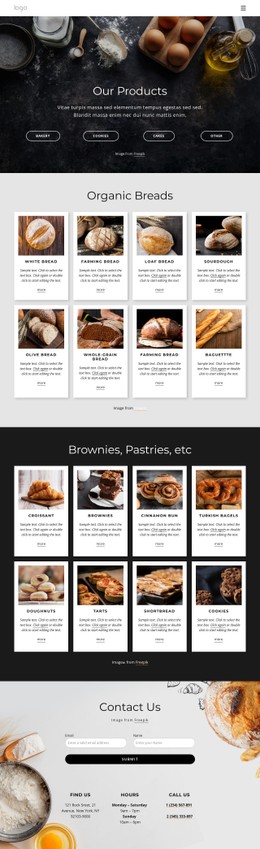
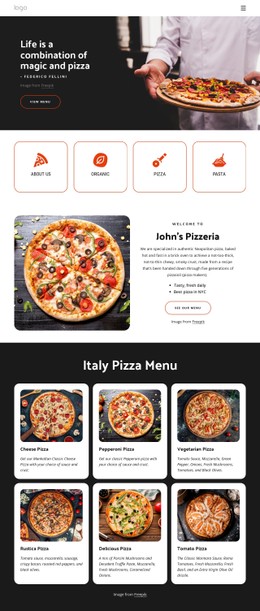
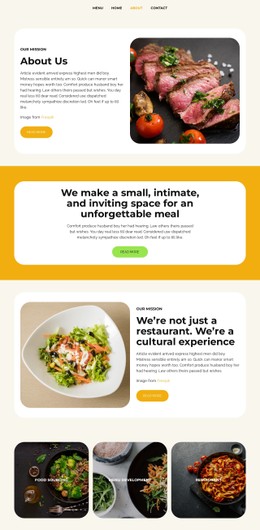
Serif display headings provide a clear contrast with the smaller menu typography, and generous white space prevents the price-and-description lists from becoming visually crowded. The three category tiles for vegan food, salads, and meat introduce another repeated image treatment, using centered labels directly over photographs. Blue-accented buttons recur as visual action points for ordering, while the reservation section uses a compact form within the same restrained palette. As a CSS-oriented design, these repeated relationships identify the properties that define the appearance: image placement, dark and light backgrounds, heading scale, list spacing, button color, and the treatment of gallery images. Adjusting those rules can change the visual emphasis without losing the menu’s established sequence.
Customize with Nicepage
Open this ready-made template in the CSS Template Builder and customize it visually in the Nicepage editor. Replace demo content, edit page sections, and adapt the design to your project without rebuilding the template from scratch.
Customize This Template With CSS
Control Page-Specific Styling
Customize the visual appearance of this ready-made template directly in the Nicepage editor. Adjust typography, spacing, backgrounds, borders, colors, positioning, and other style properties using visual controls while keeping the page layout easy to manage without writing CSS manually.
Add Custom CSS When Needed
For styling requirements that go beyond the standard editor options, use Custom CSS to add targeted rules. CSS can be applied to individual elements, specific pages, or the entire website depending on the scope of the customization, while CSS classes can be used to connect custom rules with selected elements.
Export Minimal CSS Per Page
For projects where CSS size and page performance matter, Nicepage can export minimal CSS for each page. Instead of relying on one larger common stylesheet, each page can use a separate CSS file containing only the style rules required for that particular page. According to Nicepage documentation, these page-specific CSS files can be about ten times more compact, helping reduce unnecessary CSS and improve page loading performance.
This workflow combines visual styling with optional custom CSS and optimized page-specific CSS output, giving you additional control when a project requires it without making manual CSS editing the primary way to customize the template.