Start your trip almost anywhere CSS Template

Edit Template Offline
2. Create new page and search for id 3544585
Edit Template Online
Create Awesome Websites


Free Nicepage Builder
Keywords
White Space, Colored Bands, and Vehicle Cards Define the Styling System
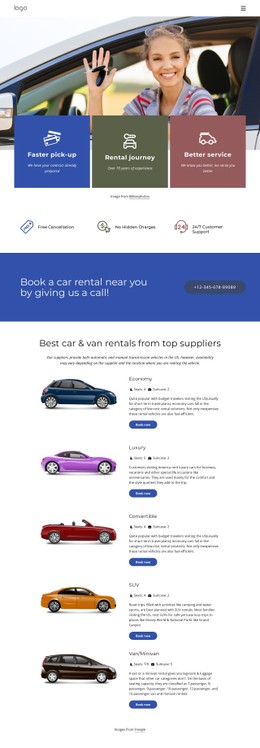
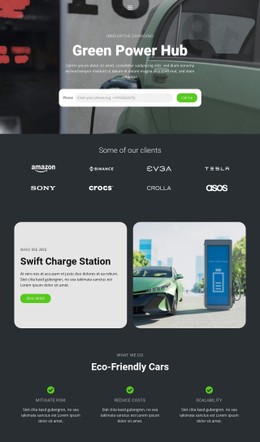
Bright white sections give the car rental content a clear base, while blue, olive, and muted red bands separate different levels of emphasis. The full-width blue booking callout creates a strong visual signal for the phone action, whereas the olive supplier-deals section gives promotional content a different surface. These contrasting backgrounds help distinguish booking support, rental value, and traveler information without changing the page sequence.
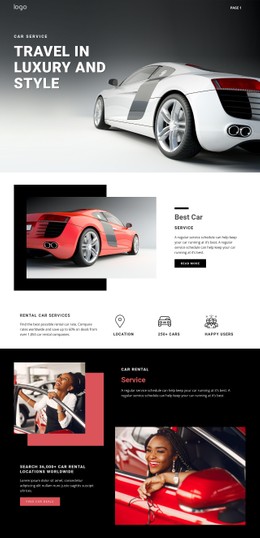
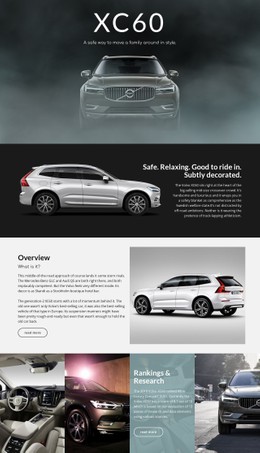
Large vehicle and travel images carry visual attention through the opening over-grid section, the featured rental promotion, the six-image gallery, and the starting-price area. The three colored benefit cards layered over the opening image introduce a repeated relationship between photography and compact content panels. Farther down, the five image-led vehicle cards repeat a consistent category treatment for Economy, Luxury, Convertible, SUV, and Van/Minivan. Their repeated structure can retain a coherent appearance while individual images and text change.
Rounded blue, white, and colored buttons connect Book now, Learn more, and Start now actions across different backgrounds. Compact centered typography and generous vertical spacing keep the promotional bands from becoming visually crowded, while the three-column support area applies the same contrast-led approach to booking management, WhatsApp Support, and Live Chat. The design can be refined through Nicepage styling controls or targeted Custom CSS when a visual rule needs to extend beyond the standard appearance settings.
Customize with Nicepage
Open this ready-made template in the CSS Template Builder and customize it visually in the Nicepage editor. Replace demo content, edit page sections, and adapt the design to your project without rebuilding the template from scratch.
Customize This Template With CSS
Control Page-Specific Styling
Customize the visual appearance of this ready-made template directly in the Nicepage editor. Adjust typography, spacing, backgrounds, borders, colors, positioning, and other style properties using visual controls while keeping the page layout easy to manage without writing CSS manually.
Add Custom CSS When Needed
For styling requirements that go beyond the standard editor options, use Custom CSS to add targeted rules. CSS can be applied to individual elements, specific pages, or the entire website depending on the scope of the customization, while CSS classes can be used to connect custom rules with selected elements.
Export Minimal CSS Per Page
For projects where CSS size and page performance matter, Nicepage can export minimal CSS for each page. Instead of relying on one larger common stylesheet, each page can use a separate CSS file containing only the style rules required for that particular page. According to Nicepage documentation, these page-specific CSS files can be about ten times more compact, helping reduce unnecessary CSS and improve page loading performance.
This workflow combines visual styling with optional custom CSS and optimized page-specific CSS output, giving you additional control when a project requires it without making manual CSS editing the primary way to customize the template.