Online school Web Page Design

Edit Template Offline
2. Create new page and search for id 3636971
Edit Template Online
Create Awesome Websites


Free Nicepage Builder
Keywords
Split Heroes and Card Groups Shape the Information Flow
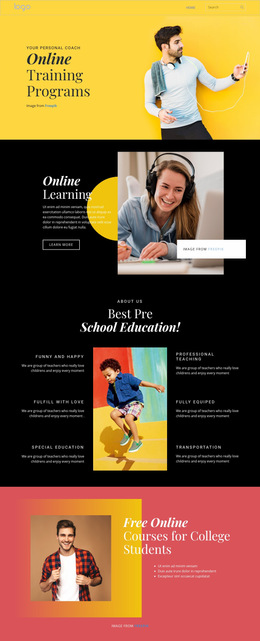
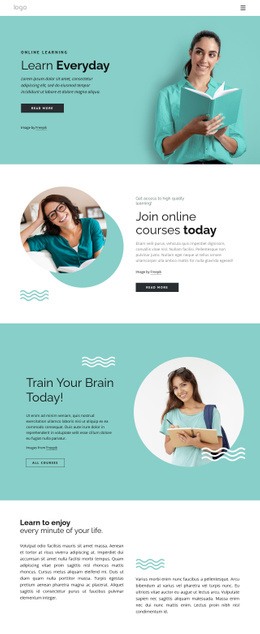
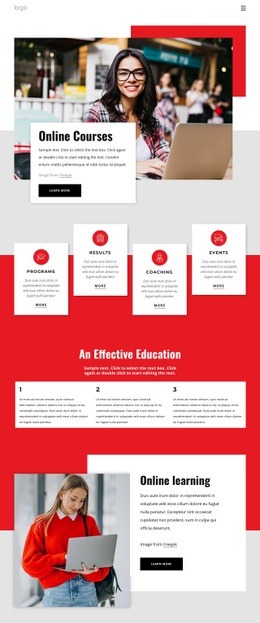
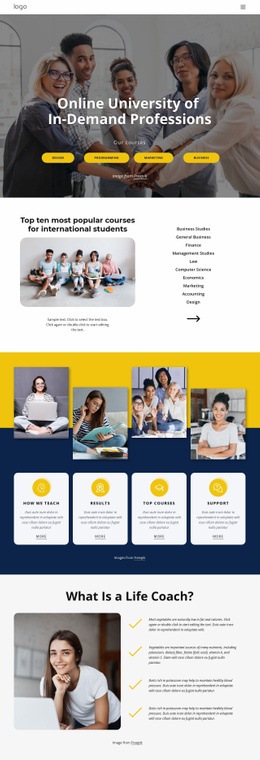
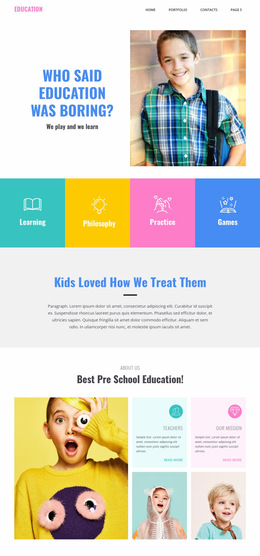
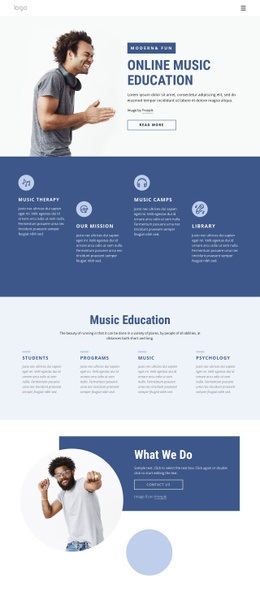
The opening split section establishes an immediate visual hierarchy: the Online School heading and introductory copy occupy one side, while the large circular student image supplies a strong counterweight on the other. The page then changes to a centered heading above six numbered categories, reducing the visual complexity of the hero and making the subject list easy to scan. This transition from image-led introduction to ordered information gives the page a deliberate first movement.
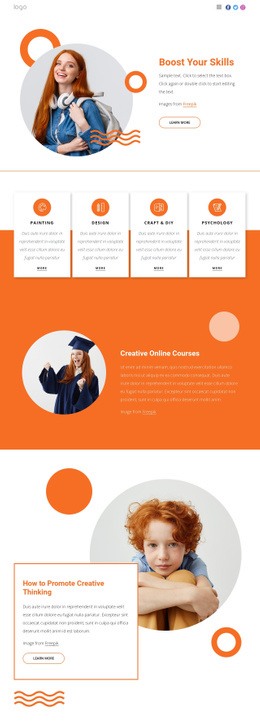
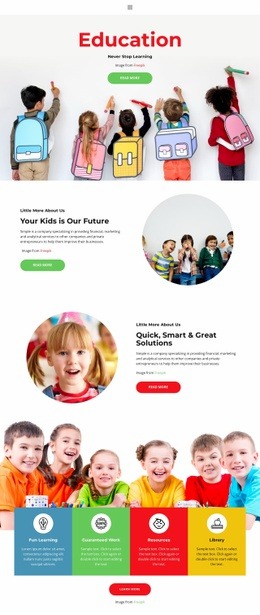
The three pathway cards restore a stronger visual rhythm through one-row image-backed tiles, followed by another split section pairing audience-focused copy with a circular classroom image. The free-course area changes density again: a centered heading sits above three white cards on a pink gradient, creating a clear content group for Arts & Humanities, Health & Medicine, and Engineering. These alternations prevent the page from becoming a repeated sequence of identical blocks.
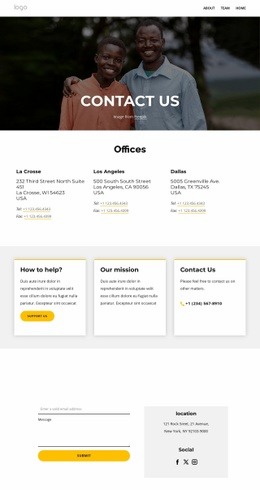
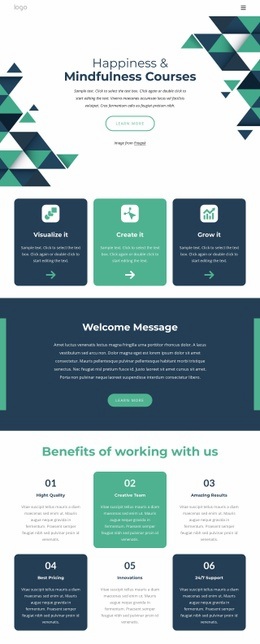
The four displayed metric tiles create a compact horizontal information moment, while six testimonial cards expand into a denser two-row arrangement. The final contact panel returns to a two-column structure, placing locations beside the inquiry form. This composition makes the page readable as a sequence of visual transitions—split, list, tiles, split, cards, metrics, testimonials, and contact—rather than as a flat inventory of education elements.
Customize with Nicepage
Open this ready-made template in the Web Page Design Builder and customize it visually in the Nicepage editor. Replace demo content, edit page sections, and adapt the design to your project without rebuilding the template from scratch.
Design a Web Page Section by Section
Choose a Design for Each Section
Build the page from individual content sections instead of starting with a fixed full-page layout. Use Block Designs to browse ready-made sections for different purposes, including introductions, services, galleries, testimonials, contact forms, pricing, and other common parts of a web page. Search or filter the available designs to find a layout that fits the content you want to add.
Combine Blocks and Page Elements
Add selected Blocks to the page and arrange them in the order that supports the page's purpose. A hero section can introduce the main message, followed by services, benefits, portfolio content, testimonials, calls to action, or contact information.
Inside each section, use Web Page Elements such as Text, Image, Hyperlink, Grid, Gallery, and other elements to build and present the page content. Individual elements can be added and adjusted within the Blocks, giving you more control over the composition of each section without having to create the complete layout from scratch.
Refine the Page Layout and Flow
After assembling the main sections, adjust their content, spacing, backgrounds, images, typography, and element placement in the Nicepage editor. Reorder Blocks when necessary and refine the transition from one section to the next so the information hierarchy and visual flow remain clear throughout the page.
This workflow makes the template useful as a web page design that can be composed from ready-made sections, customized with individual page elements, rearranged, and adapted to the content and purpose of an individual page.