The Outside Web Page Design


Edit Template Offline
2. Create new page and search for id 32177
Edit Template Online
Create Awesome Websites


Free Nicepage Builder
Keywords
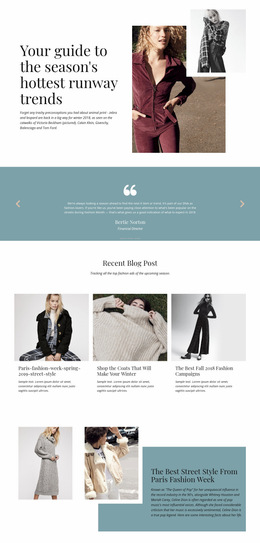
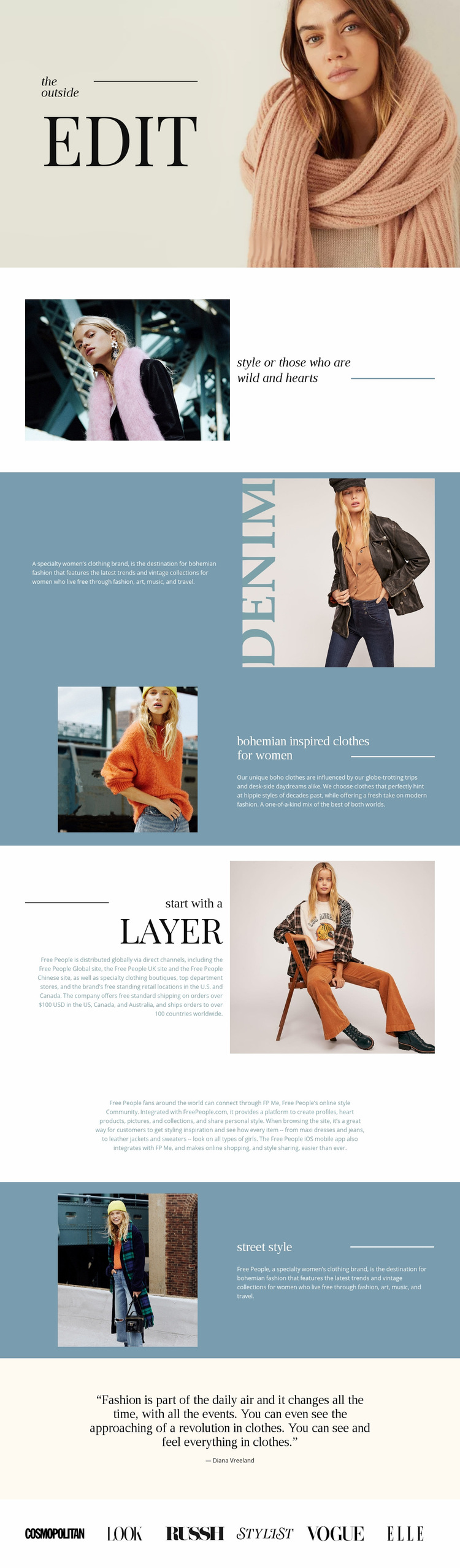
Alternating Split Panels Give the Fashion Page a Deliberate Editorial Rhythm
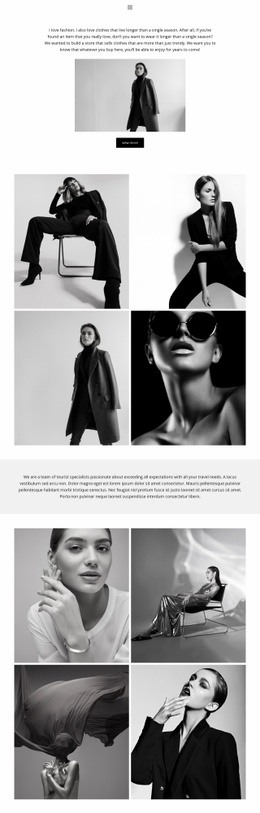
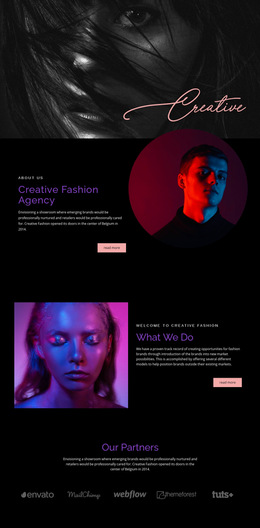
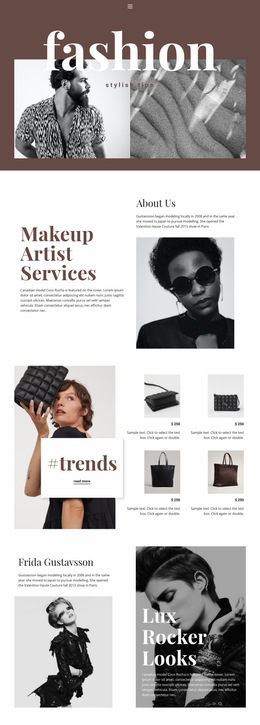
The composition changes pace from section to section instead of placing every message inside the same visual container. The opening Text On Image block gives the page a strong asymmetrical entry: a large portrait occupies one side while the title treatment, eyebrow label, and divider occupy the other. A smaller split panel then reduces the scale, allowing the short style statement to function as a quieter transition before the fuller brand description.
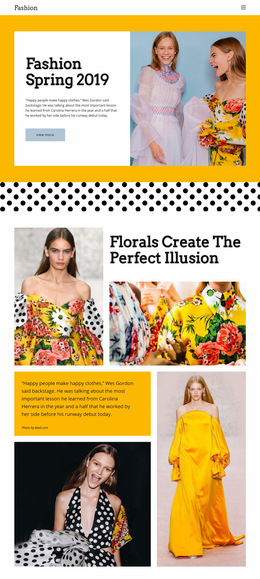
The blue-background panels create another compositional register. Text and fashion photography share the same horizontal field, but their roles vary: one area explains the brand, another discusses bohemian influences, and the “street style” section returns to concise positioning. The distribution section changes alignment through right-oriented editorial copy beside a seated portrait, adding variation without abandoning the image-and-text relationship. Between these panels, the centered community paragraph creates generous negative space and lowers the content density.
The quotation section provides a centered focal point rather than another split arrangement, and the six publication marks establish an even horizontal finish. This progression makes the page readable as a composition of transitions, scale changes, alignment choices, and pauses. Its strength as web page design lies in how content placement controls the visitor’s visual rhythm while keeping the fashion subject consistent throughout.
Customize with Nicepage
Open this ready-made template in the Web Page Design Builder and customize it visually in the Nicepage editor. Replace demo content, edit page sections, and adapt the design to your project without rebuilding the template from scratch.
Design a Web Page Section by Section
Choose a Design for Each Section
Build the page from individual content sections instead of starting with a fixed full-page layout. Use Block Designs to browse ready-made sections for different purposes, including introductions, services, galleries, testimonials, contact forms, pricing, and other common parts of a web page. Search or filter the available designs to find a layout that fits the content you want to add.
Combine Blocks and Page Elements
Add selected Blocks to the page and arrange them in the order that supports the page's purpose. A hero section can introduce the main message, followed by services, benefits, portfolio content, testimonials, calls to action, or contact information.
Inside each section, use Web Page Elements such as Text, Image, Hyperlink, Grid, Gallery, and other elements to build and present the page content. Individual elements can be added and adjusted within the Blocks, giving you more control over the composition of each section without having to create the complete layout from scratch.
Refine the Page Layout and Flow
After assembling the main sections, adjust their content, spacing, backgrounds, images, typography, and element placement in the Nicepage editor. Reorder Blocks when necessary and refine the transition from one section to the next so the information hierarchy and visual flow remain clear throughout the page.
This workflow makes the template useful as a web page design that can be composed from ready-made sections, customized with individual page elements, rearranged, and adapted to the content and purpose of an individual page.