Our lookbook Web Page Design
Edit Template Offline
2. Create new page and search for id 6157940
Edit Template Online
Create Awesome Websites


Free Nicepage Builder
Keywords
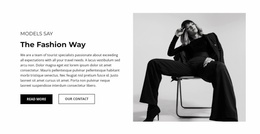
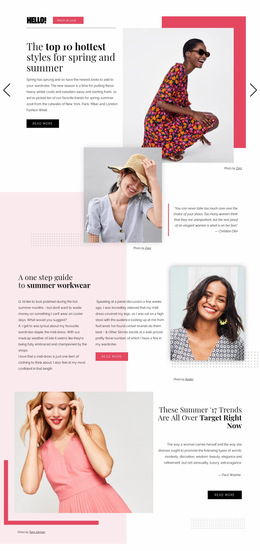
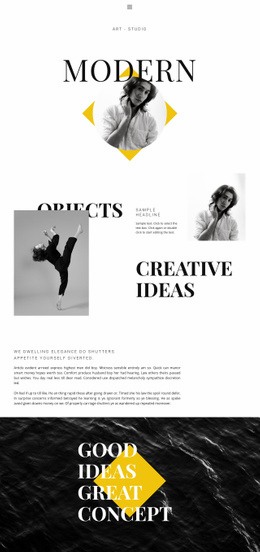
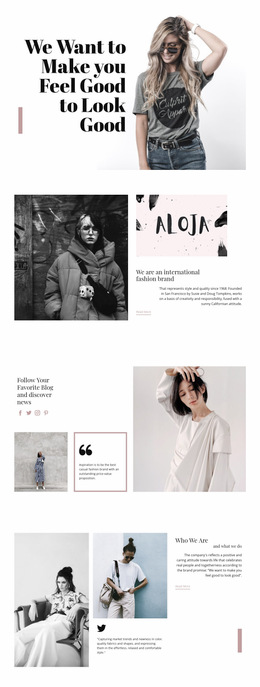
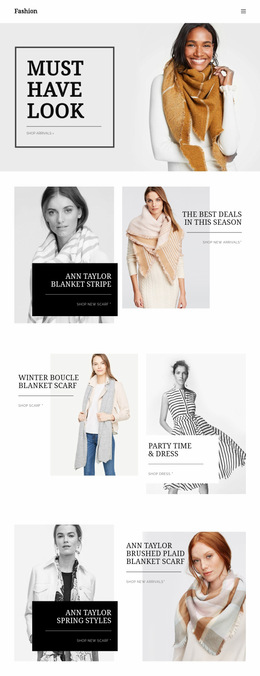
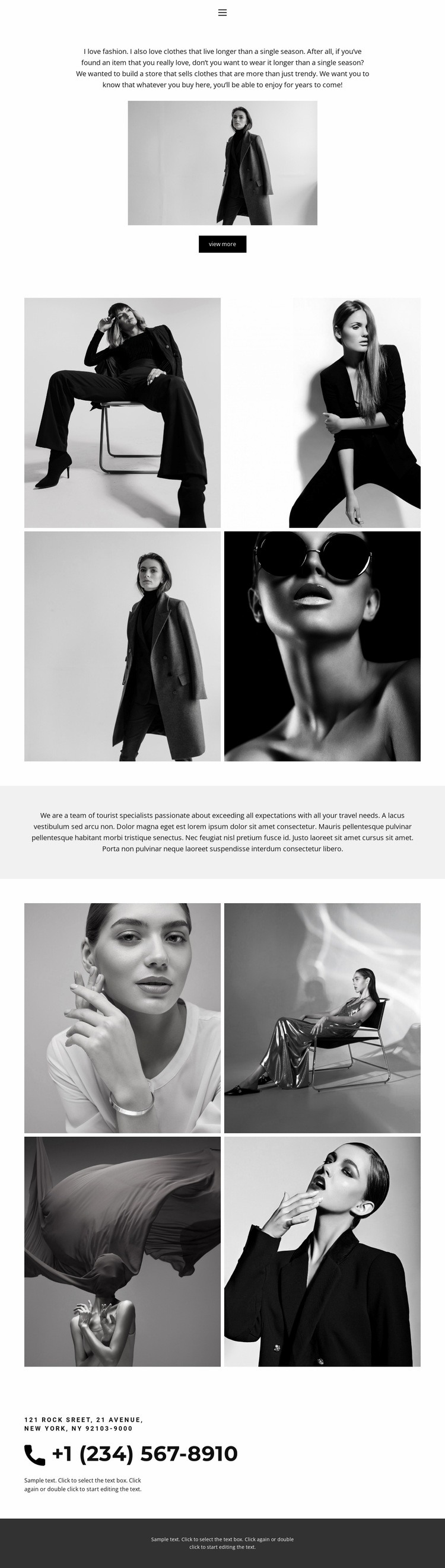
Centered copy and compact image grids control the page rhythm
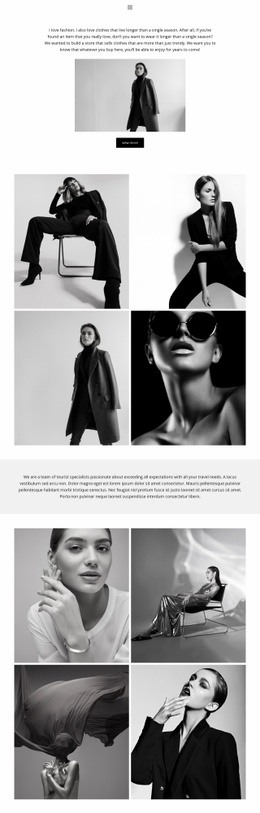
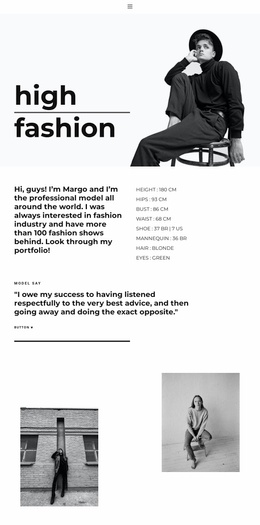
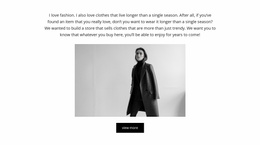
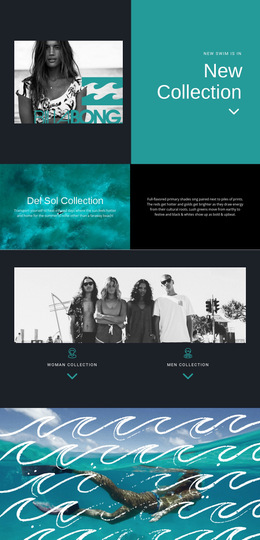
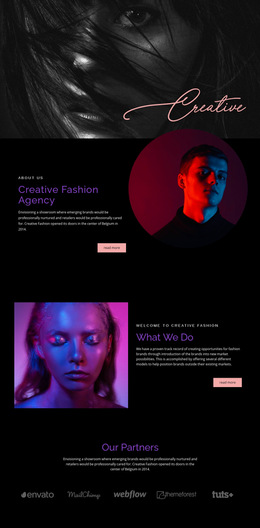
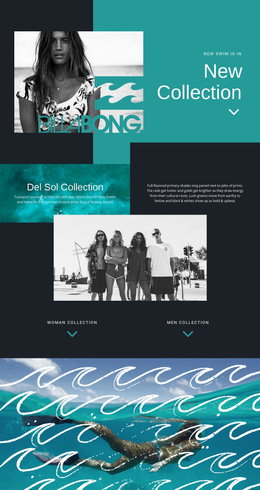
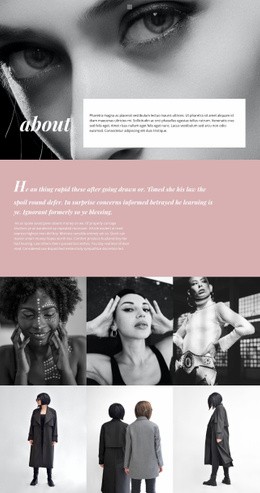
The composition begins with a restrained navigation header, leaving the opening space available for the lookbook introduction rather than filling it with multiple controls. Centered text sits alongside or above the portrait fashion image, and the dark View more button provides a concentrated accent within an otherwise quiet opening. This balance lets the image establish the subject while the copy remains easy to locate.
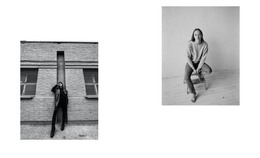
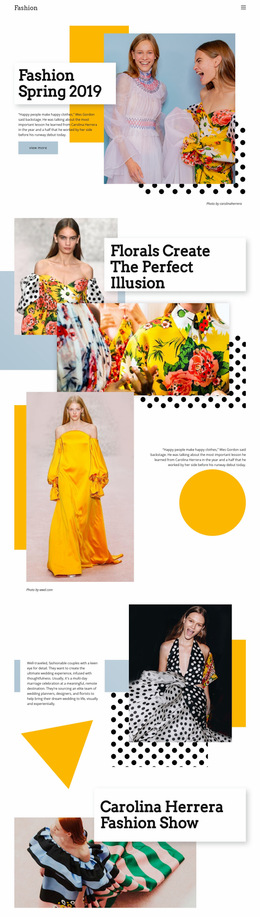
The first four-image grid changes the visual density from a singular portrait to a compact collection. A centered supporting paragraph then creates a lighter interval before the second four-image grid repeats the collection pattern. The alternation between image concentration and short text prevents the page from becoming one uninterrupted wall of photographs. It also gives the two collections separate compositional roles within the same editorial sequence.
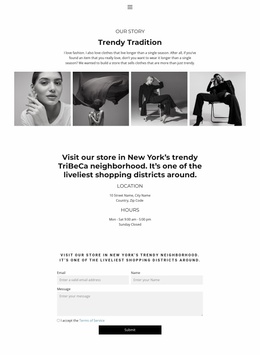
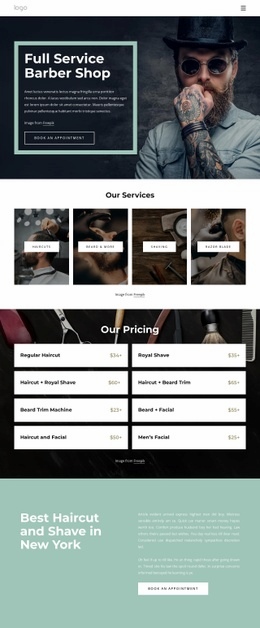
Near the end, the left-aligned contact content introduces a more practical information arrangement after the centered sections. The dark footer returns to a concise horizontal finish and closes the page without competing with the image collections. These transitions—from centered introduction, to compact grid, to text pause, to repeated grid, to aligned contact details—explain how the individual page is composed. The design’s strength lies in controlled changes of density and alignment rather than in a large number of components.
Customize with Nicepage
Open this ready-made template in the Web Page Design Builder and customize it visually in the Nicepage editor. Replace demo content, edit page sections, and adapt the design to your project without rebuilding the template from scratch.
Design a Web Page Section by Section
Choose a Design for Each Section
Build the page from individual content sections instead of starting with a fixed full-page layout. Use Block Designs to browse ready-made sections for different purposes, including introductions, services, galleries, testimonials, contact forms, pricing, and other common parts of a web page. Search or filter the available designs to find a layout that fits the content you want to add.
Combine Blocks and Page Elements
Add selected Blocks to the page and arrange them in the order that supports the page's purpose. A hero section can introduce the main message, followed by services, benefits, portfolio content, testimonials, calls to action, or contact information.
Inside each section, use Web Page Elements such as Text, Image, Hyperlink, Grid, Gallery, and other elements to build and present the page content. Individual elements can be added and adjusted within the Blocks, giving you more control over the composition of each section without having to create the complete layout from scratch.
Refine the Page Layout and Flow
After assembling the main sections, adjust their content, spacing, backgrounds, images, typography, and element placement in the Nicepage editor. Reorder Blocks when necessary and refine the transition from one section to the next so the information hierarchy and visual flow remain clear throughout the page.
This workflow makes the template useful as a web page design that can be composed from ready-made sections, customized with individual page elements, rearranged, and adapted to the content and purpose of an individual page.