Our delicious food Web Page Design


The Centered Heading Anchors a Balanced Menu Grid
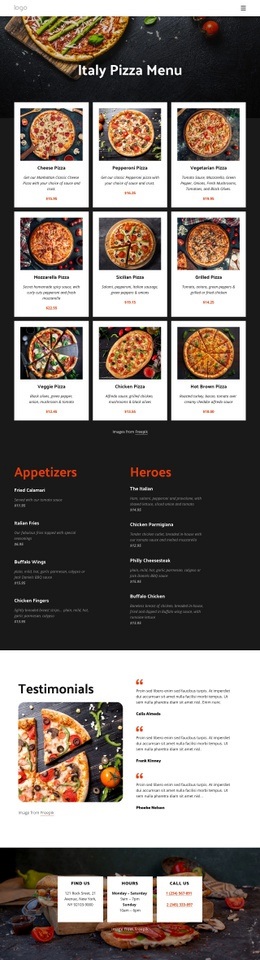
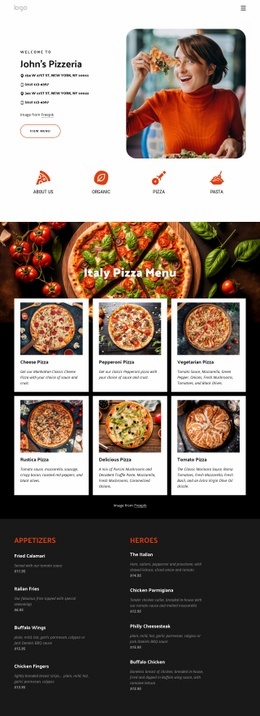
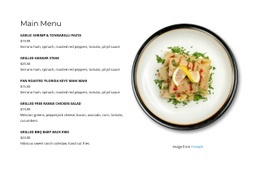
The page composition starts with a centered “Our menu” label and the larger “Delicious From The Chef” heading. This narrow introductory area creates a visual entry point before the content expands into two columns. Below it, six menu entries occupy three rows, with each item using the same name, displayed price, and compact description pattern. The repeated alignment makes the grid easy to scan and gives both columns comparable visual weight.
The arrangement creates a useful contrast between a concentrated upper focal point and a broader information field beneath it. The large serif heading carries more visual emphasis than the smaller uppercase labels, while the white background and generous vertical spacing prevent the six text groups from feeling crowded. Because the layout is static and text-only, hierarchy depends on position, scale, spacing, and consistent alignment rather than movement or image transitions.
Placed within one webpage, the block can work as a distinct middle or supporting composition between other content areas. Its two-column grid introduces a moderate information density: more substantial than a short feature strip, but more contained than a long menu page. Neighboring sections can provide restaurant imagery, story, contact details, or a response action, while this block contributes a clearly bounded menu rhythm. The composition is therefore useful not merely for listing dishes, but for creating a deliberate visual pause with structured culinary information.
Customize with Nicepage
Open this ready-made template in the Web Page Design Builder and customize it visually in the Nicepage editor. Replace demo content, edit page sections, and adapt the design to your project without rebuilding the template from scratch.
Edit Template Offline
2. Create a new page or select existing
3. Click Add new block, search for id 123069 and click enter
Edit Template Online
Create Awesome Websites


Free Nicepage Builder
Keywords
Design a Web Page Section by Section
Choose a Design for Each Section
Build the page from individual content sections instead of starting with a fixed full-page layout. Use Block Designs to browse ready-made sections for different purposes, including introductions, services, galleries, testimonials, contact forms, pricing, and other common parts of a web page. Search or filter the available designs to find a layout that fits the content you want to add.
Combine Blocks and Page Elements
Add selected Blocks to the page and arrange them in the order that supports the page's purpose. A hero section can introduce the main message, followed by services, benefits, portfolio content, testimonials, calls to action, or contact information.
Inside each section, use Web Page Elements such as Text, Image, Hyperlink, Grid, Gallery, and other elements to build and present the page content. Individual elements can be added and adjusted within the Blocks, giving you more control over the composition of each section without having to create the complete layout from scratch.
Refine the Page Layout and Flow
After assembling the main sections, adjust their content, spacing, backgrounds, images, typography, and element placement in the Nicepage editor. Reorder Blocks when necessary and refine the transition from one section to the next so the information hierarchy and visual flow remain clear throughout the page.
This workflow makes the template useful as a web page design that can be composed from ready-made sections, customized with individual page elements, rearranged, and adapted to the content and purpose of an individual page.