Showroom interior design Web Page Design

Edit Template Offline
2. Create new page and search for id 1102022
Edit Template Online
Create Awesome Websites


Free Nicepage Builder
Keywords
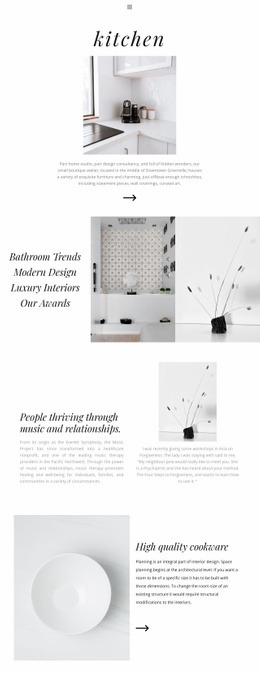
Alternating Panels and Overlap Blocks Shape the Page Rhythm
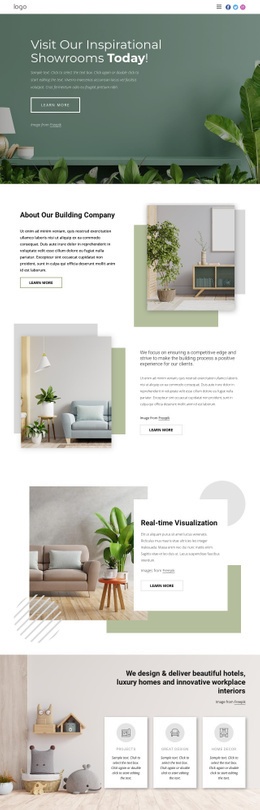
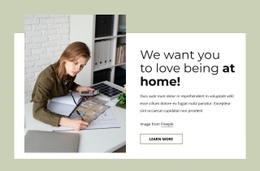
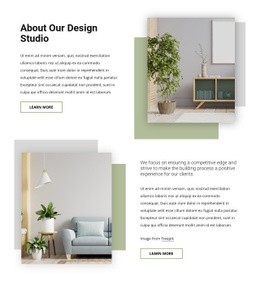
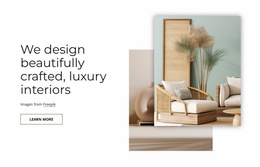
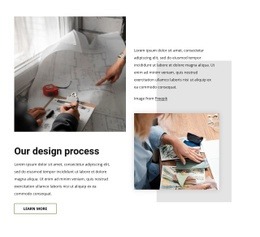
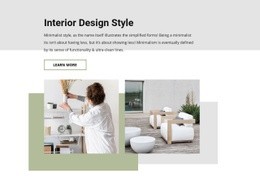
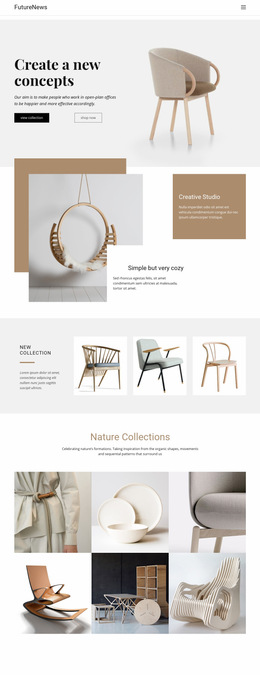
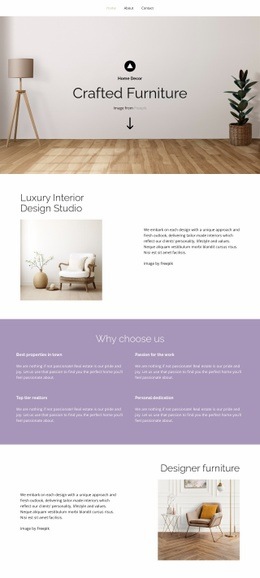
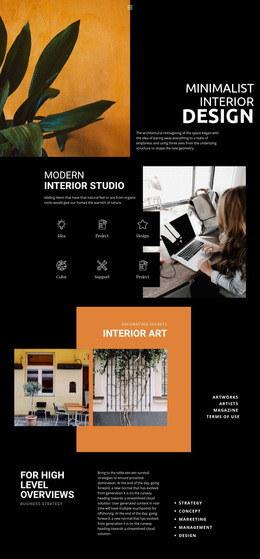
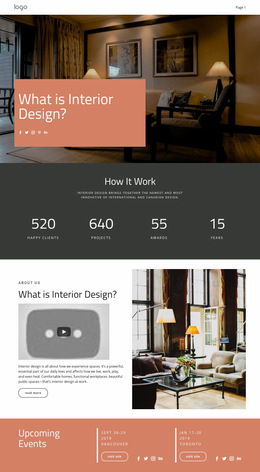
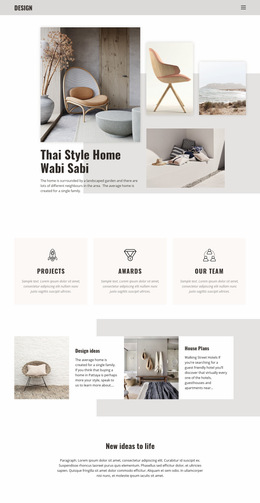
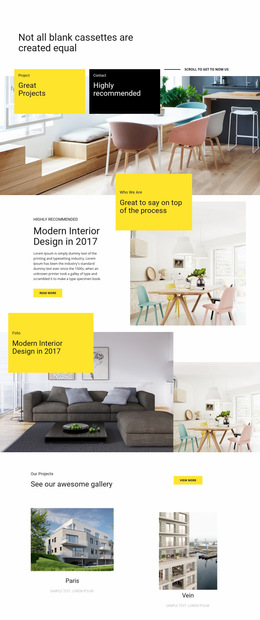
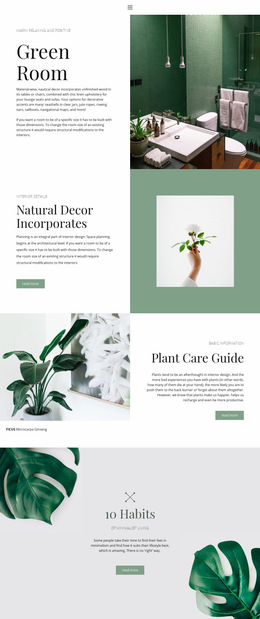
The composition begins with a full-width interior photograph carrying the showroom headline, introductory copy, and Learn More button. This concentrated opening gives way to two alternating image-and-text panels, creating a change in direction and density as the visitor enters the studio explanation. The page does not keep one repeated column pattern; instead, it uses image placement to separate related pieces of content while preserving a calm overall rhythm.
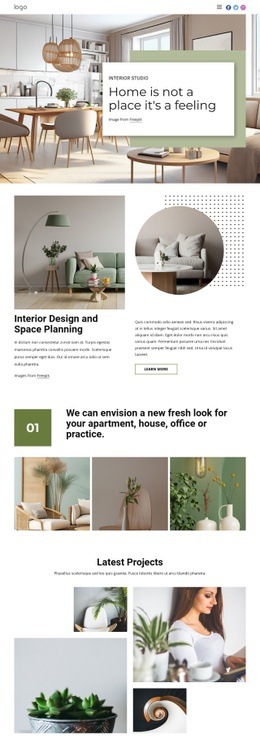
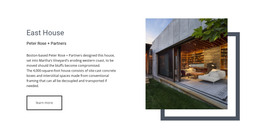
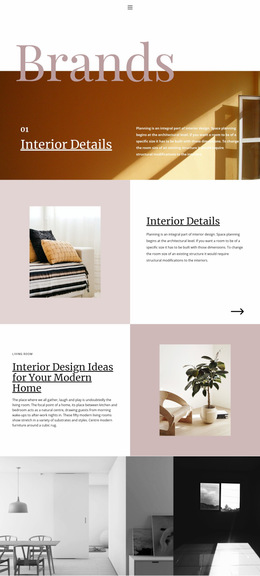
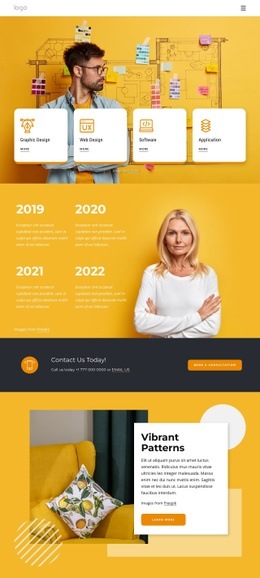
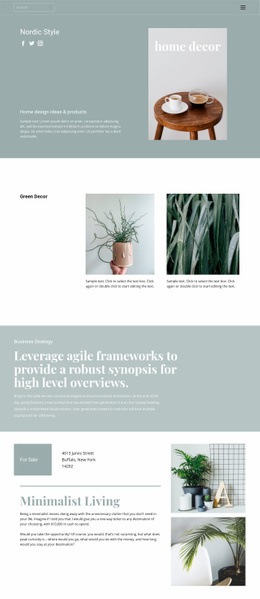
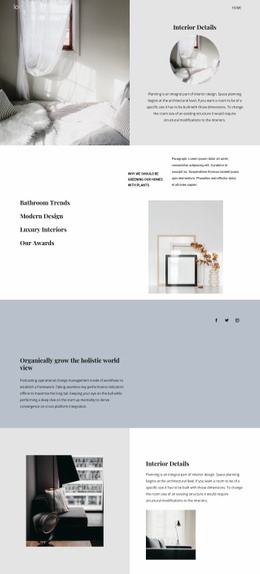
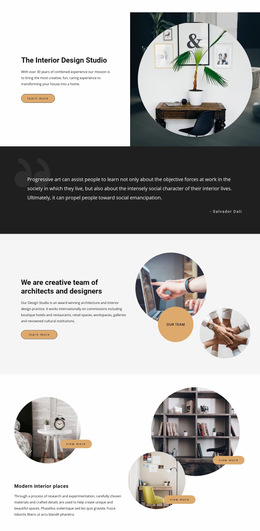
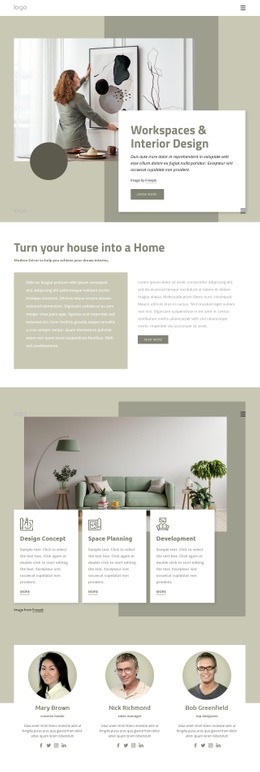
The Real-time Visualization section introduces a stronger spatial device. A large room image sits beside an overlapping text card, circular accent, and striped decoration, producing depth within the otherwise open composition. The following photographic value-proposition band reverses that density with centered white text and three white feature cards. Later, the Interior Studio profile returns to layered portrait, room imagery, and a text card, while the three-image gallery creates a more regular visual showcase.
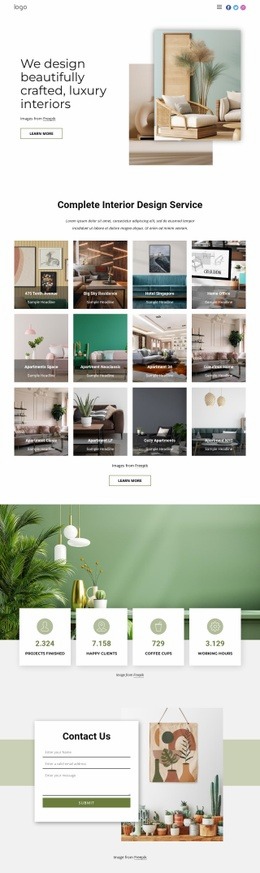
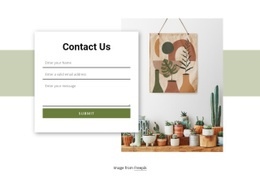
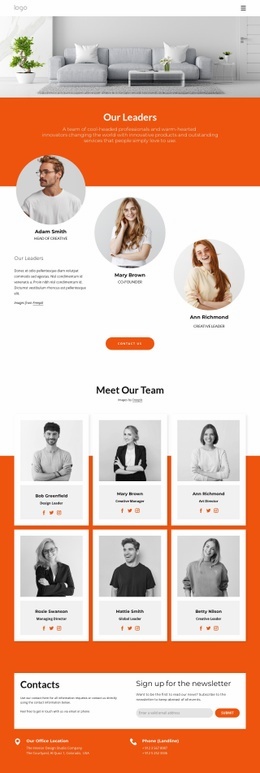
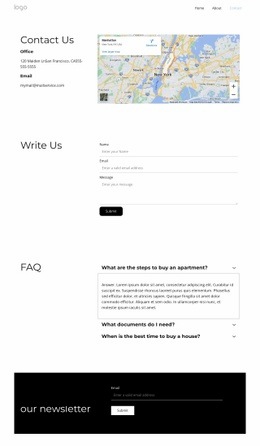
The four metric tiles form a compact horizontal information group beside a large interior image, giving the page a brief change from descriptive storytelling to labeled data. Finally, the contact form places a card beside an image before the dark multi-column footer. These transitions create a readable presentation from one page to the next section. Nicepage’s Block Designs can support comparable section work, but the template-specific value lies in this existing arrangement of scale, overlap, and visual pauses.
Customize with Nicepage
Open this ready-made template in the Web Page Design Builder and customize it visually in the Nicepage editor. Replace demo content, edit page sections, and adapt the design to your project without rebuilding the template from scratch.
Design a Web Page Section by Section
Choose a Design for Each Section
Build the page from individual content sections instead of starting with a fixed full-page layout. Use Block Designs to browse ready-made sections for different purposes, including introductions, services, galleries, testimonials, contact forms, pricing, and other common parts of a web page. Search or filter the available designs to find a layout that fits the content you want to add.
Combine Blocks and Page Elements
Add selected Blocks to the page and arrange them in the order that supports the page's purpose. A hero section can introduce the main message, followed by services, benefits, portfolio content, testimonials, calls to action, or contact information.
Inside each section, use Web Page Elements such as Text, Image, Hyperlink, Grid, Gallery, and other elements to build and present the page content. Individual elements can be added and adjusted within the Blocks, giving you more control over the composition of each section without having to create the complete layout from scratch.
Refine the Page Layout and Flow
After assembling the main sections, adjust their content, spacing, backgrounds, images, typography, and element placement in the Nicepage editor. Reorder Blocks when necessary and refine the transition from one section to the next so the information hierarchy and visual flow remain clear throughout the page.
This workflow makes the template useful as a web page design that can be composed from ready-made sections, customized with individual page elements, rearranged, and adapted to the content and purpose of an individual page.