Web design for everybody One Page Template


A Recognizable About Destination With Contact Details
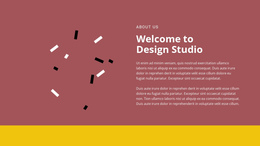
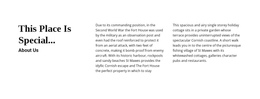
The “About Us” heading gives this section a clear identity within a continuous page. Visitors can enter through the upper split, where the large image and adjacent text card present the organization or creative practice as one coordinated introduction. The image carries visual weight, while the supporting subheading and compact copy establish the reading side of the region without turning the block into a separate page.
The full-width white card beneath the split works as a continuation of the same destination. It offers room for supplementary descriptive text while preserving a simple vertical progression from introduction to explanation. The final row adds a practical layer through three equal cards labeled “Call Us,” “Location,” and “Hours.” Their repeated icon-and-detail pattern makes contact and availability information part of the destination rather than an unrelated visual add-on.
Within a one-page project, this block could sit between an opening statement and later services, work samples, or other contact content. It does not require anchor navigation to be useful; its strong heading and internal organization already make it easy to identify as one section in the page journey. If navigation is added at the page level, this block can provide a meaningful destination while neighboring blocks retain their own roles.
Customize with Nicepage
Open this ready-made template in the One Page Template Builder and customize it visually in the Nicepage editor. Replace demo content, edit page sections, and adapt the design to your project without rebuilding the template from scratch.
Edit Template Offline
2. Create a new page or select existing
3. Click Add new block, search for id 1723931 and click enter
Edit Template Online
Create Awesome Websites


Free Nicepage Builder
Keywords
Use This Block as a Section in a One-Page Website
Give the Block a Distinct Content Role
A one-page website combines several meaningful content sections within one continuous document. A block can serve as one of those destinations—for example About, Services, Gallery, Testimonials, Pricing, Team, or Contact—while other blocks provide the rest of the page journey.
Connect Navigation to Meaningful Sections
When the final page uses section-based navigation, Menu For One-Page Site can connect menu items to individual page Blocks. The analyzed block does not prove that anchor navigation already exists; it simply provides one possible destination when its content is substantial enough to stand as a recognizable section.
Keep Longer Pages Easy to Explore
For long one-page sites, Back To Top can help visitors return to the beginning after moving through several sections. Navigation behavior is managed at the page level, while each block retains its own content function.
This workflow positions the block as one part of a continuous one-page experience rather than treating a single section as the entire one-page site.