Adventures has hiking and trekking options Landing Page

Edit Template Offline
2. Create new page and search for id 3134178
Edit Template Online
Create Awesome Websites


Free Nicepage Builder
Keywords
The mountain introduction leads into tour interest and direct response points
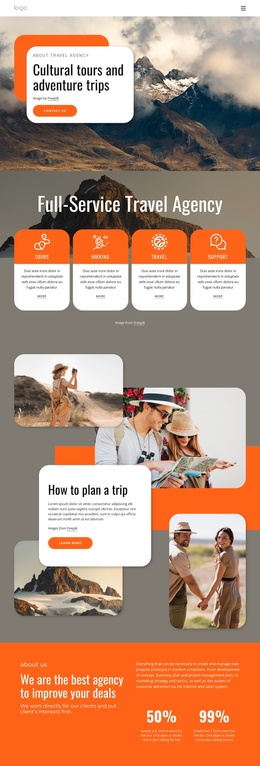
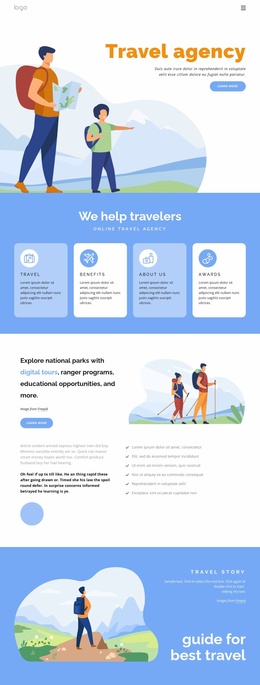
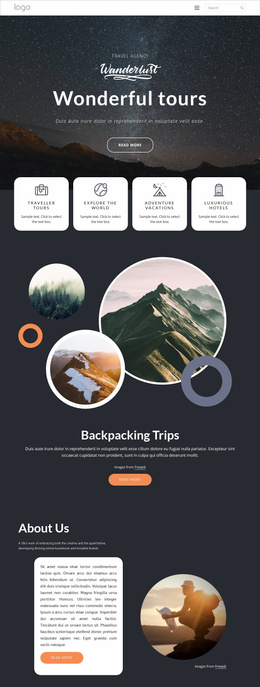
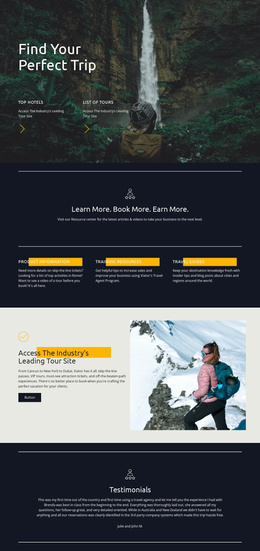
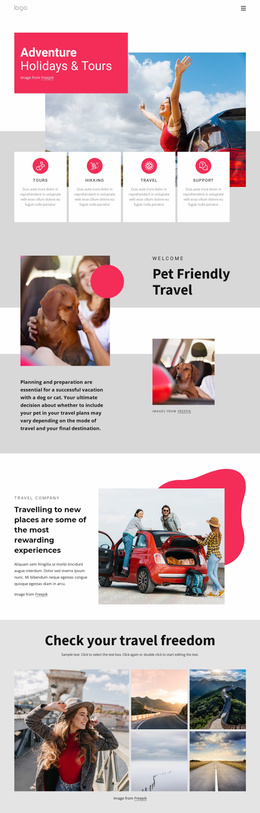
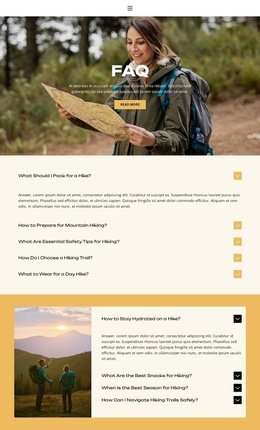
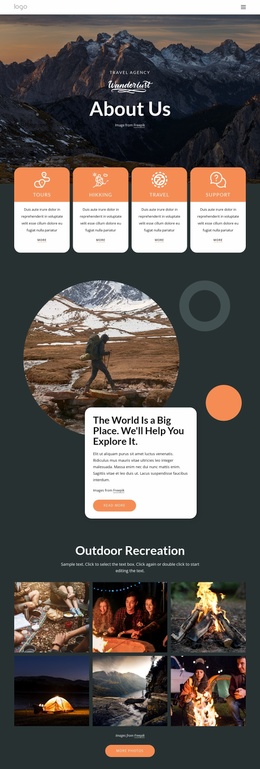
The opening mountain illustration gives the page an immediate subject and pairs the travel-agency message with a compact call to action. Instead of asking visitors to process detailed tour information at once, the layout first uses four benefit cards to establish what the agency emphasizes. The following split section then presents digital tours, ranger programs, and educational opportunities beside hikers, turning the initial impression into a more specific offer.
The travel-story band provides a strong visual interruption while keeping the visitor within the outdoor-tourism theme. After that pause, the US National Park Tours & Holidays section presents a named tour focus, descriptive copy, a vehicle illustration, and another action button. This sequence can support an inquiry-oriented path because the page moves from broad interest to services and then to a concrete tour subject before reaching contact content.
The phone-based Contact Us area creates a direct response option, while the closing contact region adds a newsletter signup form for visitors who prefer recurring articles, videos, and event information. These actions serve related but distinguishable responses: immediate conversation and continued content connection. The percentage cards sit between the tour promotion and final contact area as supporting proof-like content, although their sample values should remain structural rather than treated as verified business results. This gives the page a focused promotional flow without inventing a single mandatory conversion action.
Customize with Nicepage
Open this ready-made template in the Landing Page Builder and customize it visually in the Nicepage editor. Replace demo content, edit page sections, and adapt the design to your project without rebuilding the template from scratch.
Build a Landing Page Around One Conversion Goal
Focus on One Primary Action
Use the landing page to guide visitors toward one measurable response, such as requesting a quote, registering, subscribing, booking a consultation, applying for a service, or submitting an inquiry. Keep the primary call-to-action consistent across the important sections so the headline, supporting content, form, and CTA buttons work toward the same campaign goal instead of competing for attention.
Capture Leads With a Form
Use the Contact Form Element to add a contact, subscription, application, or other conversion form directly to the landing page. Customize the form fields, layout, labels, inputs, and button to collect the information required for your campaign while keeping the form focused on the action you want visitors to complete.
Nicepage also provides several form submission options. Form submissions can be sent to Email, stored as Leads, added to Google Sheets, passed to a custom URL or server endpoint, or used to populate a MailChimp mailing list. This provides practical options for collecting inquiries, registrations, subscriptions, applications, and other campaign responses.
Manage Leads and Campaign Responses
When submissions are stored as Leads, you can use Contact Form Leads to review the information collected through the landing page and use it for follow-up. Keep the form connected to the same offer and primary CTA presented throughout the page so visitors move from the campaign message to a clear conversion action.
This workflow makes the template suitable for landing pages where the offer, content, call-to-action, form, and lead collection process work together toward one defined conversion goal.

More from Travel & Hotels Landing Pages
-
Free Website Builder SoftwareDownload