Curls and waves are very trendy HTML Template


Four Editorial Cards Form a Ready-Made Static Section
The row already covers one complete content-category role: four parallel editorial subjects are presented together rather than scattered across unrelated areas. About Us introduces “A Guide to Wash-n-go’s,” Community introduces “Beauty and Identity,” and the two News cards present “Get the Hair Rules Experience” and “Products for every texture.” Each subject has its own label, heading, and supporting paragraph, so the section can communicate a group of related topics while remaining one contained block.
Its static arrangement is reinforced by the four equal-width vertical cards and the absence of confirmed interaction. Two image-backed cards provide photographic texture, while two solid-color cards create a quieter counterpoint. The lower placement of the text keeps the card surfaces prominent and gives every item a similar reading path. Serif headings and italic supporting copy add editorial distinction without requiring additional components.
Inside a static HTML page or site, this block can be placed as a prepared editorial section between other content areas. The surrounding implementation can provide navigation and additional page content, while this section retains its own four-topic structure. Its value is the finished arrangement of related subjects, not a claim that one block supplies the entire static project.
Customize with Nicepage
Open this ready-made template in the HTML Builder and customize it visually in the Nicepage editor. Replace demo content, edit page sections, and adapt the design to your project without rebuilding the template from scratch.
Edit Template Offline
2. Create a new page or select existing
3. Click Add new block, search for id 6139940 and click enter
Edit Template Online
Create Awesome Websites


Free Nicepage Builder
Keywords
Export and Use This Template as an HTML Website
Create a Portable HTML Website
When the template is ready, use the HTML Export option to create a static website with the files required for deployment. The exported website can be used independently of the Nicepage editor and deployed on your preferred hosting.
Nicepage also provides SEO settings and optimization features, including Page Titles and Descriptions, Canonical settings, headings, image Alt Text, and other page-level properties that help prepare the website for search engines.
Deploy Without a CMS
Upload the finished website to the hosting environment that fits your project. Because the exported site does not require WordPress, Joomla, or another CMS to deliver its pages, it can be placed on your own server, uploaded to a hosting provider, or deployed through an existing web infrastructure.
Hand Off the Website Files
The generated website files can also be provided to a client, developer, or hosting team. They remain available outside the Nicepage editor for deployment, technical review, or project-specific development when additional work is required.
This workflow makes the template a practical foundation for a portable static website that can be exported from the Nicepage editor and deployed independently.

Design Set (17)
-

-
-
-
-
-
-
Free Website Builder SoftwareDownload
-
-
-
-
-
-
-


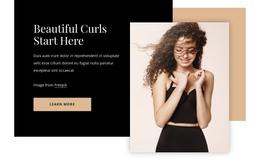
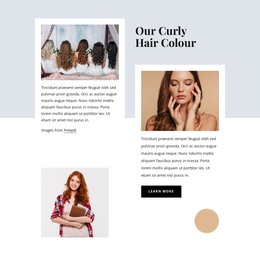
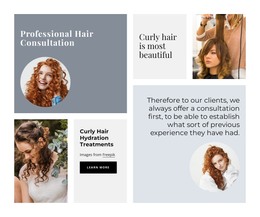
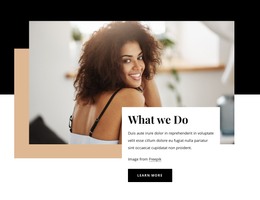

More from Fashion & Beauty Blocks
-
-
-
-
-
-
-
-
-
-
-
Free Website Builder SoftwareDownload
-
-
-
-
-
-
-
-
-
-





More from Wide Blocks
-

-
-
-
-
-
-
-
-
-
-
Free Website Builder SoftwareDownload
-
-
-
-
-
-
-
-
-
-