Pilates and yoga center HTML Template



Edit Template Offline
2. Create new page and search for id 214514
Edit Template Online
Create Awesome Websites


Free Nicepage Builder
Keywords
A Complete Pilates and Yoga Page From Introduction to Inquiry
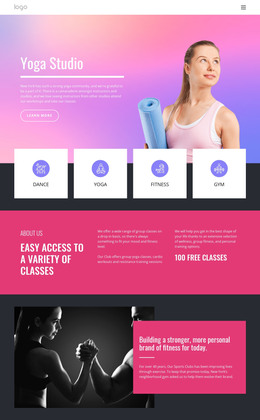
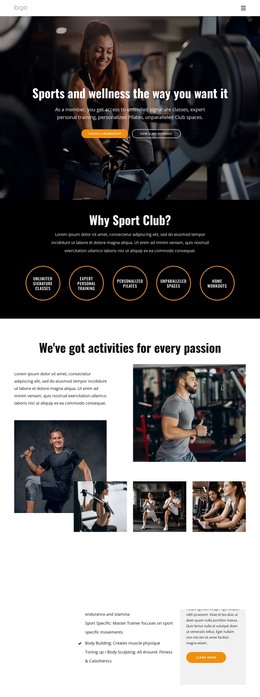
The opening split hero gives the static page an immediate subject: Pilates and Yoga appears beside a large exercise photograph, a short introduction, and a Read more action. From there, the three-item feature section makes the offer easier to understand by separating For Beginners, Group Classes, and Fitness Challenge into distinct content units. This creates a usable progression from general introduction to class-oriented information without requiring the visitor to interpret a blank layout.
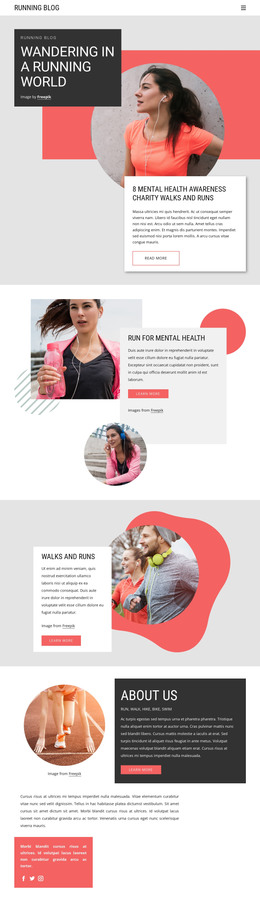
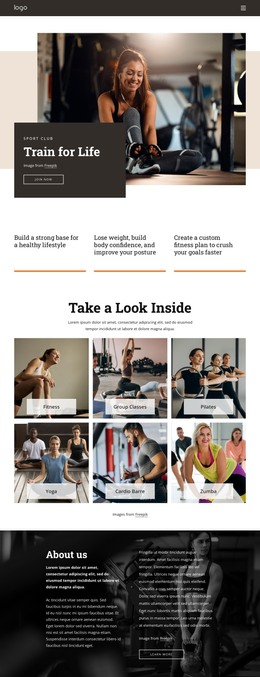
The middle of the page adds depth through several different content roles. “Become your best self” combines a motivational text card with overlapping lifestyle images, while the yoga section places educational descriptions beside circular photography. The Pilates transformation and benefits sections then shift the emphasis toward physical and mind-and-body outcomes. Together, these areas give the page explanatory content, visual context, and repeated Learn more actions rather than presenting only a title and image.
The final learning invitation leads into contact categories for calls, location, and business hours, followed by a form with name, email, message, and submission action. That closing arrangement makes the design function as a self-contained HTML page with a recognizable visitor path. Navigation, mobile navigation, the dark footer, and the connected section sequence complete the static implementation while leaving the placeholder wording and sample contact values available for replacement.
Customize with Nicepage
Open this ready-made template in the HTML Builder and customize it visually in the Nicepage editor. Replace demo content, edit page sections, and adapt the design to your project without rebuilding the template from scratch.
Export and Use This Template as an HTML Website
Create a Portable HTML Website
When the template is ready, use the HTML Export option to create a static website with the files required for deployment. The exported website can be used independently of the Nicepage editor and deployed on your preferred hosting.
Nicepage also provides SEO settings and optimization features, including Page Titles and Descriptions, Canonical settings, headings, image Alt Text, and other page-level properties that help prepare the website for search engines.
Deploy Without a CMS
Upload the finished website to the hosting environment that fits your project. Because the exported site does not require WordPress, Joomla, or another CMS to deliver its pages, it can be placed on your own server, uploaded to a hosting provider, or deployed through an existing web infrastructure.
Hand Off the Website Files
The generated website files can also be provided to a client, developer, or hosting team. They remain available outside the Nicepage editor for deployment, technical review, or project-specific development when additional work is required.
This workflow makes the template a practical foundation for a portable static website that can be exported from the Nicepage editor and deployed independently.

More from Sports HTML Templates
-
Free Website Builder SoftwareDownload