Nature travel gifts HTML Template


Edit Template Offline
2. Create new page and search for id 1087925
Edit Template Online
Create Awesome Websites


Free Nicepage Builder
Keywords
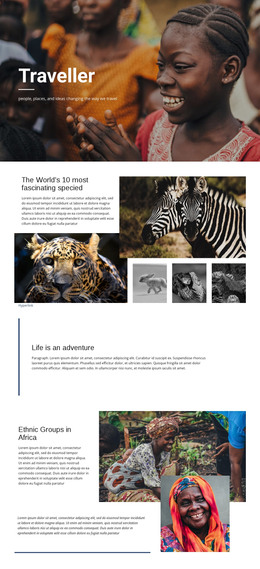
The Forest Hero and Newsletter Card Complete a Static Travel Page
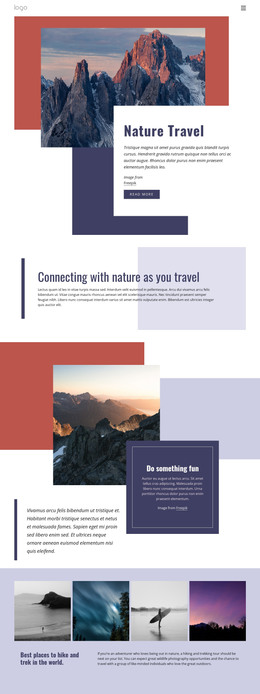
The page already brings together the major content areas needed for a self-contained travel presentation. A full-width forest hero establishes the subject, three repeated news cards provide an editorial section, and the “Travel with us” content introduces the service direction before the nine-category grid expands it. The categories cover flights, hotels, transfers, activities, hiking, attractions, adventure, climbing, and cycling, giving the static page more substance than a single promotional statement.
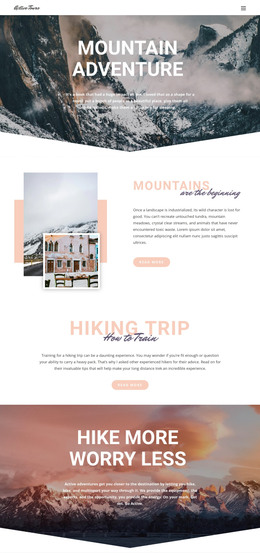
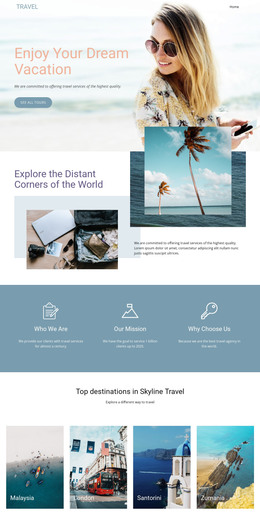
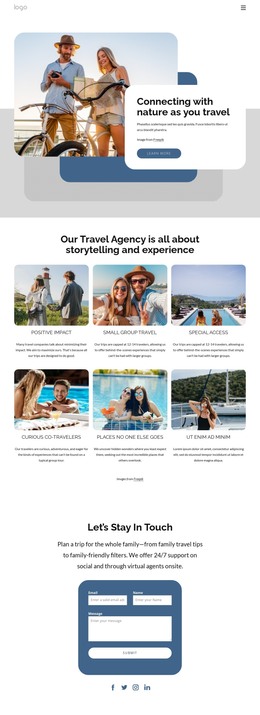
The following image-led sections continue the same narrative through outdoor photography, overlapping shapes, and short calls to action. An about-us section then explains the travel-agent value proposition and places two percentage callouts beside descriptive content. Near the end, the rounded newsletter card over a landscape image gives visitors a visible subscription response point, followed by a dark footer that closes the document cleanly.
This completeness is useful for an HTML implementation because the page has a coherent beginning, middle, and end before project content is replaced. The three article cards, service categories, promotional panels, about section, and subscription form can be retained as distinct static content areas. The demo headlines, dates, sample statistics, and placeholder copy should be replaced with verified project information, but their presence confirms the intended arrangement of the finished page.
Customize with Nicepage
Open this ready-made template in the HTML Builder and customize it visually in the Nicepage editor. Replace demo content, edit page sections, and adapt the design to your project without rebuilding the template from scratch.
Export and Use This Template as an HTML Website
Create a Portable HTML Website
When the template is ready, use the HTML Export option to create a static website with the files required for deployment. The exported website can be used independently of the Nicepage editor and deployed on your preferred hosting.
Nicepage also provides SEO settings and optimization features, including Page Titles and Descriptions, Canonical settings, headings, image Alt Text, and other page-level properties that help prepare the website for search engines.
Deploy Without a CMS
Upload the finished website to the hosting environment that fits your project. Because the exported site does not require WordPress, Joomla, or another CMS to deliver its pages, it can be placed on your own server, uploaded to a hosting provider, or deployed through an existing web infrastructure.
Hand Off the Website Files
The generated website files can also be provided to a client, developer, or hosting team. They remain available outside the Nicepage editor for deployment, technical review, or project-specific development when additional work is required.
This workflow makes the template a practical foundation for a portable static website that can be exported from the Nicepage editor and deployed independently.

More from Travel & Hotels HTML Templates
-
Free Website Builder SoftwareDownload