Smart living, safe data Html Code Example


Edit Template Offline
2. Create new page and search for id 6542635
Edit Template Online
Create Awesome Websites


Free Nicepage Builder
Keywords
Policy Sections Create Clear HTML Extension Points
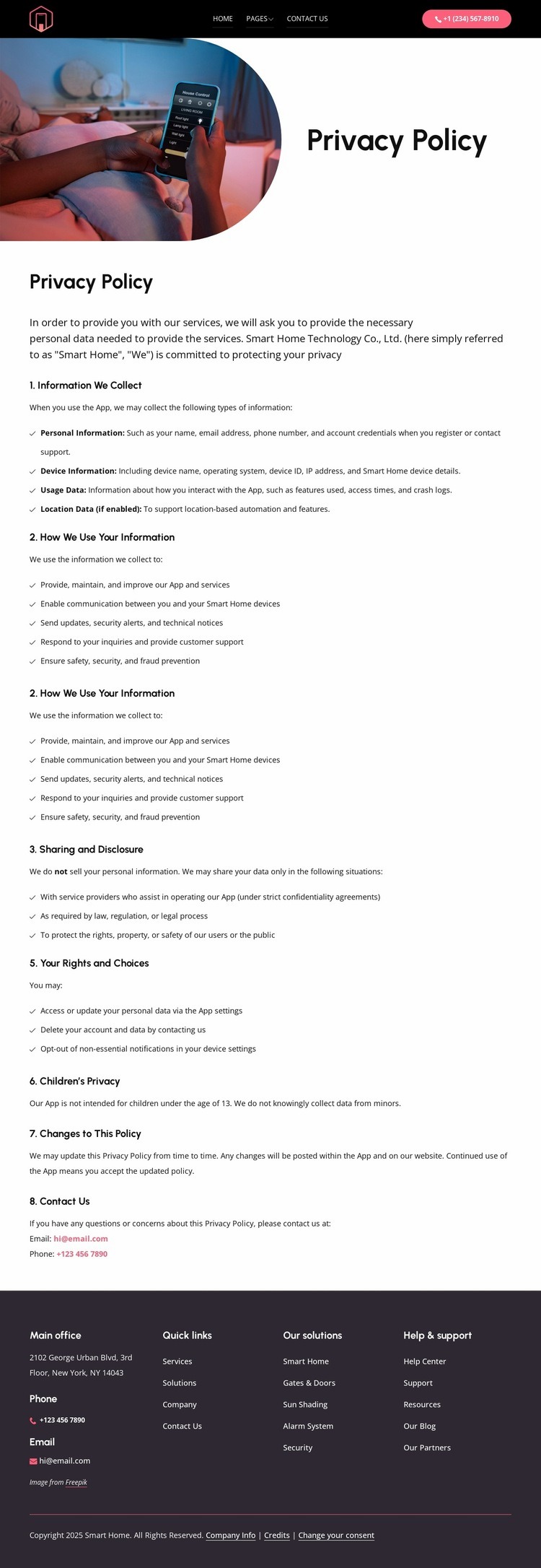
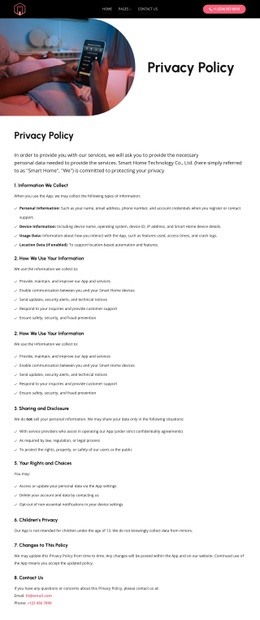
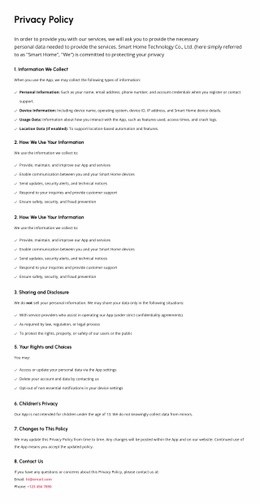
The page divides its legal information into distinct content zones rather than presenting one uninterrupted block of text. After the dark header and split Privacy Policy introduction, the first text area groups information about personal, device, usage, and enabled-location data. Numbered headings and bullet lists make these categories identifiable as separate content units. The following section continues with sharing and disclosure, user rights and choices, children’s privacy, changes to the policy, and contact information. This arrangement gives additional markup or project-specific functionality clear places to relate to existing content without requiring the whole page to be reorganized.
The contact channels are especially useful integration points because policy questions may need a support link, an external contact service, or another project-specific interaction beside the existing phone and email references. The footer also separates office information, quick links, solutions, and help resources into four columns, creating additional zones for carefully scoped additions. If the finished project requires functionality beyond standard text, navigation, and contact content, Nicepage’s HTML Element can provide a direct extension point for custom HTML while the policy hierarchy remains recognizable. The page therefore supports custom extension through its existing content relationships, not through an unsupported claim that custom code is already present.
Customize with Nicepage
Open this ready-made template in the HTML Code Generator and customize it visually in the Nicepage editor. Replace demo content, edit page sections, and adapt the design to your project without rebuilding the template from scratch.
Extend This Page With Custom HTML Code
Insert Code With the HTML Element
Use the HTML Element to add custom code directly to a Block in the Nicepage editor. Enter the required markup in the Code field when the page needs content or functionality that is not available through the standard page elements.
Place the HTML Element in the Layout
Treat the HTML Element as part of the visual page composition. Adjust its position, width, height, alignment, and margins to place the custom content where it belongs alongside text, images, buttons, and other elements. This makes it possible to combine visually edited sections with project-specific code without separating the custom element from the rest of the layout.
Add HTML, CSS, JavaScript, and External Components
The HTML Element supports HTML, CSS, and JavaScript, allowing you to extend the page with custom markup and interactive functionality. It can also be used to embed custom code and third-party components, such as social feeds, advertising code, widgets, or other external functionality required by the project.
This workflow makes the template useful for projects that need a visual page editor together with custom HTML code, JavaScript, embedded components, and functionality beyond the standard page elements.

Design Set (23)
-
Customize Any TemplateDownload
-

-
-
-
-
-
-
-
-
-
-
-
-













More from Technology Html Code Examples
-
Customize Any TemplateDownload