Climate and energy control Html Code Example


Edit Template Offline
2. Create new page and search for id 6315975
Edit Template Online
Create Awesome Websites


Free Nicepage Builder
Keywords
The Inquiry, Map, and Device Areas Leave Room for Extensions
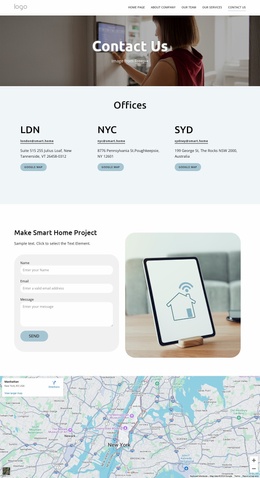
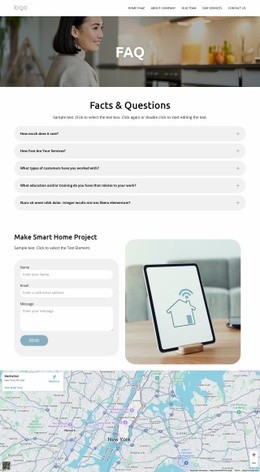
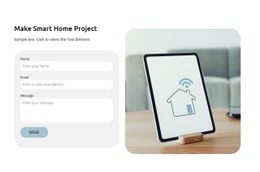
The project inquiry area is the clearest integration point in this design. It places a contact form beside a device image, giving the page a defined place for project-specific communication while preserving the visual relationship between the requested service and the technology being discussed. The visible map below adds a separate location-oriented content zone, and the footer repeats contact channels, support details, quick links, and a consultation prompt.
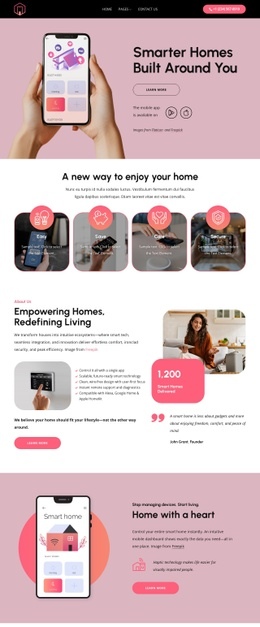
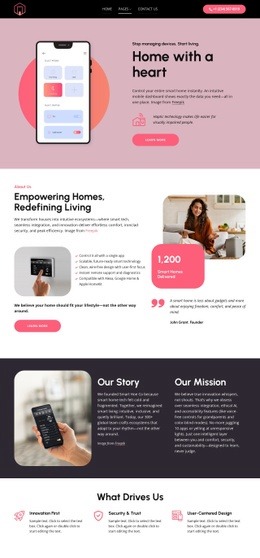
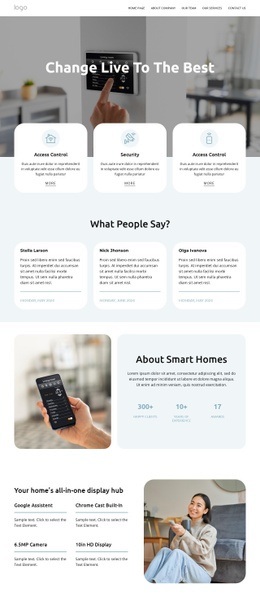
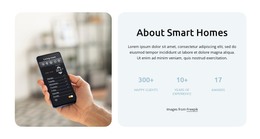
Other parts of the page offer different extension contexts. The six-item management slider presents outdoor CCTV, temperature control, tracking, auto control, motion sensing, and heating plans as browsable capability content. The all-in-one display hub section pairs a feature list with product imagery, while the Smart Home split section combines descriptive copy, a View more action, and labels for wireless connection, central management, and smart applications. These areas could logically sit beside project-specific widgets, richer device information, or external service content if the final implementation needs functionality beyond the visible page elements.
The important point is that additional code would have natural locations rather than requiring an entirely new composition. A custom HTML element is a Nicepage-supported way to add external code, but the page-specific value comes from matching that extension to the inquiry, location, device, or capability area where visitors already expect related information.
Customize with Nicepage
Open this ready-made template in the HTML Code Generator and customize it visually in the Nicepage editor. Replace demo content, edit page sections, and adapt the design to your project without rebuilding the template from scratch.
Extend This Page With Custom HTML Code
Insert Code With the HTML Element
Use the HTML Element to add custom code directly to a Block in the Nicepage editor. Enter the required markup in the Code field when the page needs content or functionality that is not available through the standard page elements.
Place the HTML Element in the Layout
Treat the HTML Element as part of the visual page composition. Adjust its position, width, height, alignment, and margins to place the custom content where it belongs alongside text, images, buttons, and other elements. This makes it possible to combine visually edited sections with project-specific code without separating the custom element from the rest of the layout.
Add HTML, CSS, JavaScript, and External Components
The HTML Element supports HTML, CSS, and JavaScript, allowing you to extend the page with custom markup and interactive functionality. It can also be used to embed custom code and third-party components, such as social feeds, advertising code, widgets, or other external functionality required by the project.
This workflow makes the template useful for projects that need a visual page editor together with custom HTML code, JavaScript, embedded components, and functionality beyond the standard page elements.

Design Set (19)
-

-
-
Customize Any TemplateDownload
-
-
-
-
-
-
-
-
-









More from Technology Html Code Examples
-
Customize Any TemplateDownload