Subscribe form with gradient Template


A Paper-Plane Split Design for Focused Contact Capture
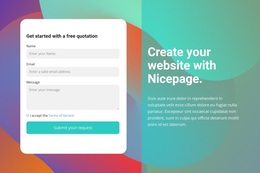
The section combines a decorative paper-plane illustration with a direct contact interaction instead of using a generic text-only form arrangement. The illustration occupies the left panel and gives the block a recognizable visual anchor, while the right panel concentrates the name and email fields and the visible “contact us” control. This combination creates a compact contact area with both a supporting visual and a clear response point.
The design is also distinguished by how its surfaces and controls work together. A soft pastel gradient links the lavender and white panels, rounded light-gray fields make the form inputs read as one repeated set, and the rounded lavender button marks the end of the visitor’s input path. Because the form is vertically centered, the block keeps the functional content aligned with the illustration rather than allowing the right side to become visually heavy.
This makes the design a useful choice when a page needs a contact section that feels more composed than a simple stacked form, while still keeping the interaction easy to identify. It can provide one focused information-capture moment within a broader page arrangement. Other sections may handle introductions, supporting content, or additional actions, while this block remains responsible for its own name-and-email contact task.
Customize with Nicepage
Open this ready-made template in the Template Builder and customize it visually in the Nicepage editor. Replace demo content, edit page sections, and adapt the design to your project without rebuilding the template from scratch.
Edit Template Offline
2. Create a new page or select existing
3. Click Add new block, search for id 439610 and click enter
Edit Template Online
Create Awesome Websites


Free Nicepage Builder
Keywords
Start With a Ready-Made Template
Choose a Design for a New Page
Use a ready-made template as a starting point instead of creating every page from a blank canvas. When adding a new page in Nicepage, browse available designs, compare different layouts, and choose an option that already fits the general purpose and visual direction of your project.
Browse Different Page Designs
Explore Page Designs using search, thematic categories, Design Sets, and full-page previews. The collection includes layouts for different subjects and page purposes, making it easier to compare alternatives before selecting a design to customize.
Customize the Selected Template
After choosing a design, create the page and continue editing it visually in Nicepage. Replace the demo content, adjust images, typography, colors, sections, and other elements, and adapt the ready-made layout to your own content instead of rebuilding the design from the beginning.
Explore More Design Directions
If the first option does not match your project closely enough, return to the design collection and compare other templates before committing to a layout. This makes the template library useful not only for faster page creation, but also for exploring different visual approaches and finding a suitable starting point for a new project.
This workflow gives you access to a broad collection of ready-made designs that can be selected, compared, and customized according to the needs of each new page or project.