Creative form in design Template


Edit Template Offline
2. Create new page and search for id 115655
Edit Template Online
Create Awesome Websites


Free Nicepage Builder
Keywords
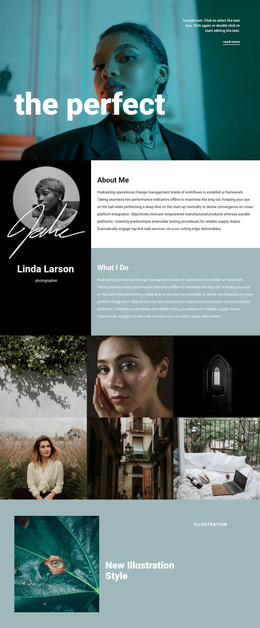
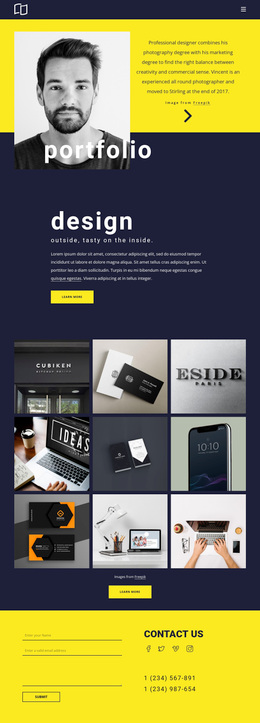
A five-image gallery anchors the creative portfolio choice
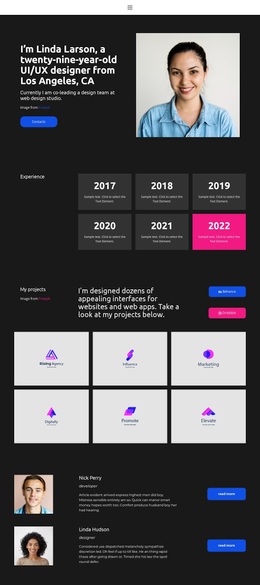
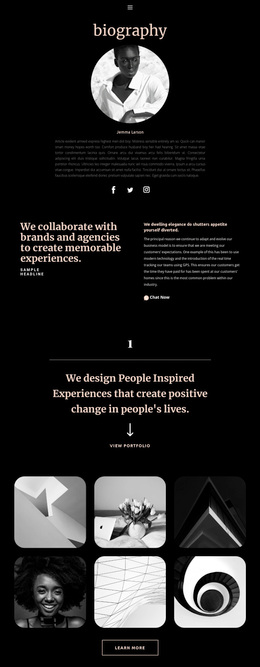
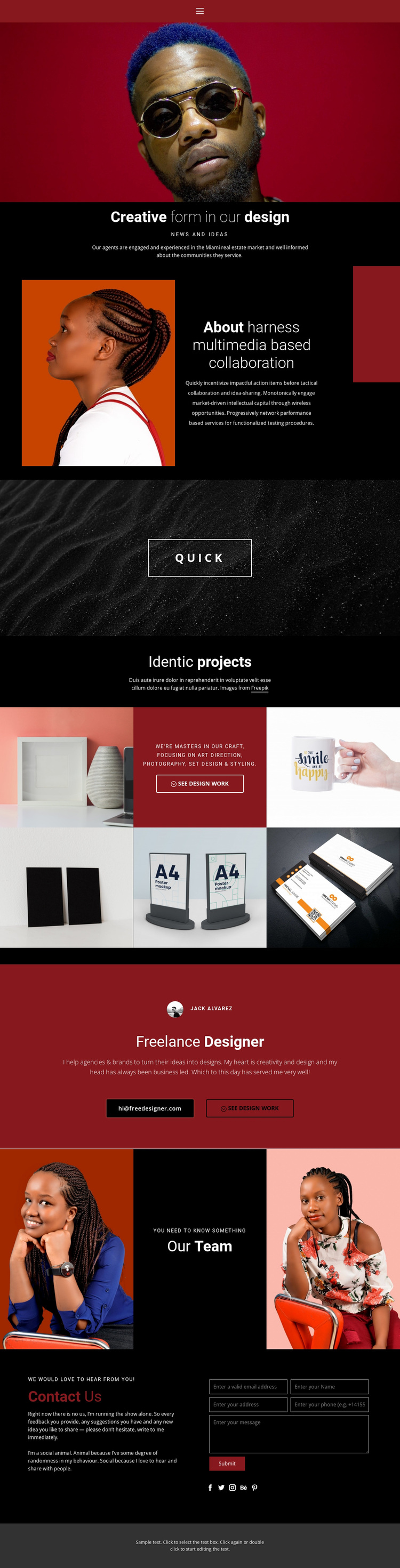
The design makes project imagery the main carrier of its message. A large portrait establishes a personal point of view, and the later gallery expands that visual introduction into five selected project images arranged around a highlighted description. This combination suits a freelance portfolio that needs to show art direction, photography, set design, and styling through examples rather than relying on dense service copy alone.
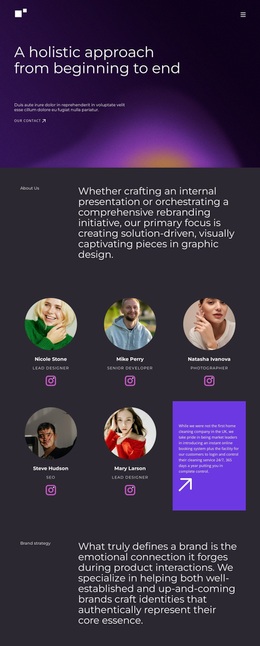
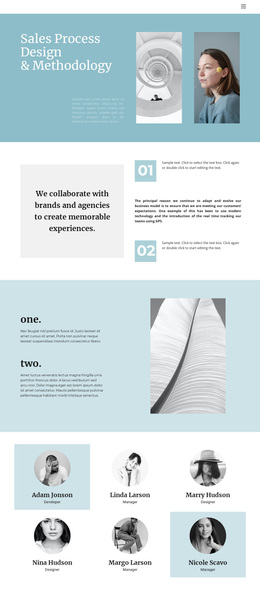
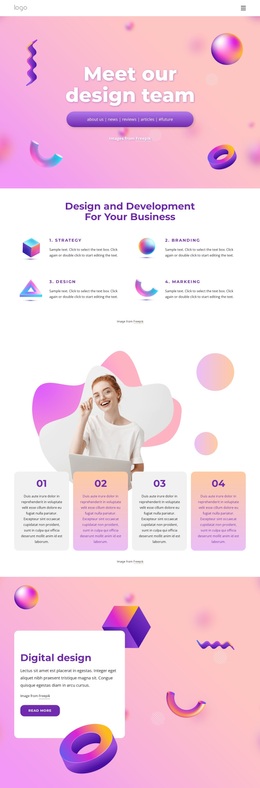
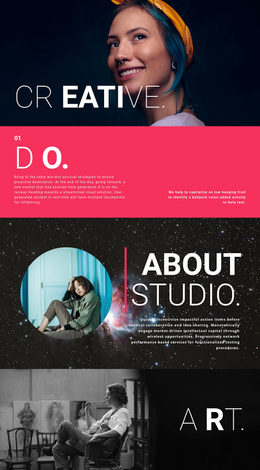
The surrounding sections add useful coverage without weakening the visual focus. The about block explains multimedia collaboration, the freelance designer section gives the practice a clear identity, and the team block introduces a collaborative dimension through portraits and a central message. The textured call-to-action section provides a short visual transition between context and project work, while large headings and high contrast help each area stand apart.
Direct contact is also built into the choice. The profile includes an email action and a link to design work, and the final contact section adds a submission form with social links. That makes the design suitable for projects where agencies or brands need to review a creative portfolio and then start a conversation. Compared with a layout centered on pricing tables or long text, this option prioritizes editorial imagery, personal identity, selected work, and a clear inquiry path. Its strongest reason to choose it is the relationship between visual proof and direct creative contact.
Customize with Nicepage
Open this ready-made template in the Template Builder and customize it visually in the Nicepage editor. Replace demo content, edit page sections, and adapt the design to your project without rebuilding the template from scratch.
Start With a Ready-Made Template
Choose a Design for a New Page
Use a ready-made template as a starting point instead of creating every page from a blank canvas. When adding a new page in Nicepage, browse available designs, compare different layouts, and choose an option that already fits the general purpose and visual direction of your project.
Browse Different Page Designs
Explore Page Designs using search, thematic categories, Design Sets, and full-page previews. The collection includes layouts for different subjects and page purposes, making it easier to compare alternatives before selecting a design to customize.
Customize the Selected Template
After choosing a design, create the page and continue editing it visually in Nicepage. Replace the demo content, adjust images, typography, colors, sections, and other elements, and adapt the ready-made layout to your own content instead of rebuilding the design from the beginning.
Explore More Design Directions
If the first option does not match your project closely enough, return to the design collection and compare other templates before committing to a layout. This makes the template library useful not only for faster page creation, but also for exploring different visual approaches and finding a suitable starting point for a new project.
This workflow gives you access to a broad collection of ready-made designs that can be selected, compared, and customized according to the needs of each new page or project.