Reach out to our team for quick answers Website Template
Edit Template Offline
2. Create new page and search for id 6477010
Edit Template Online
Create Awesome Websites


Free Nicepage Builder
Keywords
Navigation, Contact Channels, and Footer Content Form a Site Foundation
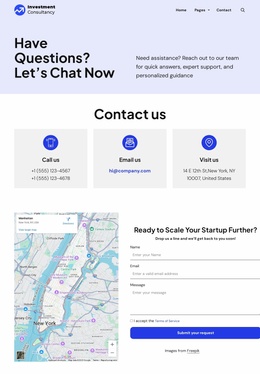
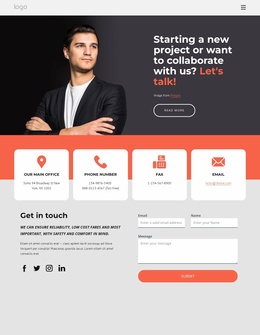
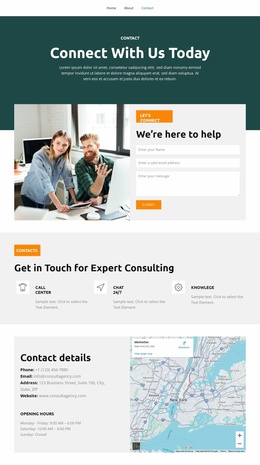
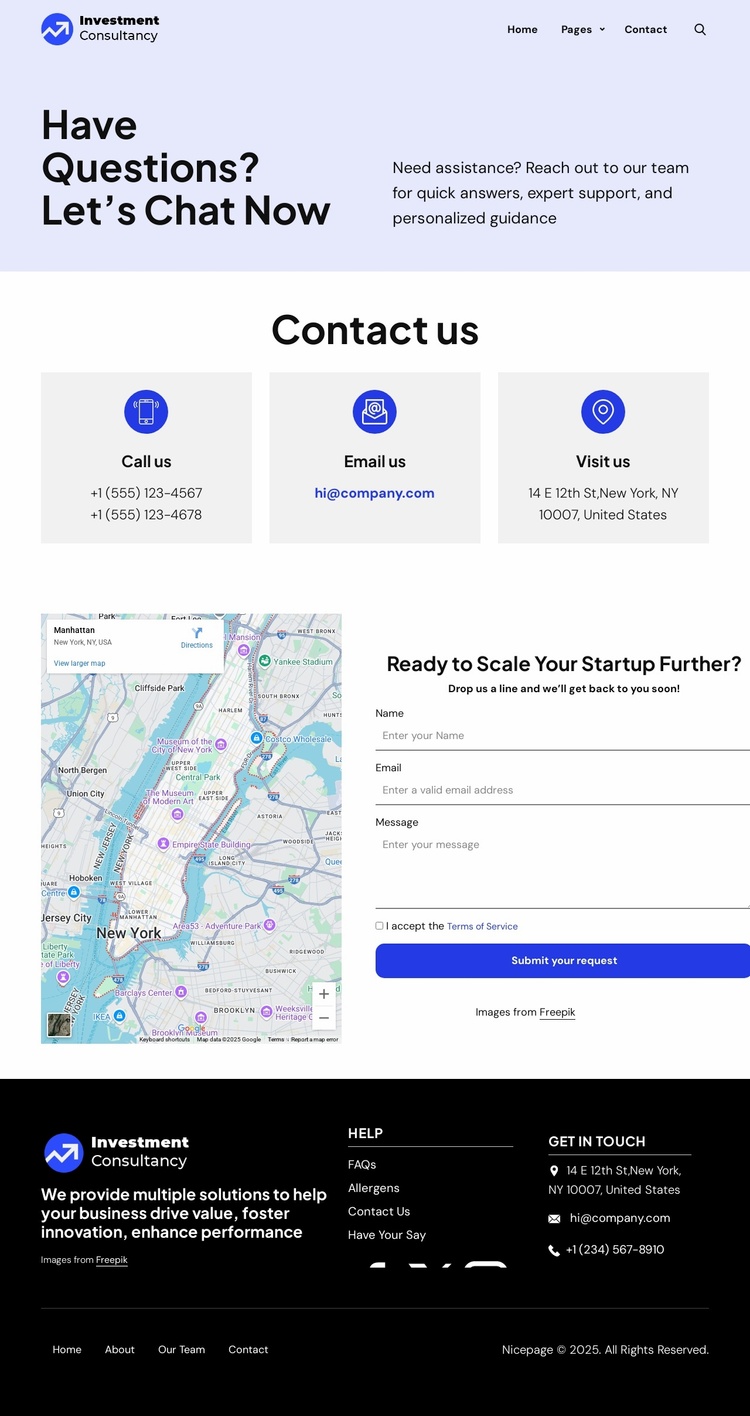
The page establishes several content areas that can serve as a starting information architecture for a broader website. The header already defines a shared navigation region with a logo, menu links, and search control. Within the page, the three contact cards separate phone, email, and location information, making those channels easy to preserve as a recurring contact area or adapt into related site content.
The map and inquiry form add two different kinds of project content. The map supports location-oriented information, while the form creates a structured route for name, email, and message submissions. Because they appear together but retain distinct roles, this section can remain a focused contact area even if other pages later expand the site’s subject matter. The dark footer contributes another reusable region through brand copy, help links, contact details, social links, legal content, and secondary navigation.
The design therefore offers more than a single isolated interaction: it shows how navigation, informational cards, location context, response content, and shared footer material can coexist in one visual system. It does not by itself prove that multiple pages are included, but its existing regions provide a clear foundation for adding verified service, company, or information pages as the project grows. The displayed address and contact details should be replaced with confirmed project data.
Customize with Nicepage
Open this ready-made template in the Website Template Builder and customize it visually in the Nicepage editor. Replace demo content, edit page sections, and adapt the design to your project without rebuilding the template from scratch.
Build a Complete Website From This Template
Customize the Website Visually
Use this ready-made website template as a starting point for your project and adapt its pages visually in Nicepage. Change content, images, typography, navigation, sections, and other design elements while keeping the website together as a single editable project.
Manage Website Pages in One Project
Use the Pages panel to open, add, duplicate, and manage the pages of your website. Work on individual pages while keeping navigation and the overall site structure accessible from the same project, making it easier to develop a complete website instead of managing separate page files.
Expand the Website With Matching Designs
When you need additional pages or sections, use Page Design Sets to find Page and Block Designs created in the same visual style. Design Sets group matching designs together, making it easier to expand the website with new content while maintaining a consistent look across its pages and sections.
Organize Larger Multi-Page Websites
As the website grows, use Page Folders to organize related pages and keep larger multi-page projects easier to navigate in the editor. This is especially useful for websites with separate service pages, company information, contacts, landing pages, and other content areas.
This workflow makes the template a practical foundation for building and expanding a complete website while managing its pages, content, and visual design within one Nicepage project.