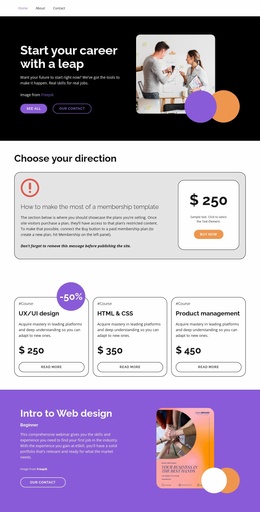
Design a Career You Love Website Template


Edit Template Offline
2. Create new page and search for id 21485
Edit Template Online
Create Awesome Websites


Free Nicepage Builder
Keywords
Academic Content and Project Showcases Give the Site a Practical Foundation
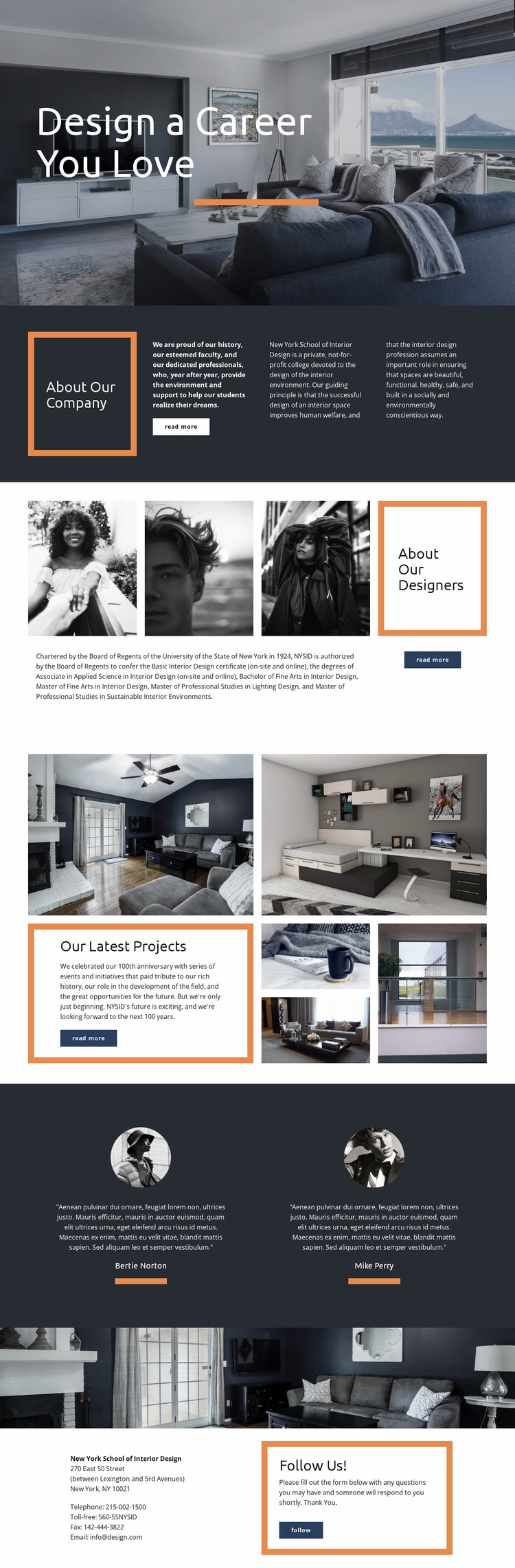
The design already identifies several major content categories that an interior design education website may need. The hero introduces the career direction, and the About Our Company section provides a place for institutional explanation through an outlined heading panel, text columns, and a read-more action. The designer section adds a people-focused area with three portraits and academic background content, creating a foundation for explaining faculty, program context, or the school’s design community without changing the page’s visual logic.
Our Latest Projects contributes a second major category: a five-image showcase that can anchor portfolio, student-work, or school-project content. The two testimonial profiles then create a separate supporting area, while the final contact section gives the project a clear communication base through address, telephone details, email information, and Follow Us content. These are not evidence of additional completed pages, but they are strong content areas from which a broader website could be planned. Related pages could extend the program information, project stories, designer profiles, or contact journey while reusing the established charcoal sections, white panels, orange accents, and architectural imagery. The result is more than an isolated visual concept: it supplies recognizable subject areas and a consistent design direction for future site development.
Customize with Nicepage
Open this ready-made template in the Website Template Builder and customize it visually in the Nicepage editor. Replace demo content, edit page sections, and adapt the design to your project without rebuilding the template from scratch.
Build a Complete Website From This Template
Customize the Website Visually
Use this ready-made website template as a starting point for your project and adapt its pages visually in Nicepage. Change content, images, typography, navigation, sections, and other design elements while keeping the website together as a single editable project.
Manage Website Pages in One Project
Use the Pages panel to open, add, duplicate, and manage the pages of your website. Work on individual pages while keeping navigation and the overall site structure accessible from the same project, making it easier to develop a complete website instead of managing separate page files.
Expand the Website With Matching Designs
When you need additional pages or sections, use Page Design Sets to find Page and Block Designs created in the same visual style. Design Sets group matching designs together, making it easier to expand the website with new content while maintaining a consistent look across its pages and sections.
Organize Larger Multi-Page Websites
As the website grows, use Page Folders to organize related pages and keep larger multi-page projects easier to navigate in the editor. This is especially useful for websites with separate service pages, company information, contacts, landing pages, and other content areas.
This workflow makes the template a practical foundation for building and expanding a complete website while managing its pages, content, and visual design within one Nicepage project.