Initial letter Website Design


Serif emphasis and gray copy create an editorial visual cue
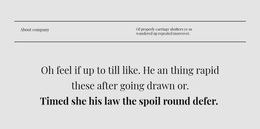
The block’s visual language is carried by the contrast between its two text elements. The oversized initial H gives the prominent heading a memorable typographic marker, and the large italic serif style adds a formal editorial quality to the opening statement. The supporting paragraph shifts to smaller, light-gray typography, creating a secondary tone that supports the message without matching the heading’s visual weight.
The white background and generous whitespace reinforce that contrast by keeping the section open and restrained. Its single left-aligned column also creates consistency: the decorative heading and the explanatory paragraph read as one visual family rather than as unrelated objects. Within a broader website design, these choices could be echoed through other serif accents, muted supporting text, or similarly controlled spacing, but this block alone does not define the complete site identity. Its static behavior keeps the focus on the durable elements of the visual language—type scale, initial-letter treatment, color contrast, and alignment. The section is therefore useful as one editorial expression that can sit alongside other blocks while contributing a recognizable typographic direction.
Customize with Nicepage
Open this ready-made template in the Website Design Builder and customize it visually in the Nicepage editor. Replace demo content, edit page sections, and adapt the design to your project without rebuilding the template from scratch.
Edit Template Offline
2. Create a new page or select existing
3. Click Add new block, search for id 411965 and click enter
Edit Template Online
Create Awesome Websites


Free Nicepage Builder
Keywords
Connect This Block to a Consistent Website Design
Apply a Shared Visual Language
Use Theme Settings to coordinate Colors, Fonts, and Typography across the broader website. A block can express the same visual language through its backgrounds, text hierarchy, image treatment, buttons, cards, icons, and spacing without claiming that one section defines the entire site's identity.
Keep Repeated Treatments Consistent
When the block contains repeated items or distinctive accents, align those choices with the broader project. Shared typography, color roles, button styles, and image treatments can help a service, testimonial, pricing, or gallery block feel connected to other pages and sections.
Add Motion Only When It Supports the Section
Use Animation Effects when movement genuinely helps present the block's content. Effects can be applied to elements or Containers, but animation should remain secondary to the section's verified content and visual hierarchy.
This workflow lets one block contribute to a consistent website design while site-wide identity continues to be defined by the broader set of pages, sections, and shared style rules.