Family friendly church Website Design


Edit Template Offline
2. Create new page and search for id 378350
Edit Template Online
Create Awesome Websites


Free Nicepage Builder
Keywords
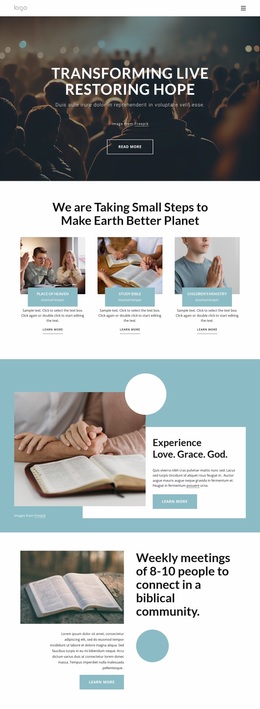
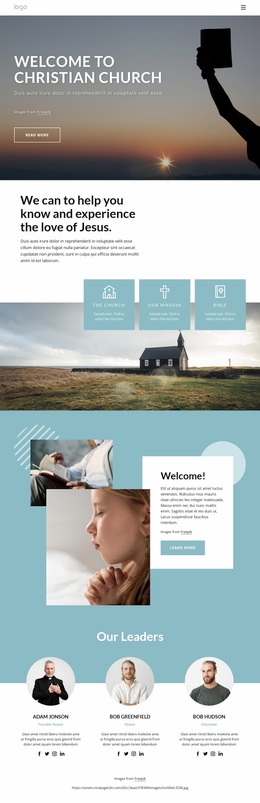
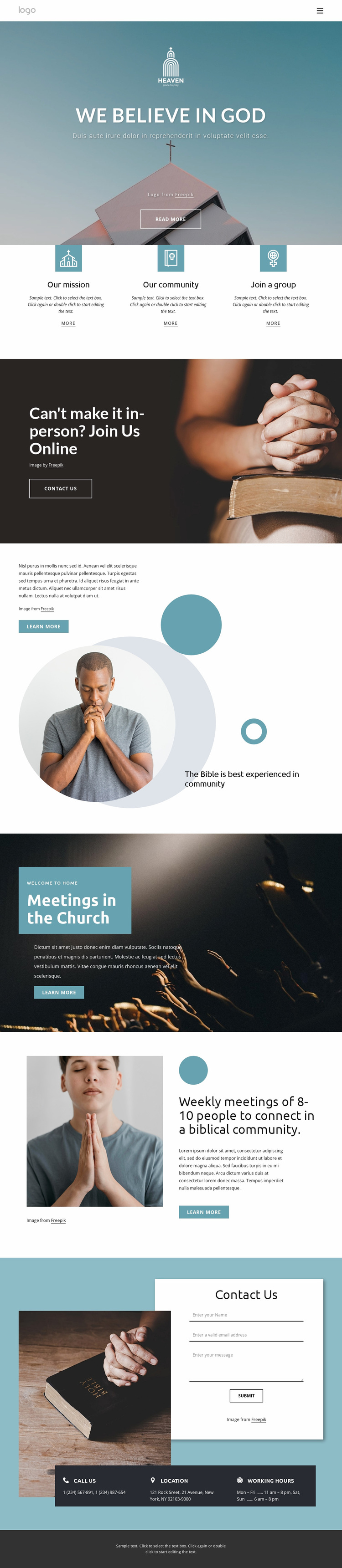
Blue Accents and Dark Photography Shape the Church’s Visual Language
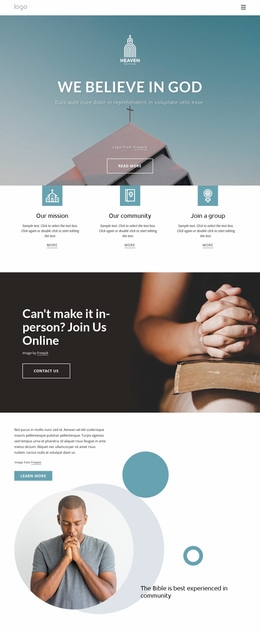
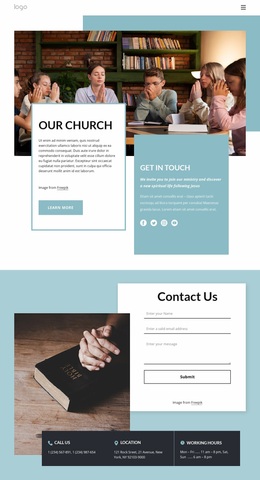
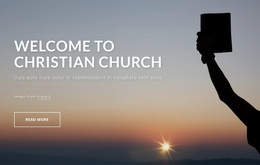
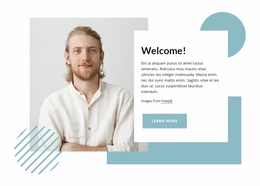
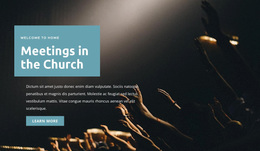
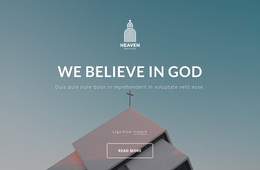
Blue and teal accents provide the main visual points of emphasis, contrasting with dark photographic backgrounds and white content areas. That palette gives the page a restrained devotional tone rather than a bright promotional one. The large condensed headings reinforce the direction: “WE BELIEVE IN GOD,” “Our mission,” and “Meetings in the Church” are treated as prominent statements, while compact body copy leaves space around the supporting information.
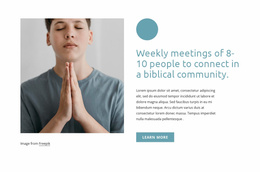
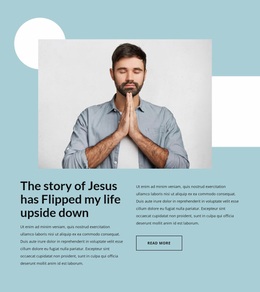
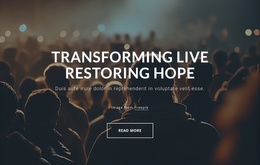
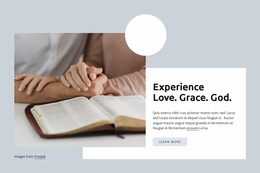
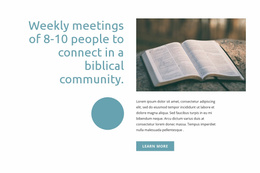
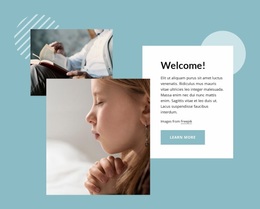
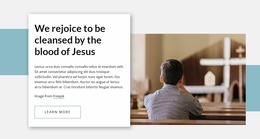
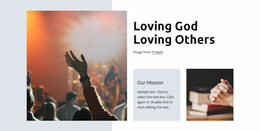
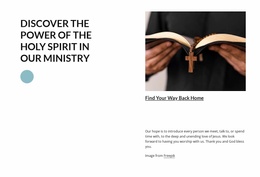
Photography carries a second layer of consistency. The opening architectural image introduces the church setting, a prayer image supports the mission content, and atmospheric backgrounds frame the meeting and online participation sections. These images are not isolated decorations; they connect the belief statement with the page’s explanations of mission, meetings, and community. The three equal cards add a repeated visual unit for the mission, community, and group pathways, balancing the larger image-led blocks.
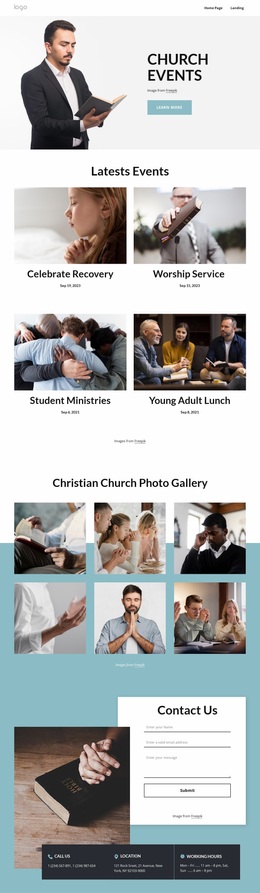
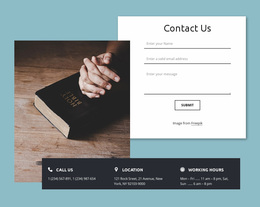
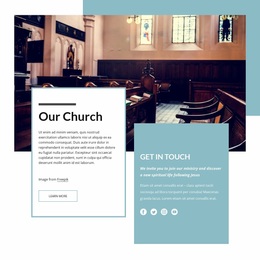
The contact area continues the same system by placing an image beside the form and using a dark strip for phone, location, and working-hours information. The footer echoes that darker finish. As a website design, the template’s identity comes from the relationship between cool accents, dark imagery, white space, condensed typography, and repeated section treatments, rather than from any single decorative element.
Customize with Nicepage
Open this ready-made template in the Website Design Builder and customize it visually in the Nicepage editor. Replace demo content, edit page sections, and adapt the design to your project without rebuilding the template from scratch.
Create a Consistent Design Across the Website
Define a Site-Wide Visual Style
Use Theme Settings to establish the visual foundation of the website across its pages and sections. Set global Colors, Fonts, and Typography so the site follows the same design direction instead of styling each page independently.
Coordinate Colors and Typography
Choose a color scheme and font combination that fit the character of the website, then fine-tune Headings H1-H6, regular Text, links, buttons, quotes, lists, and other typography styles. Consistent use of these settings helps create a clear visual hierarchy and keeps recurring design elements recognizable throughout the website.
Add Motion and Interaction
Use Animation Effects to make the website design more dynamic and interactive. Elements and Containers can use effects such as Run On Display, Animation On Hover, and Animation Sync With Scroll to introduce content as visitors move through the site or respond to user interaction. Animation Presets provide ready-made effects that can be adapted to the visual style of the website.
Keep the Website Visually Consistent
Apply the same design direction to shared website elements such as the Header, Menu, and Footer. The Theme Settings Panel brings common site-wide styling controls together, making it easier to maintain a coordinated look as the website expands across multiple pages.
This workflow makes the template a useful starting point for creating a website with a consistent visual identity, coordinated colors and typography, shared design rules, and interactive effects across its pages.