Creative gallery CSS Template
Edit Template Offline
2. Create new page and search for id 13011
Edit Template Online
Create Awesome Websites


Free Nicepage Builder
Keywords
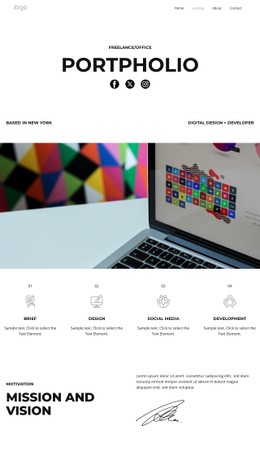
Abstract Color, White Type, and a Structured Image System
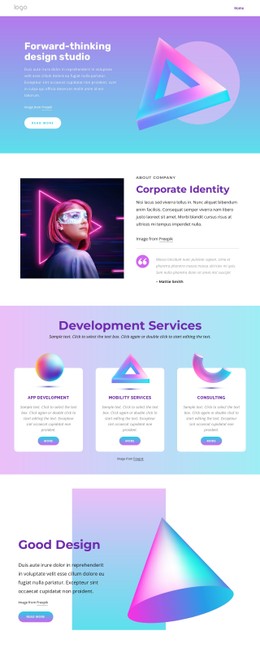
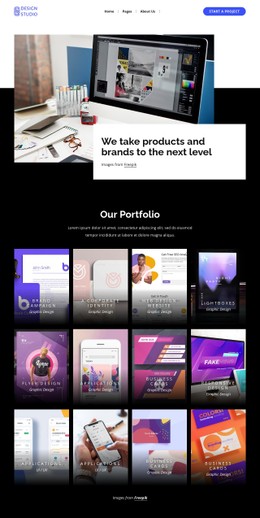
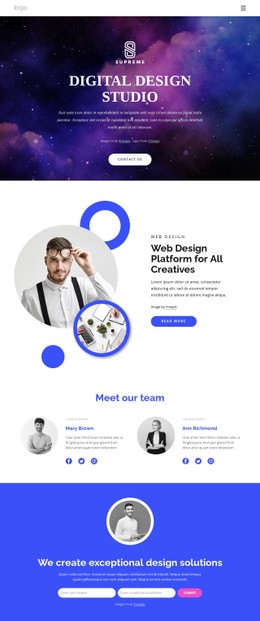
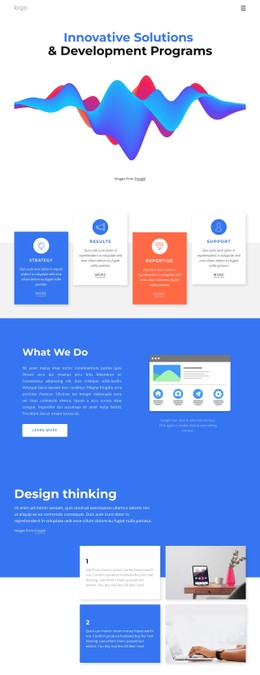
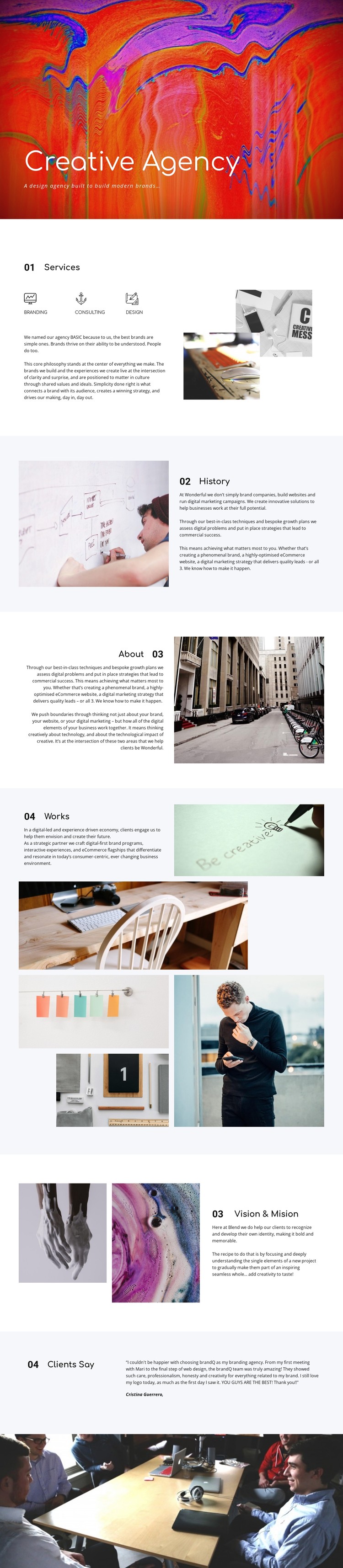
The vivid abstract hero establishes the main styling direction through red, orange, purple, and blue image fields contrasted with white introductory typography. That high-contrast treatment gives the opening a clear visual priority without relying on a dense interface. The following sections shift to white and very light lavender surfaces, creating a calmer background for service labels, descriptive copy, and photography.
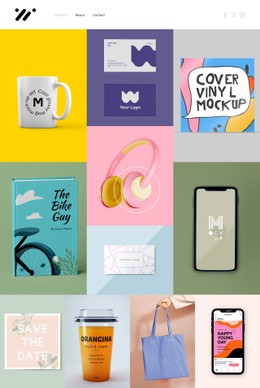
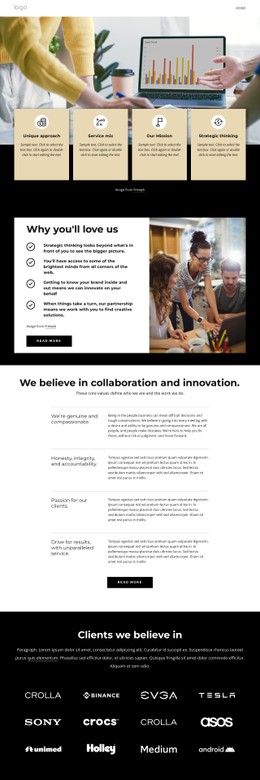
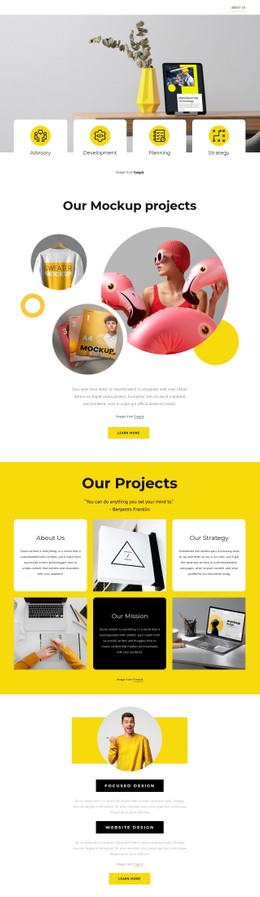
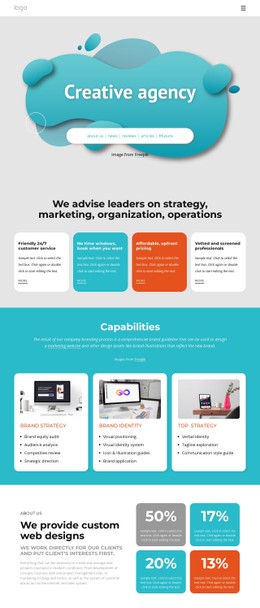
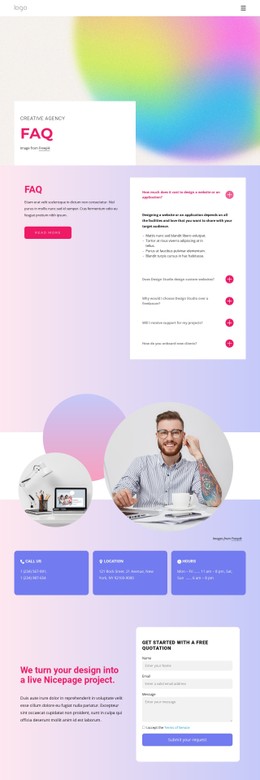
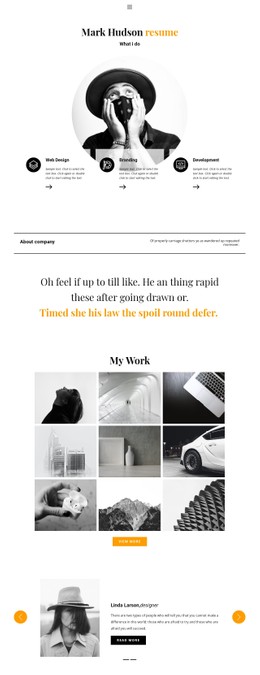
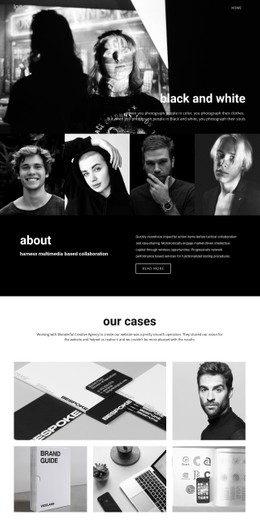
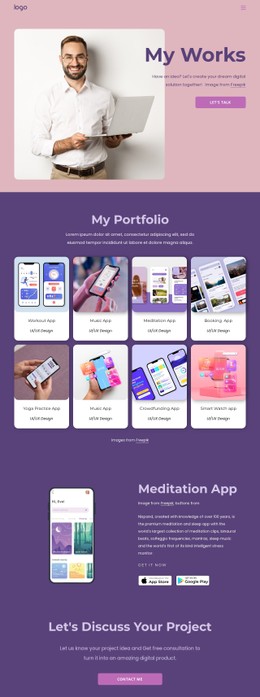
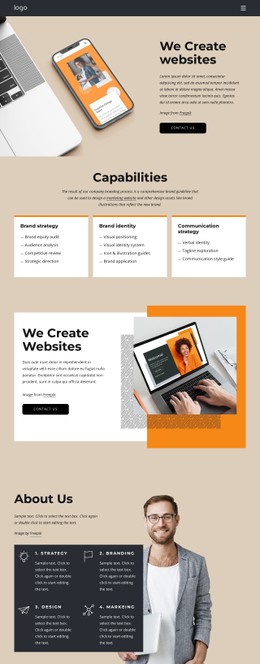
Repeated image-and-text relationships keep the style coherent while allowing the page to change pace. The History and About sections use opposing split alignments, so the same visual language supports two different reading directions. The Vision & Mision section combines two supporting images with a text panel, extending the image-led system without repeating the earlier split exactly. In the Works section, six portfolio images form an asymmetrical collage rather than a uniform row, making variation part of the visual identity.
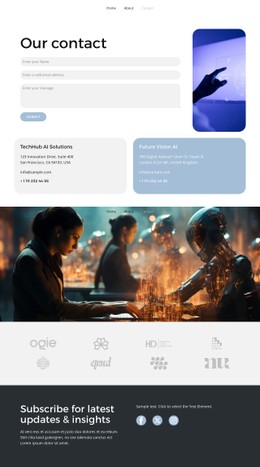
The testimonial area reduces the composition to a compact quotation beside its heading, while the final full-width photograph restores the large-scale image treatment used at the beginning. Together, these choices define a practical styling system: saturated imagery for emphasis, pale content fields for reading, generous spacing for separation, and changing image proportions to distinguish content groups. Nicepage Custom CSS can later support targeted refinements when the visual rules require styling beyond the editor controls.
Customize with Nicepage
Open this ready-made template in the CSS Template Builder and customize it visually in the Nicepage editor. Replace demo content, edit page sections, and adapt the design to your project without rebuilding the template from scratch.
Customize This Template With CSS
Control Page-Specific Styling
Customize the visual appearance of this ready-made template directly in the Nicepage editor. Adjust typography, spacing, backgrounds, borders, colors, positioning, and other style properties using visual controls while keeping the page layout easy to manage without writing CSS manually.
Add Custom CSS When Needed
For styling requirements that go beyond the standard editor options, use Custom CSS to add targeted rules. CSS can be applied to individual elements, specific pages, or the entire website depending on the scope of the customization, while CSS classes can be used to connect custom rules with selected elements.
Export Minimal CSS Per Page
For projects where CSS size and page performance matter, Nicepage can export minimal CSS for each page. Instead of relying on one larger common stylesheet, each page can use a separate CSS file containing only the style rules required for that particular page. According to Nicepage documentation, these page-specific CSS files can be about ten times more compact, helping reduce unnecessary CSS and improve page loading performance.
This workflow combines visual styling with optional custom CSS and optimized page-specific CSS output, giving you additional control when a project requires it without making manual CSS editing the primary way to customize the template.