National art school CSS Template
Edit Template Offline
2. Create new page and search for id 12952
Edit Template Online
Create Awesome Websites


Free Nicepage Builder
Keywords
White Cards, Studio Images, and Dividers Build a Repeated Styling System
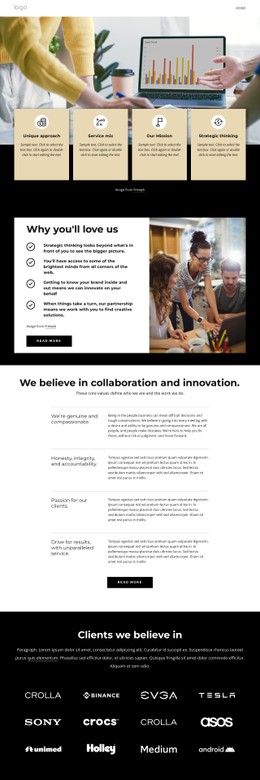
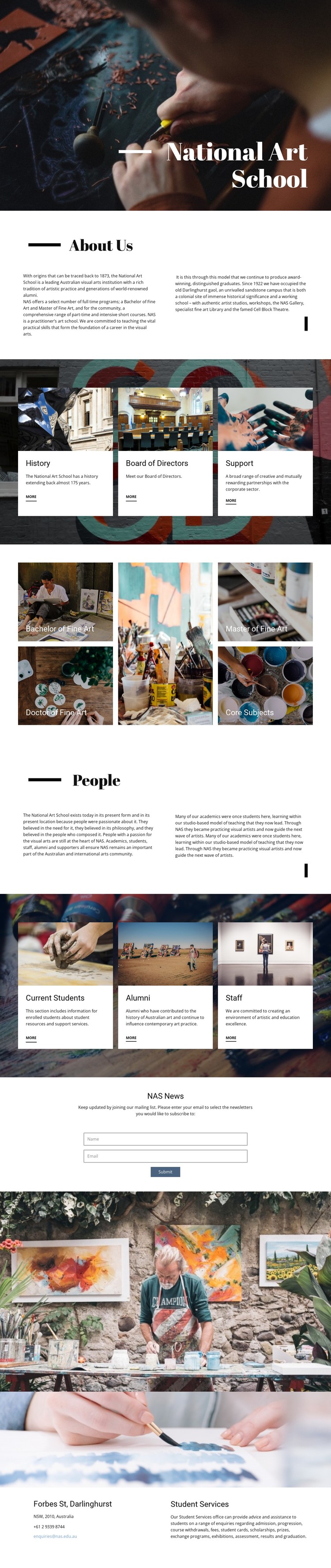
The design’s visual system begins with a large art-studio photograph carrying the National Art School title in prominent display typography. The right-aligned heading, horizontal divider, and generous surrounding space give the hero a restrained editorial treatment rather than a crowded promotional appearance. That contrast continues through the black-and-white sections, where thin divider lines and two-column text create clear separation between institutional history, programs, campus information, and the People content.
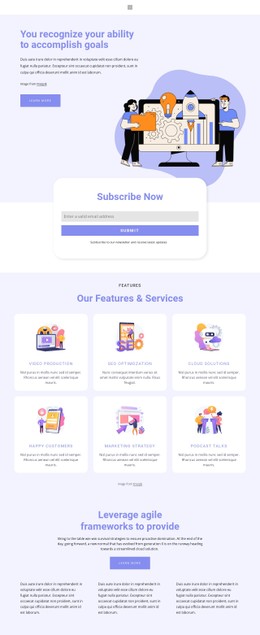
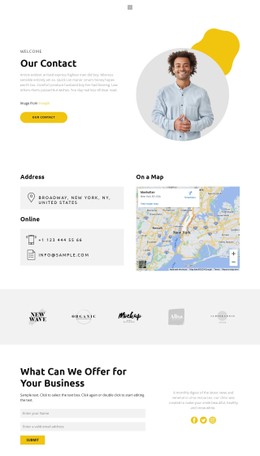
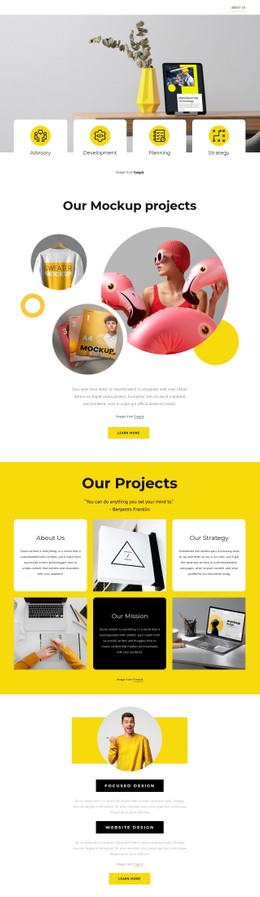
The repeated white cards provide another concrete styling rule. History, Board of Directors, and Support appear as compact information units over a photographic background, while the same white-card treatment returns for Current Students, Alumni, and Staff. This repetition connects different content groups through shared surfaces and spacing without requiring identical information. The four program tiles introduce a related but more image-led pattern for Bachelor of Fine Art, Doctor of Fine Art, Master of Fine Art, and Core Subjects, giving the page a denser mosaic interval between text sections. Near the end, the centered NAS News subscription block reduces the scale again before the full-width image and Forbes St, Darlinghurst contact area restore the broad photographic rhythm. As a CSS-oriented design, these recurring relationships make the appearance legible through backgrounds, contrast, typography, borders, spacing, and card treatments rather than through isolated decorative effects.
Customize with Nicepage
Open this ready-made template in the CSS Template Builder and customize it visually in the Nicepage editor. Replace demo content, edit page sections, and adapt the design to your project without rebuilding the template from scratch.
Customize This Template With CSS
Control Page-Specific Styling
Customize the visual appearance of this ready-made template directly in the Nicepage editor. Adjust typography, spacing, backgrounds, borders, colors, positioning, and other style properties using visual controls while keeping the page layout easy to manage without writing CSS manually.
Add Custom CSS When Needed
For styling requirements that go beyond the standard editor options, use Custom CSS to add targeted rules. CSS can be applied to individual elements, specific pages, or the entire website depending on the scope of the customization, while CSS classes can be used to connect custom rules with selected elements.
Export Minimal CSS Per Page
For projects where CSS size and page performance matter, Nicepage can export minimal CSS for each page. Instead of relying on one larger common stylesheet, each page can use a separate CSS file containing only the style rules required for that particular page. According to Nicepage documentation, these page-specific CSS files can be about ten times more compact, helping reduce unnecessary CSS and improve page loading performance.
This workflow combines visual styling with optional custom CSS and optimized page-specific CSS output, giving you additional control when a project requires it without making manual CSS editing the primary way to customize the template.