Animal shelter Web Page Design


A Central Photograph Connects Accent and Feature Content
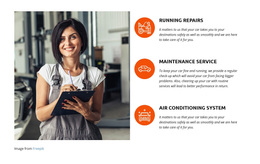
The narrow yellow panel creates a visual entry point, but the large dog photograph becomes the main anchor of the section because it occupies the central area between color and text. The right-side feature column then supplies two compact information groups, stacked vertically rather than spread across the full width. Each group combines a circular line icon, uppercase heading, and supporting paragraph, giving the reader a repeated point of entry as the eye moves down the column.
This arrangement produces a clear page rhythm: a narrow color cue, a dominant image, and a quieter information zone. The white background and generous whitespace help separate the upper and lower feature items while preserving a connection between them. Within a web page design, the block can work as a visually emphatic mid-page transition when surrounding content needs a section that shifts from imagery to supporting explanations. Its static behavior keeps the composition stable, so the main design decisions concern width, alignment, image scale, text density, and the spacing between regions. Nicepage's Blocks and Web Page Elements can help coordinate this section with neighboring content, but the block's own composition remains centered on the image-to-feature relationship.
Customize with Nicepage
Open this ready-made template in the Web Page Design Builder and customize it visually in the Nicepage editor. Replace demo content, edit page sections, and adapt the design to your project without rebuilding the template from scratch.
Edit Template Offline
2. Create a new page or select existing
3. Click Add new block, search for id 56502 and click enter
Edit Template Online
Create Awesome Websites


Free Nicepage Builder
Keywords
Design a Web Page With This Block as One Section
Place the Block in the Page Composition
Use Block Designs to combine individual sections into a complete page. The analyzed block contributes one part of that composition, while other sections can handle the introduction, services, proof, portfolio, pricing, contact, or other page-level needs.
Refine the Elements Inside the Block
Use Web Page Elements such as Text, Image, Hyperlink, Grid, Gallery, and other elements to refine the section's content. Adjust the existing elements without assuming that one block must carry the entire page structure.
Balance the Section With Neighboring Content
After the block is placed, refine its spacing, image scale, text density, alignment, and background treatment so the transition into and out of the section feels intentional. Reorder Blocks at the page level when necessary while keeping the internal composition of each section coherent.
This workflow treats the block as one compositional unit in a web page: internally designed, visually distinct, and coordinated with the sections around it.